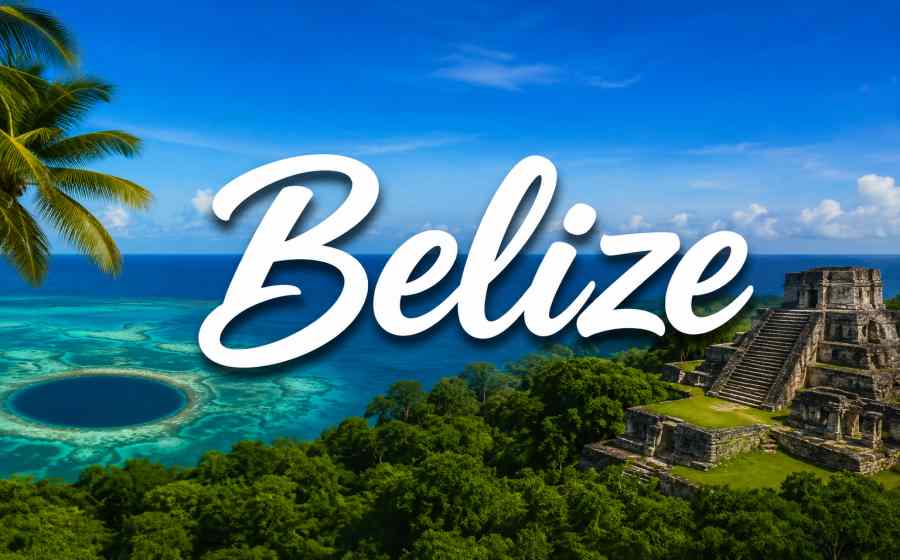
Belize – History, Culture, Sports, Tourist Places and Key Facts
Explore Belize’s history, culture, geography, sports, traditions, economy, landmarks and fascinating key facts about this Caribbean Central American nation.
Belize
Belize is a small but remarkably diverse country on the eastern coast of Central America. Known for its beautiful Caribbean coastline, tropical forests, ancient Maya sites and the spectacular Belize Barrier Reef, the country combines Central American heritage with strong Caribbean influences. Although small in size and population, Belize has a fascinating history, multicultural society and rich natural environment.
Belize is bordered by Mexico to the north, Guatemala to the west and south, and the Caribbean Sea to the east. It is the only country in Central America where English is the official language, making it particularly distinctive within the region. Belize City is the country’s largest urban center, while Belmopan serves as its capital.
Table of Contents
History of Belize
The history of Belize goes back thousands of years, with the region playing an important role in the ancient Maya civilization. The Maya established settlements, ceremonial centers and trading networks across the area. Important archaeological sites such as Xunantunich, Caracol and Lamanai provide evidence of the sophistication of Maya society.
European involvement began in the 16th century, although permanent British settlement developed much later. British settlers, often known as Baymen, established communities along the coast and became involved in the logging of valuable timber. The region gradually came under increasing British influence.
During the 18th and 19th centuries, conflicts between Britain and Spain affected the territory. Britain eventually strengthened its control, and Belize became known as British Honduras. In 1862, it was formally declared a British colony.
The movement toward self-government grew during the 20th century. Political leaders worked for greater autonomy and national independence. Belize finally achieved independence from the United Kingdom on 21 September 1981. The country retained membership in the Commonwealth, and its political system developed as a parliamentary democracy.
Geography and Natural Beauty
Belize covers a relatively small area but contains an impressive variety of landscapes. Its geography includes coastal plains, rivers, tropical forests, mountains and offshore islands called cayes.
One of Belize’s greatest natural treasures is the Belize Barrier Reef, part of the larger Mesoamerican Barrier Reef System. It is one of the world’s most important coral reef ecosystems and attracts divers, snorkelers and marine researchers from many countries.
The country is also home to diverse wildlife. Jaguars, tapirs, crocodiles, monkeys and numerous bird species can be found in different habitats. Belize has established protected areas and national parks to conserve its forests and wildlife.
Culture of Belize
Belizean culture reflects the country’s diverse population. Several cultural communities contribute to its national identity, including Mestizo, Creole, Maya, Garifuna, East Indian and Mennonite communities, among others.
English is the official language, while Spanish, Belizean Creole, Garifuna and several Maya languages are also spoken. This multilingual environment reflects centuries of migration, cultural exchange and settlement.
Music and dance are particularly important parts of Belizean culture. Punta, associated especially with the Garifuna community, is one of the country’s best-known musical and dance traditions. Garifuna culture has been recognized internationally for its cultural significance.
Food in Belize also demonstrates its multicultural character. Popular dishes include rice and beans, stewed chicken, fry jacks, tamales and seafood. Caribbean, Maya, Mexican and other culinary traditions have influenced Belizean cuisine.
Important Festivals
Belize celebrates numerous cultural and national events throughout the year. Garifuna Settlement Day, observed on 19 November, commemorates the arrival of the Garifuna people in Belize and is marked with music, dancing, traditional food and cultural performances.
Independence Day is celebrated on 21 September with parades, concerts, cultural programs and national ceremonies. The country’s festivals provide an opportunity to showcase Belizean history, music, food and traditions.
Sports in Belize
Sports are an important part of everyday life in Belize. Football (soccer) is one of the country’s most popular sports, with local clubs and national competitions attracting considerable interest.
Basketball is also widely played, particularly among young people. Belize has produced athletes who have competed internationally in different sports, including track and field.
Water-based activities have special importance because of Belize’s Caribbean location and extensive reef system. Scuba diving, snorkeling, kayaking and fishing are popular recreational activities and also contribute to the country’s tourism industry.
Belize participates in regional and international sporting events, including competitions organized through Central American and Caribbean sporting bodies.
Economy of Belize
Belize has a diverse economy based on several important sectors. Tourism is a major contributor, supported by beaches, coral reefs, wildlife reserves, Maya archaeological sites and adventure activities.
Agriculture also plays an important role. Sugar, citrus fruits, bananas and other agricultural products are among the country’s notable products. Fishing and marine resources contribute to coastal communities and the economy.
Belize also benefits from its location between the Caribbean and Central America. Small businesses, services and international trade form additional parts of the national economy.
Tourism and Famous Places
Belize attracts visitors looking for history, nature and adventure. The ancient Maya city of Caracol is one of the country’s most significant archaeological attractions. Xunantunich, located near the border with Guatemala, is another popular Maya site.
The Great Blue Hole is perhaps Belize’s most internationally recognized natural attraction. This enormous marine sinkhole forms part of the Belize Barrier Reef Reserve System and is famous among divers and adventure travelers.
Other attractions include the Cockscomb Basin Wildlife Sanctuary, Ambergris Caye, Placencia and numerous marine reserves.
Government and National Identity
Belize is a parliamentary constitutional monarchy and a member of the Commonwealth. The monarch is the country’s constitutional head of state, represented locally by a governor-general, while the prime minister serves as head of government.
Belize’s national flag features a blue field with red borders and a central coat of arms. The coat of arms reflects the country’s historical connection with forestry and the timber industry.
The country’s national symbols include the tapir, commonly known as the mountain cow, which is the national animal. The black orchid is the national flower, while the mahogany tree is the national tree.
Key Facts About Belize
- Official Name: Belize
- Capital: Belmopan
- Largest City: Belize City
- Independence: 21 September 1981
- Official Language: English
- Currency: Belize Dollar (BZD)
- Region: Central America and the Caribbean
- National Animal: Baird’s tapir
- National Flower: Black orchid
- National Tree: Mahogany
- Famous Natural Attraction: Great Blue Hole
- Major Cultural Celebration: Garifuna Settlement Day
- Major Sport: Football (soccer)
- Famous Heritage: Ancient Maya archaeological sites
Summary
Belize is a country where ancient Maya heritage, Caribbean traditions and Central American influences come together. From the ruins of Caracol and Xunantunich to the extraordinary Belize Barrier Reef and Great Blue Hole, its cultural and natural attractions are remarkably varied. Its diverse population, English-speaking heritage, vibrant festivals and strong connection with nature make Belize an interesting country to study. Understanding Belize’s history, culture, geography, sports and national symbols provides a broader picture of this unique Central American nation.
Also Check: General Knowledge