Liechtenstein – History, Culture, Tourist Places, Sports and Key Facts
Discover Liechtenstein’s history, culture, geography, sports, government, economy and fascinating facts about this small European principality.
Liechtenstein
Liechtenstein is one of Europe’s smallest countries, but its compact size hides a fascinating history, distinctive culture and impressive natural scenery. Officially known as the Principality of Liechtenstein, it is a landlocked country situated between Switzerland and Austria in the Alps. Its capital is Vaduz, which is also the political and cultural centre of the country.
Despite having a very small territory and population, Liechtenstein has developed a highly modern economy and maintains a distinctive identity as a sovereign European state. German is the official language, while Alemannic dialects are widely spoken in everyday life. The Swiss franc is the official currency because of Liechtenstein’s close relationship with Switzerland.
Table of Contents
Geography of Liechtenstein
Liechtenstein is located in Central Europe and is completely surrounded by two countries: Switzerland to the west and Austria to the east. It is one of the few doubly landlocked countries in the world, meaning that its surrounding countries are themselves landlocked.
The country lies along the Rhine Valley, with the Alps dominating its eastern landscape. Mountains, forests, valleys and hiking routes make the country particularly attractive to nature lovers.
Vaduz is the capital, while other important municipalities include Schaan, Triesen, Balzers, Eschen and Mauren. Vaduz is home to the government, parliament and the princely residence area.
History of Liechtenstein
The history of the region goes back thousands of years. Archaeological evidence shows that the territory of present-day Liechtenstein was inhabited as early as the Neolithic period, around the 5th millennium BC. Its location along important transalpine routes contributed to human settlement and cultural exchange.
The Romans later controlled the area, followed by Germanic peoples including the Alemanni. During the Middle Ages, different noble families controlled territories in the region.
A major turning point came in 1699, when Prince Johann Adam Andreas von Liechtenstein purchased the Lordship of Schellenberg. In 1712, he acquired the County of Vaduz. In 1719, Emperor Charles VI combined the two territories and elevated them to the status of the Imperial Principality of Liechtenstein.
In 1806, Liechtenstein became a sovereign state through its membership in the Confederation of the Rhine. It later became a member of the German Confederation before establishing closer economic connections with Switzerland.
Another important milestone occurred in 1924, when Liechtenstein entered into a customs treaty with Switzerland and adopted the Swiss franc as its official currency.
In the modern era, Liechtenstein strengthened its international position. It joined the Council of Europe in 1978, became a member of the United Nations in 1990, joined EFTA in 1991, and entered the European Economic Area (EEA) and World Trade Organization (WTO) in 1995.
Government and Political System
Liechtenstein is a constitutional hereditary monarchy with a democratic and parliamentary system. The Prince is the head of state, while the country also has an elected parliament known as the Landtag.
The political system combines the role of the monarchy with democratic institutions. The government is responsible for executive administration, while parliament represents the people.
Liechtenstein’s constitutional system has developed over many years, with important constitutional changes helping define the relationship between the Prince, government, parliament and citizens.
Culture of Liechtenstein
Liechtenstein’s culture reflects its location between the German-speaking Alpine regions of Switzerland and Austria. German is the official language, while local Alemannic dialects are an important part of everyday communication and cultural identity.
Traditional customs, music, festivals, crafts and local celebrations remain important elements of national life. At the same time, Liechtenstein has developed a modern cultural environment involving museums, galleries, performing arts and historical institutions.
The country’s cultural heritage is carefully preserved through government-supported institutions. The Office of Cultural Affairs works on archaeology, historic monuments, national archives and cultural activities. Liechtenstein also has numerous museums and cultural centres despite its small size.
Famous Places and Attractions
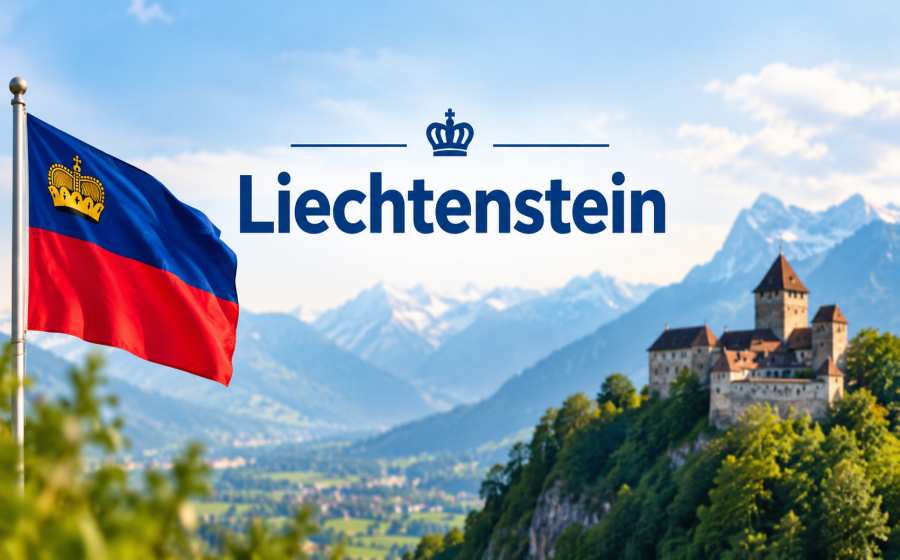
One of Liechtenstein’s best-known landmarks is Vaduz Castle, which overlooks the capital from a hillside. It is associated with the Princely Family and is one of the country’s most recognizable symbols.
Other attractions include the Kunstmuseum Liechtenstein, which focuses on modern and contemporary art, and the Liechtenstein National Museum, where visitors can learn about the country’s history and culture.
Gutenberg Castle in Balzers is another important historical landmark. Archaeological research has also uncovered evidence of settlements and structures dating back thousands of years.
The country’s mountainous environment also provides opportunities for hiking, skiing and other outdoor activities.
Sports in Liechtenstein
Sports play an important role in Liechtenstein, particularly those connected with its alpine geography. Skiing is one of the country’s most popular sports, and Liechtenstein has produced notable alpine skiers who have competed internationally.
Winter sports benefit from the country’s mountainous terrain, while football is also popular among local communities. The Liechtenstein national football team participates in international competitions despite representing one of Europe’s smallest nations.
Cycling, hiking, tennis and other recreational sports are also practiced across the country. The close sporting relationships between Liechtenstein and neighbouring Switzerland and Austria provide additional opportunities for athletes and sporting organizations. Switzerland and Liechtenstein have particularly close cross-border ties across areas including sport.
Economy of Liechtenstein
For such a small country, Liechtenstein has a remarkably developed economy. Manufacturing, financial services, industry, professional services and international business all contribute to economic activity.
The country is known for specialized manufacturing and a strong business environment. Its economic relationship with Switzerland is especially important, supported by decades of agreements and close cross-border cooperation. The Swiss franc serves as the country’s official currency.
Liechtenstein’s membership in the European Economic Area also gives it access to the European single market while it remains outside the European Union.
Education and Knowledge
Education is an important part of Liechtenstein’s social system. The country has schools and higher-education institutions, while students can also access universities and educational opportunities in neighbouring countries through regional cooperation.
Its small size means that international connections are particularly important for higher education, research and professional development.
Nature and Tourism
Liechtenstein’s Alpine landscape is one of its greatest attractions. Visitors can explore mountain trails, villages, forests and panoramic viewpoints. During winter, skiing and snow-related activities attract visitors, while warmer months are ideal for hiking and cycling.
The country’s compact size makes it possible to explore many attractions within a relatively short period. Its combination of mountain scenery, castles, museums and traditional villages gives it a distinctive tourism identity.
Interesting Facts About Liechtenstein
- Liechtenstein is one of Europe’s smallest sovereign states.
- Its capital city is Vaduz.
- It is located between Switzerland and Austria.
- German is the official language.
- The Swiss franc is the official currency.
- The territory has archaeological evidence dating back around 7,000 years.
- Liechtenstein became an Imperial Principality in 1719.
- It became a sovereign state in 1806.
- It joined the United Nations in 1990.
- It became part of the European Economic Area in 1995.
- The country is famous for its Alpine scenery and winter sports.
- Vaduz Castle is one of its most recognizable landmarks.
- Liechtenstein celebrated its 300th anniversary as a principality in 2019.
Summary
Liechtenstein may be tiny in geographical size, but it has a remarkably rich history and strong national identity. From its prehistoric settlements and medieval heritage to its modern political institutions and advanced economy, the country offers a fascinating example of how a small European state has developed over centuries.
Its Alpine landscape, German-speaking culture, historic castles, museums and sporting traditions make Liechtenstein an interesting destination. Its long-standing relationship with Switzerland and Austria, combined with its participation in international organizations, has helped the principality maintain strong connections with the wider European community.
Also Check: General Knowledge