Niki Lauda Biography – The Fearless Formula One Champion
Discover the Niki Lauda Biography, from his three Formula One world titles and near-fatal crash to his incredible comeback and five inspiring life lessons.
Niki Lauda Biography
Niki Lauda was one of the most courageous and respected figures in the history of Formula One racing. Known for his exceptional driving skills, sharp intelligence, and extraordinary determination, Lauda became a three-time Formula One World Champion and an enduring symbol of resilience. His life was not just a story of speed and victory; it was also a remarkable journey of survival, recovery, and the will to return after facing seemingly impossible challenges.
Born in Austria, Lauda rose to international fame through his outstanding performances on the racetrack. His career included championship victories, intense rivalries, a devastating accident at the 1976 German Grand Prix, and an astonishing return to competitive racing. Beyond motorsport, he also became a successful aviation entrepreneur and an influential figure in Formula One management.
Table of Contents
Early Life and Childhood
Andreas Nikolaus Lauda, popularly known as Niki Lauda, was born on February 22, 1949, in Vienna, Austria. He grew up in a prosperous family, but his interest in motor racing led him toward a career that did not fit his family’s expectations. Despite facing opposition from his family, Lauda remained determined to pursue his passion.
Unlike many aspiring drivers who gradually worked their way through traditional racing pathways, Lauda was willing to take considerable financial risks to enter professional motorsport. He obtained loans to support his early racing career and used his determination to secure opportunities in competitive racing.
His early experiences taught him the importance of discipline, preparation, and taking responsibility for his decisions. Rather than relying solely on natural talent, Lauda developed a reputation for studying cars carefully and understanding the technical details that could influence performance.
These qualities eventually distinguished him from many other drivers. He was not merely interested in driving fast; he wanted to understand how to make a racing car faster, more consistent, and more competitive.
Beginning of His Formula One Career
Niki Lauda entered Formula One in 1971, beginning a journey that would eventually make him one of the sport’s most celebrated champions. His early years were challenging because he had to prove that he belonged among the world’s best drivers.
In 1974, Lauda joined Ferrari, one of the most prestigious teams in motorsport. This move marked a major turning point in his career. Working with Ferrari gave him the opportunity to compete regularly for victories and championships.
Lauda quickly demonstrated his speed, technical understanding, and ability to provide detailed feedback to engineers. His partnership with Ferrari’s team management and engineers helped strengthen the team’s competitiveness.
In 1975, Lauda won his first Formula One World Drivers’ Championship. His performances throughout the season demonstrated remarkable consistency and control. He combined speed with careful decision-making, showing that championship success depended on more than simply taking risks on the track.
This first title established Lauda as a leading figure in international motorsport and set the stage for the dramatic events that would follow.
The 1976 Nürburgring Crash: A Life-Changing Moment
The most dramatic chapter of Niki Lauda’s life occurred on August 1, 1976, during the German Grand Prix at the Nürburgring. Lauda was defending his championship and was among the strongest competitors of the season. However, the race turned into a fight for survival when his Ferrari crashed and caught fire.
Lauda became trapped in the burning car and suffered severe burns to his head and face, along with serious lung damage caused by inhaling toxic fumes. Fellow drivers Arturo Merzario, Guy Edwards, Harald Ertl, and Brett Lunger helped rescue him from the wreckage. His injuries were so severe that doctors feared he might not survive.
Despite the seriousness of his condition, Lauda refused to surrender. He endured painful medical treatment and an extremely difficult recovery. His determination to return to racing amazed the sporting world.
Just six weeks after the accident, Lauda returned to Formula One at the Italian Grand Prix in Monza. Still bearing visible injuries and wearing bandages, he drove an extraordinary race and finished fourth.
His return became one of the most celebrated comebacks in sporting history. Although he narrowly lost the 1976 championship to his rival James Hunt, Lauda earned enormous respect for his courage and determination. His decision to withdraw from the rain-soaked final race in Japan also demonstrated that he was willing to prioritize his life over a championship trophy.
Winning the 1977 World Championship
After his remarkable recovery, Lauda returned to Ferrari for the 1977 season with renewed determination. He demonstrated that his abilities had not diminished after the accident and continued to perform at the highest level.
Lauda won the 1977 Formula One World Championship, securing his second title. His achievement was particularly meaningful because it followed a period of physical suffering and uncertainty about his future in motorsport.
Despite his success, Lauda’s relationship with Ferrari became increasingly difficult. Differences over team decisions and his future led him to leave the team before the end of the season’s racing commitments.
He subsequently joined Brabham, where he competed for two seasons. In 1979, Lauda decided to retire from Formula One, explaining that he had lost the motivation to continue racing. Instead of remaining in a successful but demanding sporting career, he chose to explore a completely different field: aviation.
Life Beyond Racing: Lauda Air
Niki Lauda’s ambitions extended far beyond the racetrack. In 1979, he founded Lauda Air, an airline that reflected his long-standing interest in aviation. He approached the aviation industry with the same analytical thinking and attention to detail that had helped him succeed in Formula One.
Building an airline presented a different set of challenges, including financial management, operational planning, safety, and competition. Lauda’s experience as a professional driver had taught him to evaluate risks carefully and make decisions under pressure.
His aviation career also demonstrated that he was capable of reinventing himself. He was not content to be remembered only as a racing champion; he wanted to build something lasting in another industry.
Lauda later became involved in additional airline ventures, including the low-cost carrier Niki. His work in aviation strengthened his reputation as a businessman who understood the importance of technical knowledge, operational discipline, and accountability.
Return to Formula One and the 1984 Championship
In 1982, Lauda returned to Formula One with McLaren after deciding that he still had the desire to compete. His comeback showed that his passion for racing had never completely disappeared.
At McLaren, he faced a new challenge in the form of talented teammate Alain Prost. Their competition became one of the defining stories of the 1984 season.
Lauda’s experience, consistency, and ability to manage races proved decisive. He won the 1984 World Drivers’ Championship by just half a point over Prost, one of the narrowest margins in Formula One championship history.
This third title was especially remarkable because Lauda had won championships with two different legendary teams: Ferrari and McLaren. His success confirmed his place among the greatest drivers in the sport.
Lauda retired from Formula One for the second and final time at the end of the 1985 season. By then, he had established an extraordinary legacy built on three world championships, race victories, and an exceptional ability to return from adversity.
Niki Lauda’s Role in Mercedes Formula One
Even after retiring as a driver, Lauda remained closely connected to Formula One. He worked in advisory and management roles, sharing his knowledge and experience with teams and younger generations of racing professionals.
In 2012, he became non-executive chairman of the Mercedes-AMG Petronas Formula One Team. In this role, he contributed to the team’s development and helped strengthen its leadership. He also played an important part in persuading Lewis Hamilton to join Mercedes in 2013, a decision that proved significant in the team’s subsequent success.
Lauda’s influence extended beyond technical discussions. His direct communication style, competitive instincts, and understanding of racing helped him earn respect throughout the paddock. He was known for expressing his opinions honestly and focusing on practical solutions rather than unnecessary excuses.
His later work with Mercedes demonstrated that his contribution to motorsport did not end when he stopped driving. He remained an influential personality who helped shape one of the most successful periods in the team’s history.
Personal Life
Niki Lauda experienced both extraordinary professional success and significant personal challenges. He was married twice and had four children. Despite his public profile, he generally maintained a practical, straightforward approach to life.
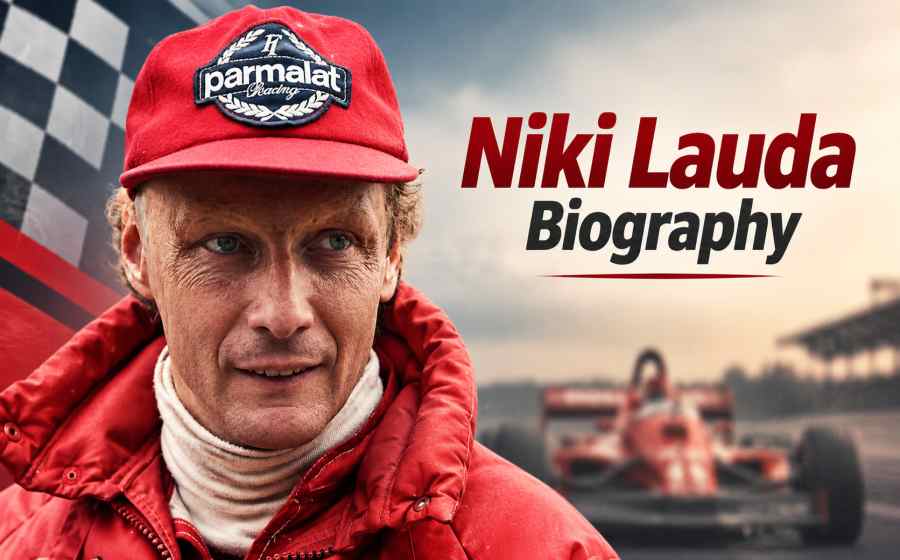
Lauda was also known for his distinctive red cap, which became one of his most recognizable features after the severe burns he suffered in 1976. Over time, the cap became a symbol associated with his identity and his remarkable survival.
In August 2018, Lauda underwent a lung transplant. He subsequently faced further health complications and died on May 20, 2019, in Zurich, Switzerland, at the age of 70.
His death prompted tributes from across the world of motorsport. Drivers, team principals, racing organizations, and fans remembered him not only as a three-time world champion but also as a determined individual who transformed personal adversity into an extraordinary story of courage.
Niki Lauda’s Legacy in Motorsport
Niki Lauda’s legacy is built on far more than his championship trophies. He changed the way many people viewed racing by demonstrating the importance of technical understanding, disciplined preparation, and intelligent decision-making.
His rivalry with James Hunt during the 1976 season became widely known beyond motorsport, particularly after the release of the 2013 film Rush, which portrayed their competition and contrasting personalities.
Lauda is remembered for winning three Formula One World Drivers’ Championships in 1975, 1977, and 1984. His comeback after the Nürburgring crash remains one of the most powerful examples of resilience in sports history.
His achievements in aviation and Formula One management further demonstrate his versatility. He proved that determination, analytical thinking, and a willingness to embrace new challenges can lead to success in different fields.
For aspiring athletes, students, entrepreneurs, and professionals, Niki Lauda’s life offers a lasting reminder that setbacks do not have to determine the future.
Inspirational Lessons from Niki Lauda’s Life
1. Never Give Up After a Setback
Lauda’s return to racing just six weeks after a devastating accident demonstrates the power of determination. Difficult experiences may change your journey, but they do not necessarily have to end it.
2. Knowledge Is as Important as Talent
Lauda understood the technical aspects of racing cars and worked closely with engineers. His example teaches us to develop our knowledge and skills instead of relying on talent alone.
3. Make Decisions with Courage and Logic
Lauda knew that success required both bravery and careful judgment. His withdrawal from the dangerous 1976 Japanese Grand Prix illustrates that protecting your life and well-being can be more important than winning.
4. Be Willing to Start Again
After leaving Formula One, Lauda built an aviation business and later returned to racing. His journey shows that people can explore new opportunities and begin new chapters at different stages of life.
5. Keep Learning Throughout Your Life
Lauda continued contributing to motorsport long after his driving career ended. His example reminds us that experience becomes more valuable when we keep learning and use it to help others succeed.
Summary
Niki Lauda’s biography is the story of a man who combined extraordinary racing talent with intelligence, determination, and courage. From winning his first Formula One championship with Ferrari to surviving a near-fatal accident and securing another title with McLaren, he repeatedly proved his ability to overcome challenges.
His achievements in aviation and motorsport management further established him as a versatile and influential personality. Although he passed away in 2019, his story continues to inspire people around the world.
Niki Lauda will always be remembered as a legendary Formula One champion who demonstrated that true greatness is not measured only by victories, but also by the courage to face adversity, make difficult decisions, and continue moving forward.
Also Check: Biography