
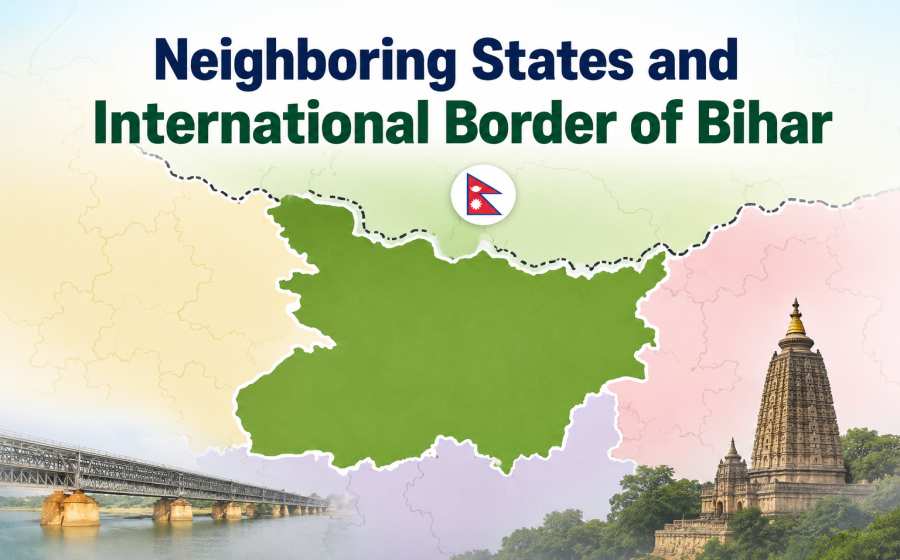
Neighboring States and International Border of Bihar – Nepal Border, Geography and Strategic Importance
Neighboring States and International Border of Bihar explained with bordering states, Nepal boundary, key districts and important GK facts for exams.
Neighboring States and International Border of Bihar
Bihar is one of India’s most historically significant states and occupies an important position in the eastern part of the country. Understanding Bihar’s neighbouring states and international borders is an essential topic for students preparing for competitive examinations such as BPSC, Bihar Police, SSC, Railway, UPSC, and other state-level tests. Knowledge of Bihar’s geographical boundaries not only strengthens General Knowledge but also helps in understanding its cultural, economic, and strategic importance.
Situated in the fertile Indo-Gangetic Plain, Bihar shares its borders with three Indian states and one international country. These boundaries have played a major role in shaping Bihar’s trade, migration, culture, and administration throughout history.
Table of Contents
Geographical Location of Bihar
Bihar lies in eastern India and covers an area of approximately 94,163 square kilometres. The state capital is Patna, located near the banks of the River Ganga, which divides Bihar into northern and southern regions.
The state is strategically positioned between the Himalayan foothills to the north and the plains of eastern India to the south. Its location makes it a significant gateway connecting northern India with the eastern and northeastern regions.
Neighboring States of Bihar
Bihar shares boundaries with the following Indian states:
1. Uttar Pradesh (West)
Uttar Pradesh forms Bihar’s western border. This boundary connects Bihar with one of India’s largest and most populous states.
Several districts of western Bihar share borders with Uttar Pradesh. These include:
- Buxar
- Kaimur
- Rohtas
- West Champaran
The connection between Bihar and Uttar Pradesh is historically important because both regions were part of ancient kingdoms and centres of learning. Cultural traditions, festivals, and dialects also show similarities across the border.
2. Jharkhand (South)
Jharkhand lies to the south of Bihar. Until the year 2000, Jharkhand was part of Bihar. On 15 November 2000, it became a separate state.
Districts bordering Jharkhand include:
- Gaya
- Nawada
- Jamui
- Banka
- Aurangabad
This border region is important because Jharkhand is rich in minerals and forest resources, whereas Bihar is primarily an agricultural state. Economic interactions between the two states continue to be significant.
3. West Bengal (East)
West Bengal forms Bihar’s eastern boundary and serves as an important link between Bihar and northeastern India.
Districts situated near West Bengal include:
- Kishanganj
- Katihar
- Purnia
Trade routes passing through this region connect Bihar to major ports and commercial centres in eastern India. The cultural influence of Bengal can also be observed in the cuisine, language, and traditions of eastern Bihar.
International Border of Bihar
Nepal (North)
Bihar shares an international border with Nepal, making it one of the few Indian states connected directly to a foreign nation.
The Bihar Nepal border stretches for approximately 729 kilometres, making it one of the longest international borders shared by an Indian state.
The following districts of Bihar border Nepal:
- West Champaran
- East Champaran
- Sitamarhi
- Madhubani
- Supaul
- Araria
- Kishanganj
Importance of the Bihar–Nepal Border
The international border with Nepal holds great strategic and economic significance.
Open Border System
India and Nepal maintain an open border arrangement under bilateral agreements. Citizens of both countries can travel across the border without visas or passports for most routine purposes.
Trade and Commerce
Cross-border trade contributes significantly to local economies. Several border towns act as commercial centres where goods and services are exchanged regularly.
Cultural Similarities
Communities living on both sides share linguistic and cultural ties. Festivals such as Chhath Puja and common traditions strengthen people-to-people connections.
Security Importance
Due to the open nature of the border, effective surveillance and coordination between security agencies are essential to prevent illegal activities and ensure national security.
Major Border Checkpoints
Some important border points between Bihar and Nepal include:
- Raxaul (East Champaran)
- Jogbani (Araria)
- Bhitthamore (Sitamarhi)
- Laukaha (Madhubani)
Among these, Raxaul is considered one of the busiest trade gateways between India and Nepal.
Why are Bihar’s Borders Important?
Bihar’s boundaries influence many aspects of the state’s development and administration.
Economic Importance
- Facilitate interstate and international trade.
- Support transportation and logistics networks.
- Encourage market access for agricultural products.
Cultural Importance
- Promote exchange of languages, customs, and traditions.
- Strengthen historical relationships among neighbouring regions.
Strategic Importance
- Enhance national security through border management.
- Improve disaster response coordination, especially during floods affecting border districts.
Administrative Importance
- Assist in planning infrastructure projects.
- Help manage migration and resource distribution efficiently.
Important GK Facts About Bihar’s Borders
- Bihar is located in eastern India.
- Patna is the capital of Bihar.
- Bihar shares borders with three Indian states and one foreign country.
- Uttar Pradesh lies to the west.
- Jharkhand lies to the south.
- West Bengal lies to the east.
- Nepal lies to the north.
- Bihar shares an international border of about 729 km with Nepal.
- Kishanganj district borders both West Bengal and Nepal.
- Raxaul is a major trade gateway between India and Nepal.
Summary
Bihar’s neighbouring states and international borders significantly shape its identity, economy, and strategic relevance. The state’s connections with Uttar Pradesh, Jharkhand, and West Bengal strengthen interstate cooperation, while its long border with Nepal provides unique opportunities for cultural exchange and international trade.
Also Check: Bihar GK