
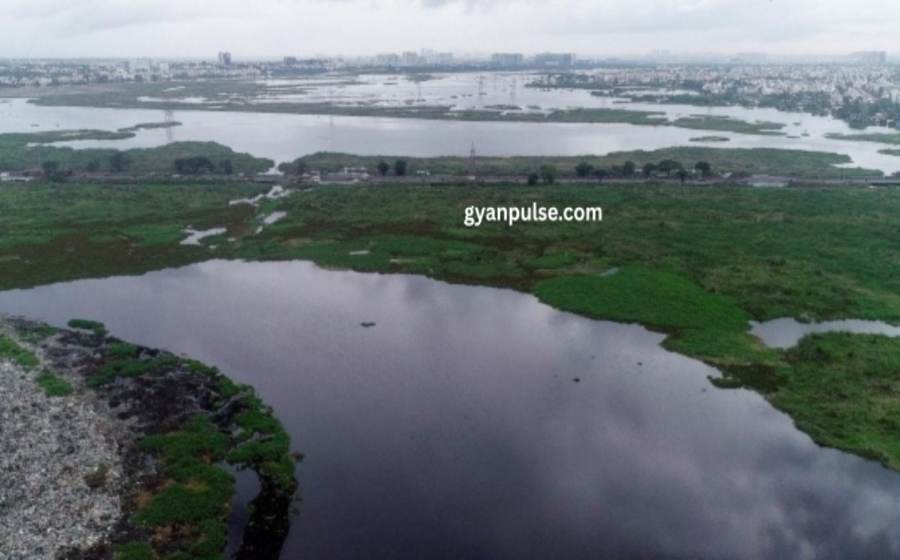
NGT Stopped Construction Near Pallikaranai Marshland, National Green Tribunal
NGT Stopped Construction Near Pallikaranai Marshland to protect wetlands, preserve biodiversity and reduce flood risks through stricter rules.
NGT Stopped Construction Near Pallikaranai Marshland
The Southern Bench of the National Green Tribunal (NGT) has ordered a stop to all construction activities within one kilometre of Pallikaranai Marshland. This step is meant to protect the ecologically sensitive wetland until a scientific study clearly defines its boundary and impact zone.
The decision comes after reports of landfilling and construction in the Perumbakkam wetland, which is directly linked to the larger Pallikaranai Marsh system.
Table of Contents
Background Information
Pallikaranai Marsh, recognized as a Ramsar Site in 2022, is among the few natural wetlands left in Chennai. It helps control floods and supports rich biodiversity. However, unchecked construction around the marsh is now threatening its delicate ecosystem and the safety of nearby communities.
Role of the National Green Tribunal
The NGT bench, headed by Justice Pushpa Sathyanarayana along with expert member Prashant Gargava, took action on its own after media reports highlighted illegal activities near the marsh.
The tribunal pointed out that Survey No. 286 in Perumbakkam village is only 246 metres from the marsh boundary. The bench emphasized that any unauthorized construction here could disturb water flow and raise the risk of flooding.
Claims by Builders and Tribunal’s Remarks
The developer, M/s Grande City Development Company LLP, stated that the land is classified as a “Primary Residential Use Zone” under the Chennai Metropolitan Development Authority (CMDA) master plan. They claimed that only temporary leveling was carried out for a land survey, not permanent construction. However, the tribunal made it clear that land-use zoning cannot override environmental protections, especially in ecologically sensitive areas.
The tribunal further stressed that environmental laws and ecological concerns must remain a priority when dealing with sensitive wetland regions. It noted that even temporary activities in such areas can potentially affect natural water movement and disturb the ecological balance.
Action by Tamil Nadu Wetland Authority
The Tamil Nadu State Wetland Authority (TNSWA) has temporarily marked a one-kilometre buffer zone around the marsh using topographical and water-flow studies.
This zone shows the area influenced by the marsh’s ecosystem. The Integrated Management Plan (IMP), currently under revision, will formalize this zone and set clear rules for future activities.
Guidelines for Cooperation and Compliance
The NGT has instructed TNSWA, the Water Resources Department, and CMDA to speed up the completion of the Integrated Management Plan (IMP).
Until the plan is finalized and the buffer zone is officially declared, no new approvals for projects affecting the marsh or its water systems will be allowed. This step is intended to protect the marsh’s ecosystem and safeguard nearby communities from flood risks.
Environmental Protection and Flood Prevention Measures
The NGT’s decision to stop construction activities near Pallikaranai Marshland highlights the importance of balancing urban development with environmental conservation. Wetlands like Pallikaranai play a critical role in maintaining ecological stability by supporting biodiversity, storing excess rainwater, and reducing flood risks.
Uncontrolled land development around such sensitive areas can disrupt natural water channels and weaken the region’s ability to manage heavy rainfall. By enforcing a temporary restriction and pushing authorities to establish a scientifically defined buffer zone, the tribunal aims to ensure long-term environmental protection and safer living conditions for surrounding communities.
Summary
The NGT has halted construction within one kilometre of Pallikaranai Marshland to protect its fragile ecosystem and reduce potential flood risks. The tribunal directed authorities to finalize a scientific buffer zone and strengthen environmental safeguards. This action reflects the growing focus on preserving wetlands while ensuring that development projects follow sustainable and ecological guidelines.
Also Check: Current Affairs