
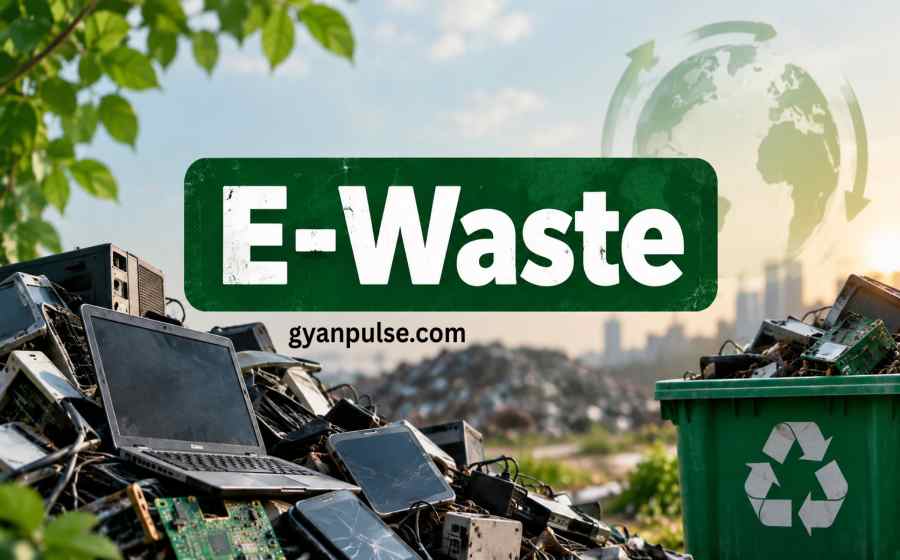
E-Waste – Meaning, Major Sources and Smart Management Solutions
E-Waste: Discover its meaning, sources, impacts and management solutions to reduce electronic waste, protect nature and promote a sustainable future.
E-Waste
In today’s digital world, electronic devices have become an essential part of our daily lives. From smartphones and laptops to televisions and refrigerators, technology is advancing rapidly. However, with this rapid growth comes a serious environmental challenge known as electronic waste or E-waste. Managing this waste has become crucial for protecting both human health and the environment.
Table of Contents
What is E-Waste?
E waste refers to discarded electrical and electronic devices that are no longer in use or have reached the end of their lifecycle. These items may be broken, outdated, or simply replaced by newer models. Common examples include computers, mobile phones, printers, air conditioners, washing machines, and batteries.
E-waste is not just ordinary waste. It contains hazardous materials such as lead, mercury, cadmium, and brominated flame retardants, which can cause serious environmental pollution and health risks if not handled properly. At the same time, it also contains valuable materials like gold, silver, and copper that can be recovered and reused.
Sources of E Waste
E-waste is generated from various sectors of society. Understanding its sources helps in managing it more effectively.
1. Household Appliances
One of the largest contributors to E-waste is household electronic devices. Items like televisions, refrigerators, microwaves, and mobile phones are frequently replaced due to technological upgrades or wear and tear.
2. IT and Telecommunications Equipment
Computers, laptops, servers, routers, and mobile devices used in offices and homes contribute significantly to E-waste. Rapid innovation in the tech industry leads to shorter product lifespans.
3. Industrial and Commercial Equipment
Industries use heavy electronic machinery and control systems that eventually become obsolete or damaged, adding to the E-waste problem.
4. Medical Equipment
Hospitals and healthcare centers use advanced electronic devices such as scanners, monitors, and diagnostic machines. When these become outdated, they contribute to electronic waste.
5. Educational Institutions
Schools and colleges use computers, projectors, and lab equipment. Regular upgrades result in the disposal of old electronic devices.
Impacts of E Waste
Improper disposal of E waste can lead to severe consequences:
- Environmental Pollution: Toxic substances can contaminate soil, water, and air.
- Health Hazards: Exposure to harmful chemicals may cause respiratory issues, neurological damage, and other diseases.
- Loss of Resources: Valuable metals and components are wasted instead of being recycled.
- Climate Impact: Improper handling can release greenhouse gases into the atmosphere.
E Waste Management
Effective E waste management is essential for reducing its harmful effects. It involves proper collection, recycling, and disposal methods.
1. Reduce
The first step is to minimize the generation of E-waste. Consumers should avoid unnecessary purchases and choose durable electronic products.
2. Reuse
Old devices can be repaired, upgraded, or donated instead of being thrown away. Reusing extends the life of electronic items and reduces waste.
3. Recycle
Recycling helps recover valuable materials from E-waste. Authorized recycling centers use safe methods to extract metals and dispose of hazardous substances properly.
4. Proper Disposal
E-waste should never be mixed with regular household waste. Governments and organizations provide designated collection centers for safe disposal.
5. Awareness and Education
Public awareness plays a crucial role in managing E waste. People should be educated about the risks and proper disposal methods.
Government Initiatives and Policies
Many countries, including India, have introduced regulations to manage E waste effectively. Policies such as Extended Producer Responsibility (EPR) make manufacturers responsible for collecting and recycling their products after use. This encourages eco-friendly product design and proper waste management systems.
Role of Individuals and Society
Every individual can contribute to reducing E-waste:
- Buy eco-friendly and long-lasting products
- Repair instead of replacing devices
- Donate old electronics
- Use authorized recycling services
- Spread awareness about E-waste hazards
Building a Sustainable E-Waste Future
Responsible e waste management is essential for protecting natural resources, reducing pollution, and supporting a healthier environment. By choosing durable electronics, repairing devices, reusing old equipment, and recycling through authorized facilities, individuals can significantly reduce electronic waste. Greater awareness, responsible manufacturing, and effective government policies can further encourage sustainable practices and help create a cleaner future.
Summary
E-waste is one of the fastest-growing environmental challenges in the modern world. While technology has made life easier, it has also increased the burden on our planet. Proper understanding of E waste, its sources, and management strategies is essential for sustainable development.
By adopting responsible consumption habits and supporting recycling initiatives, we can reduce the harmful impact of E waste. A collective effort from individuals, industries, and governments can help create a cleaner, healthier, and more sustainable future.
Also Check: Environment