Iran – History, Vibrant Culture, Sports and Key Facts
Discover Iran’s rich history, vibrant culture, famous sports, geography, economy and key facts. Explore one of the world’s oldest civilizations.
Iran
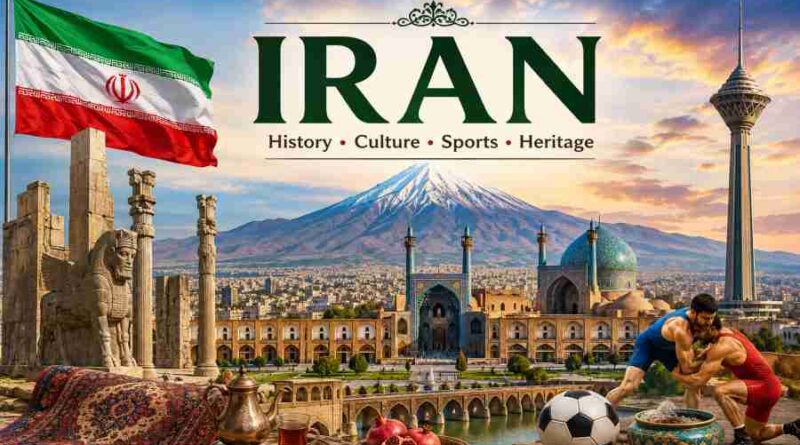
Iran is one of the oldest civilizations in the world, known for its rich heritage, stunning architecture, ancient empires, and deep cultural traditions. Located in Western Asia, Iran has played a significant role in shaping human history for thousands of years. Formerly known as Persia, the country is famous for its poetry, art, cuisine, scientific contributions, and historical landmarks. Today, Iran remains an important nation in the Middle East with a unique blend of tradition and modernity.
Table of Contents
History of Iran
Iran’s history stretches back thousands of years. Archaeological evidence suggests that humans have lived in the region for over 100,000 years. The earliest known civilizations in the area emerged around 3000 BCE. The powerful Persian Empire, established by the Achaemenid dynasty under Cyrus the Great, became one of the largest empires in ancient history.
Throughout history, Iran witnessed the rise and fall of several great dynasties, including the Medes, Parthians, and Sassanids. In the 7th century, Islamic influence spread across the region, profoundly shaping Iranian society and culture. Despite various invasions and political changes, Iran preserved much of its unique Persian identity.
The country underwent significant transformation during the 20th century, culminating in the Iranian Revolution of 1979, which established the Islamic Republic of Iran. Today, Iran remains a nation with a strong sense of historical continuity and national pride.
Geography and Climate
Iran covers approximately 1.6 million square kilometers, making it one of the largest countries in Asia. It shares borders with several countries, including Iraq, Turkey, Afghanistan, Pakistan, Armenia, Azerbaijan, and Turkmenistan. The country also has coastlines along the Caspian Sea and the Persian Gulf.
Iran’s landscape is highly diverse, featuring mountain ranges, deserts, fertile plains, forests, and coastal regions. The climate varies from snowy winters in mountainous areas to hot and dry conditions in desert regions.
Culture and Traditions
Iranian culture is among the oldest and most influential cultures in the world. Persian traditions have significantly influenced neighboring regions and civilizations throughout history. Iranian culture is known for its hospitality, respect for family values, and appreciation of literature and art.
Poetry holds a special place in Iranian society. Famous Persian poets such as Hafez, Rumi, and Ferdowsi continue to inspire readers worldwide.
Traditional Persian carpets, miniature paintings, calligraphy, and architecture are celebrated globally for their beauty and craftsmanship. Historic cities such as Tehran, Isfahan, and Shiraz showcase remarkable cultural heritage.
Language and Religion
The official language of Iran is Persian (Farsi), although many regional languages and dialects are spoken across the country. Persian literature is considered one of the richest literary traditions in the world.
Islam is the official religion, with the majority of Iranians following the Shia branch of Islam. Iran is also home to smaller communities of Christians, Jews, and Zoroastrians.
Sports in Iran
Sports are an important part of Iranian life. Traditional wrestling is often regarded as the country’s national sport and has deep cultural roots. Iranian wrestlers have won numerous international championships and Olympic medals. Weightlifting and martial arts are also highly popular.
Football (soccer) is the most popular modern sport in Iran. The national football team has achieved considerable success in Asian competitions and has qualified for multiple FIFA World Cups. Volleyball, basketball, and athletics have also gained significant popularity in recent decades.
Interestingly, many historians believe that the sport of polo originated in ancient Persia, highlighting Iran’s long-standing contribution to global sports culture.
Economy of Iran
Iran possesses some of the world’s largest oil and natural gas reserves. Energy exports have long been a major contributor to the national economy. In addition to petroleum, Iran produces agricultural products, textiles, automobiles, and industrial goods.
The country’s economy has faced challenges due to international sanctions and global market fluctuations, but Iran continues to maintain significant economic importance within the region.
Food and Cuisine
Iranian cuisine is famous for its rich flavors, aromatic spices, and balanced use of herbs. Popular dishes include kebabs, saffron rice, stews, and various bread varieties.
Meals often feature ingredients such as saffron, pomegranate, pistachios, walnuts, and fresh herbs. Tea plays an important role in social gatherings and hospitality traditions throughout the country.
Key Facts About Iran
- Official Name: Islamic Republic of Iran
- Capital City: Tehran
- Official Language: Persian (Farsi)
- Currency: Iranian Rial
- Population: Over 87 million people (estimated)
- Largest Religion: Shia Islam
- Former Name: Persia
- Famous Sport: Wrestling and Football
- Known For: Persian Empire, poetry, carpets, architecture, and oil reserves
- Highest Mountain: Mount Damavand
Interesting Facts
- Iran is home to one of the world’s oldest continuous civilizations.
- The country was historically known as Persia until 1935.
- Persian carpets are among the most famous handmade carpets in the world.
- Polo is believed to have originated in ancient Persia.
- Iran has a rich literary tradition spanning more than a thousand years.
- The country contains numerous UNESCO World Heritage Sites.
- Wrestling remains one of the most respected sports in Iranian society.
Summary
Iran is a nation where ancient history meets modern life. From the grandeur of the Persian Empire to its enduring cultural traditions, Iran offers a fascinating story of resilience, creativity, and influence. Its contributions to literature, architecture, science, sports, and art have left a lasting impact on global civilization. Understanding Iran’s history, culture, and achievements helps us appreciate the richness of one of the world’s most remarkable countries.
Also Check: General Knowledge