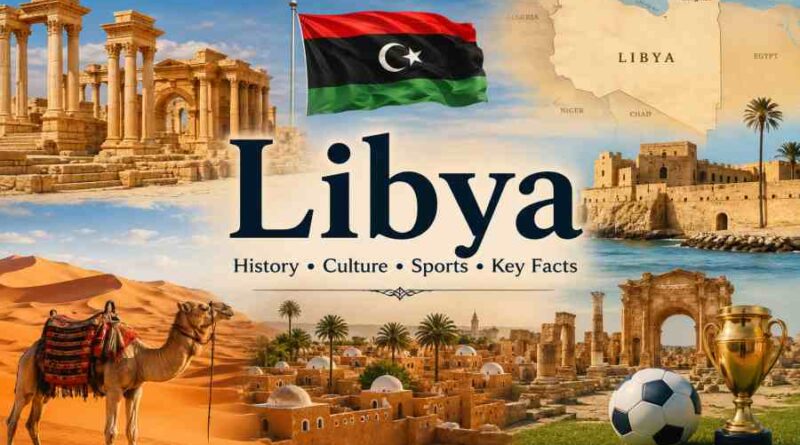
Libya – History, Culture, Sports and Fascinating Facts About North Africa’s Hidden Gem
Explore Libya’s history, culture, sports, geography, economy and key facts. Discover what makes Libya a unique and important nation in North Africa.
Libya
Libya is a fascinating country located in North Africa along the Mediterranean Sea. Known for its vast deserts, ancient civilizations, rich cultural heritage, and strategic location, Libya has played an important role in regional and global history for centuries. Despite modern challenges, the country remains a land of historical treasures, unique traditions, and natural beauty.
Table of Contents
Introduction to Libya
Libya is bordered by Egypt to the east, Sudan to the southeast, Chad and Niger to the south, Algeria to the west, and Tunisia to the northwest. The country has one of the longest coastlines on the Mediterranean Sea in Africa. Covering approximately 1.76 million square kilometers, Libya is the fourth-largest country in Africa.
Capital: Tripoli
Official Language: Arabic
Currency: Libyan Dinar (LYD)
Population: Around 7 million people
Continent: Africa
Most of Libya’s land area is covered by the Sahara Desert, making it one of the driest countries in the world.
History of Libya
Libya’s history dates back thousands of years and includes influences from numerous civilizations.
Ancient Era
The region was inhabited by Berber tribes long before foreign powers arrived. Ancient Phoenicians established trading settlements along the coast, while the Greeks founded colonies in eastern Libya around the 7th century BCE.
Later, the Romans incorporated much of Libya into their empire. During Roman rule, cities such as Leptis Magna became important centers of trade and culture. Today, these ancient ruins are among the best-preserved Roman archaeological sites in the world.
Islamic Influence
In the 7th century CE, Arab armies brought Islam to Libya. Over time, Arabic language and Islamic traditions became deeply rooted in Libyan society and remain dominant today.
Ottoman and Italian Rule
Libya became part of the Ottoman Empire in the 16th century. In 1911, Italy invaded and colonized the country. Italian rule lasted until World War II and left a lasting impact on infrastructure and urban development.
Independence
Libya gained independence on December 24, 1951, becoming the Kingdom of Libya under King Idris I. It was one of the first African nations to gain independence after World War II.
Modern Libya
In 1969, Muammar Gaddafi led a military coup and ruled Libya for more than four decades. In 2011, a popular uprising during the Arab Spring led to the end of his government. Since then, Libya has faced political and security challenges while working toward stability and development.
Geography and Climate
Libya’s landscape is dominated by the Sahara Desert, which covers more than 90% of the country. Despite the arid environment, the northern coastal region enjoys a Mediterranean climate with mild winters and warm summers.
Major geographical features include:
- Sahara Desert
- Mediterranean coastline
- Jebel Akhdar (Green Mountain region)
- Sand seas and dunes
- Oases such as Ghadames and Kufra
The country’s climate varies from Mediterranean in the north to extremely hot and dry desert conditions in the south.
Culture of Libya
Libyan culture reflects a blend of Arab, Berber, African, Mediterranean, and Islamic influences.
Language and Religion
Arabic is the official language and is spoken throughout the country. Berber languages are also used in some communities.
Islam is the predominant religion, and Islamic traditions play a significant role in daily life, social customs, and national celebrations.
Traditional Clothing
Traditional Libyan clothing is designed to suit the desert climate. Men often wear loose robes and head coverings, while women wear modest traditional garments that vary by region.
Music and Dance
Libyan music combines Arab and African influences. Traditional instruments include drums, flutes, and stringed instruments. Folk dances are often performed during weddings, festivals, and community celebrations.
Cuisine
Libyan cuisine is rich in flavor and influenced by Mediterranean and Arab cooking traditions.
Popular Libyan dishes include:
- Couscous
- Bazin (a traditional barley dough dish)
- Shorba (soup)
- Grilled lamb
- Dates and honey-based desserts
Tea is a popular beverage and is often served as a sign of hospitality.
Sports in Libya
Sports are an important part of Libyan society, with football being the most popular sport.
Football
Football attracts passionate fans across the country. The Libyan national football team competes in African and international tournaments. Domestic football clubs also enjoy strong support.
Other Popular Sports
Besides football, Libyans participate in:
- Basketball
- Volleyball
- Athletics
- Handball
- Martial arts
Desert racing and traditional equestrian activities are also enjoyed in some regions.
Economy of Libya
Libya possesses some of Africa’s largest oil reserves, making petroleum the backbone of its economy.
Major economic sectors include:
- Oil and natural gas
- Agriculture
- Trade
- Construction
- Services
The country’s oil wealth has significantly contributed to national income. However, economic growth has often been affected by political instability and fluctuations in global oil prices.
Tourism and Famous Attractions
Although tourism remains limited compared to some neighboring countries, Libya contains remarkable historical and natural attractions.
Leptis Magna
One of the most impressive Roman cities in the world, featuring temples, theaters, and marketplaces.
Sabratha
An ancient Roman city known for its magnificent theater and archaeological remains.
Ghadames
Often called the “Pearl of the Desert,” this oasis town is famous for its traditional architecture and historic significance.
Sahara Desert
The vast desert landscape offers spectacular dunes, rock formations, and breathtaking scenery.
Education in Libya
Education is highly valued in Libya. Primary and secondary education are generally free, and the government has historically invested in literacy and educational development.
Major universities offer programs in engineering, medicine, science, and humanities. Educational reforms continue to be an important part of national development efforts.
Key Facts About Libya
- Libya is the fourth-largest country in Africa.
- More than 90% of its territory is desert.
- Tripoli is the capital and largest city.
- The country has one of Africa’s largest proven oil reserves.
- Leptis Magna is considered one of the best-preserved Roman cities in the world.
- Arabic is the official language.
- Islam is the dominant religion.
- Libya gained independence in 1951.
- The Mediterranean Sea borders the country’s northern coast.
- The Sahara Desert shapes much of Libya’s geography and lifestyle.
Summary
Libya is a country of remarkable contrasts, where ancient Roman ruins stand beside vast desert landscapes and centuries-old traditions coexist with modern aspirations. Its rich history, diverse culture, strategic location, and abundant natural resources make it one of North Africa’s most intriguing nations. Understanding Libya’s heritage and achievements provides valuable insight into the history and culture of the wider African and Arab worlds.
Also Check: General Knowledge