Mongolia – History, Culture, Traditional Sports and Fascinating Facts
Explore Mongolia’s rich history, unique nomadic culture, traditional sports, vast landscapes and key facts that make this Asian nation remarkable.
Mongolia
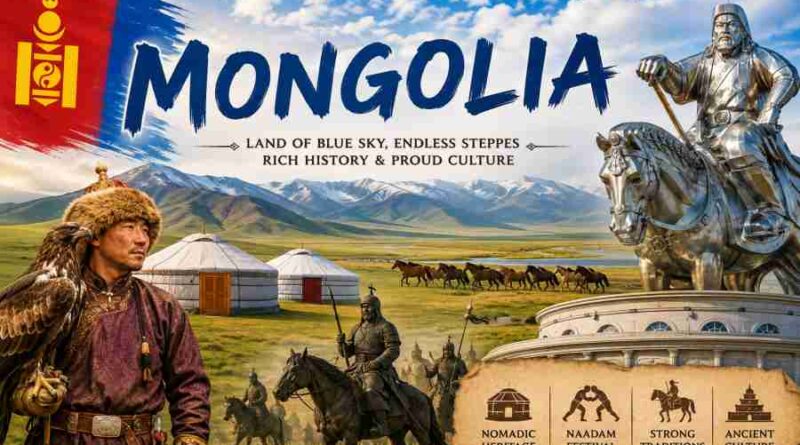
Mongolia is a vast and beautiful country located in East and Central Asia. Known for its endless grasslands, nomadic lifestyle, and the legacy of the great ruler Genghis Khan, Mongolia has a rich history and unique cultural identity. Despite being one of the least densely populated countries in the world, it has played a significant role in world history and continues to preserve its traditions while embracing modern development.
Table of Contents
History of Mongolia
The history of Mongolia dates back thousands of years. Ancient tribes inhabited the region long before the rise of the Mongol Empire. The most significant period in Mongolian history began in the 13th century when Genghis Khan united various nomadic tribes and established the powerful Mongol Empire in 1206.
Under his leadership and that of his successors, the empire expanded across Asia and Europe, becoming the largest contiguous land empire in history. The Mongol Empire connected different civilizations through trade, communication, and cultural exchange.
After the empire declined, Mongolia came under the influence of neighboring powers, including the Qing Dynasty of China. In 1921, Mongolia declared independence with support from the Soviet Union. It became the Mongolian People’s Republic and remained closely aligned with the Soviet Union until democratic reforms were introduced in 1990. Today, Mongolia is a democratic nation with a growing economy and strong national identity.
Geography and Climate
Mongolia is a landlocked country bordered by Russia to the north and China to the south. It covers approximately 1.56 million square kilometers, making it one of the largest countries in Asia.
The country is famous for the Gobi Desert, vast steppes, mountains, and forests. Mongolia experiences an extreme continental climate, with very cold winters and warm summers. Some regions can experience temperatures below -30°C during winter. The capital city, Ulaanbaatar, is often regarded as one of the coldest capital cities in the world.
Culture and Traditions
Mongolian culture is deeply influenced by its nomadic heritage. Even today, many families live in traditional portable homes called gers, also known as yurts. These circular tents are designed to withstand harsh weather conditions and can be easily moved from place to place.
Respect for nature, family values, and hospitality are important aspects of Mongolian culture. Visitors are often welcomed warmly and offered food and drinks as a sign of friendship.
Traditional clothing known as the “Deel” is still worn during festivals and special occasions. The colorful garments reflect Mongolia’s cultural pride and regional diversity.
Music and storytelling also play a vital role in Mongolian society. Traditional throat singing, known as Khoomei, is a unique musical art form in which singers produce multiple tones simultaneously.
Language and Religion
The official language of Mongolia is Mongolian, written primarily in the Cyrillic script. Efforts are also being made to preserve and promote the traditional Mongolian script.
The dominant religion is Tibetan Buddhism, which has influenced Mongolian culture for centuries. Many monasteries, temples, and religious festivals remain important parts of daily life. Some people also practice Shamanism, one of the region’s oldest spiritual traditions.
Traditional Mongolian Food
Mongolian cuisine is heavily influenced by the country’s climate and nomadic lifestyle. Meat and dairy products are common ingredients.
Popular dishes include:
- Buuz (steamed meat dumplings)
- Khuushuur (fried meat pastries)
- Boodog (meat cooked with hot stones)
- Airag (fermented mare’s milk)
Food in Mongolia is generally simple, nutritious, and designed to provide energy for life in harsh environments.
Sports in Mongolia
Sports are an important part of Mongolian culture. The country’s most famous sporting event is the Naadam Festival, held every year during July.
Naadam celebrates the “Three Manly Games”:
Wrestling
Mongolian wrestling is the most popular traditional sport. It has been practiced for centuries and remains a source of national pride.
Horse Racing
Children often participate as jockeys in long-distance horse races that showcase Mongolia’s strong equestrian traditions.
Archery
Archery has deep historical roots dating back to the era of the Mongol Empire and remains a key part of cultural celebrations.
In modern times, Mongolia has also achieved success in judo, boxing, wrestling, and weightlifting at international competitions, including the Olympic Games.
Economy of Mongolia
Mongolia’s economy relies heavily on mining, agriculture, and livestock farming. The country possesses significant reserves of coal, copper, gold, and other minerals.
Livestock remains an important part of rural life, with millions of sheep, goats, horses, cattle, and camels raised across the country.
In recent years, Mongolia has focused on economic diversification, infrastructure development, and international trade partnerships to support long-term growth.
Wildlife and Nature
Mongolia is home to diverse wildlife despite its harsh climate. Some notable animals include:
- Snow leopards
- Wild Bactrian camels
- Mongolian gazelles
- Wolves
- Golden eagles
The country contains several national parks and protected areas that help conserve its unique ecosystems. Nature tourism has become increasingly popular among travelers seeking untouched landscapes and outdoor adventures.
Key Facts About Mongolia
- Capital: Ulaanbaatar
- Continent: Asia
- Population: Approximately 3.5 million people
- Official Language: Mongolian
- Currency: Mongolian Tögrög
- Government: Parliamentary Republic
- Largest Desert: Gobi Desert
- National Festival: Naadam Festival
- Famous Historical Figure: Genghis Khan
- One of the least densely populated countries in the world
Summary
Mongolia is a nation where ancient traditions and modern progress exist side by side. From the legendary achievements of Genghis Khan to the vibrant celebrations of the Naadam Festival, the country offers a fascinating blend of history, culture, and adventure. Its vast landscapes, nomadic heritage, unique sports, and rich cultural traditions make Mongolia one of the most remarkable countries in Asia. Whether exploring the sweeping steppes, learning about its imperial past, or experiencing its warm hospitality, Mongolia leaves a lasting impression on everyone who discovers it.
Also Check: General Knowledge