
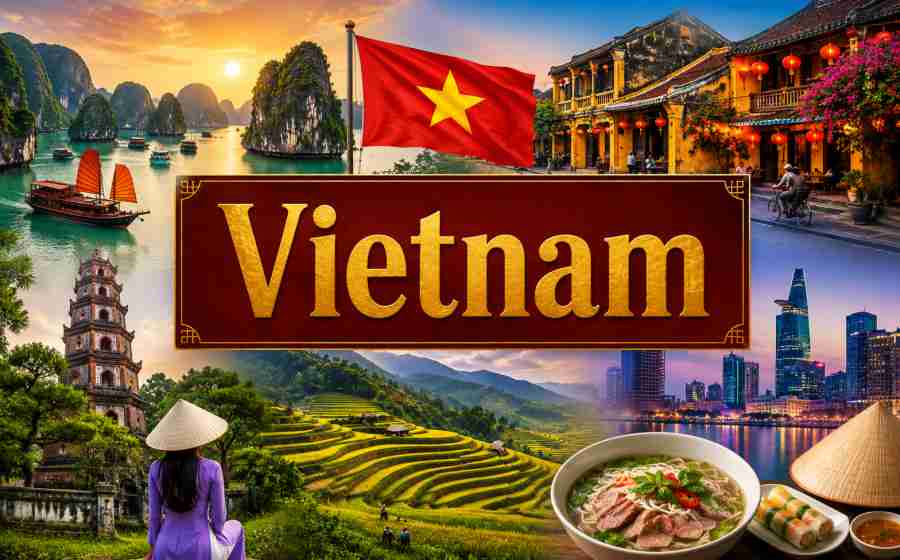
Vietnam – History, Culture, Sports and Fascinating Facts About the Land of the Dragon
Discover Vietnam’s rich history, vibrant culture, popular sports, famous landmarks, economy, traditions and key facts about this dynamic Asian nation.
Vietnam
Vietnam is one of Southeast Asia’s most fascinating countries, known for its rich history, vibrant culture, stunning natural landscapes, and remarkable economic growth. Located on the eastern coast of the Indochinese Peninsula, Vietnam attracts millions of visitors every year with its beautiful beaches, ancient temples, bustling cities, and delicious cuisine. The country has overcome centuries of foreign rule and conflict to emerge as a dynamic nation with a strong cultural identity and growing global influence.
Today, Vietnam is recognized for its hardworking people, diverse traditions, and impressive achievements in education, sports and economic development.
Table of Contents
History of Vietnam
Vietnam has a long and complex history that spans thousands of years. The earliest Vietnamese civilizations developed around the fertile Red River Delta. Ancient kingdoms such as Van Lang laid the foundation for Vietnamese culture and society.
For over a thousand years, Vietnam experienced periods of Chinese rule, which significantly influenced its language, administration, and culture. However, the Vietnamese people continuously fought to preserve their identity and eventually gained independence in the 10th century.
During the 19th century, Vietnam became part of French Indochina under colonial rule. French influence introduced modern infrastructure and education but also led to resistance movements seeking independence.
After World War II, Vietnam declared independence under the leadership of Ho Chi Minh. This eventually led to conflicts including the First Indochina War and the Vietnam War. The war ended in 1975 with the reunification of North and South Vietnam, creating the Socialist Republic of Vietnam.
Since economic reforms introduced in 1986, Vietnam has experienced rapid growth and modernization, becoming one of Asia’s fastest-growing economies.
Geography and Climate
Vietnam is located in Southeast Asia and shares borders with China, Laos, and Cambodia. It also has a long coastline along the South China Sea.
The country covers approximately 331,000 square kilometers and features diverse landscapes including:
- Mountain ranges
- River deltas
- Tropical forests
- Coastal plains
- Islands and beaches
Vietnam experiences a tropical and subtropical climate. Weather conditions vary by region, with the north having cooler winters while the south remains warm throughout the year.
Some famous natural attractions include:
- Ha Long Bay
- Mekong Delta
- Phong Nha-Ke Bang National Park
- Sapa Mountains
These locations showcase Vietnam’s extraordinary natural beauty.
Culture of Vietnam
Vietnamese culture reflects a blend of indigenous traditions and influences from China, France, and neighboring Southeast Asian countries.
Family plays a central role in Vietnamese society. Respect for elders, strong family bonds, and community values remain important aspects of daily life.
Traditional arts include:
- Water puppet theater
- Folk music
- Traditional dance
- Handicrafts and embroidery
Vietnamese architecture ranges from ancient pagodas and temples to French colonial buildings and modern skyscrapers.
The Vietnamese language is the official language and uses the Latin-based Vietnamese alphabet known as Quốc Ngữ.
Festivals and Traditions
Vietnam celebrates numerous colorful festivals throughout the year.
Tet Festival
Tet, or the Vietnamese Lunar New Year, is the country’s most important festival. Families gather to honor ancestors, exchange gifts, and enjoy traditional foods.
Mid-Autumn Festival
This festival is especially popular among children and features lantern parades, cultural performances, and mooncakes.
Hung Kings Festival
The event honors Vietnam’s legendary founders and highlights national pride and heritage. These celebrations help preserve Vietnamese traditions and strengthen community ties.
Vietnamese Cuisine
Vietnamese cuisine is famous worldwide for its fresh ingredients, balanced flavors, and healthy cooking methods.
Popular dishes include:
- Pho (noodle soup)
- Banh Mi (Vietnamese sandwich)
- Spring Rolls
- Bun Cha
- Com Tam
Rice is a staple food and appears in many traditional dishes. Fresh herbs, vegetables, seafood, and aromatic spices contribute to the unique taste of Vietnamese food. Street food culture is also an important part of everyday life, attracting both locals and tourists.
Sports in Vietnam
Sports are becoming increasingly popular across Vietnam. Football (soccer) is the most widely followed sport and enjoys tremendous support from fans.
The Vietnam national football team has achieved notable success in regional competitions, particularly in Southeast Asia.
Other popular sports include:
- Volleyball
- Badminton
- Martial arts
- Basketball
- Athletics
Traditional martial arts such as Vovinam are an important part of Vietnamese heritage. Vovinam combines self-defense techniques with physical fitness and discipline.
Vietnam regularly participates in international sporting events including the Olympic Games, Asian Games, and Southeast Asian Games.
Economy of Vietnam
Vietnam has transformed into one of the fastest-growing economies in Asia.
Major sectors include:
- Manufacturing
- Agriculture
- Tourism
- Technology
- Exports
The country is a leading exporter of:
- Rice
- Coffee
- Seafood
- Textiles
- Electronics
Foreign investment and economic reforms have contributed significantly to Vietnam’s development. Major cities such as Hanoi and Ho Chi Minh City have become important centers for business and innovation.
Education and Innovation
Vietnam places a strong emphasis on education. Literacy rates are high, and the government continues to invest in schools, universities, and research institutions.
The country has gained international recognition for strong student performance in science and mathematics. Technology and digital innovation are also growing rapidly, helping Vietnam strengthen its position in the global economy.
Tourism in Vietnam
Tourism plays a vital role in Vietnam’s economy. Visitors are drawn by the country’s natural beauty, cultural heritage, and affordable travel experiences.
Popular tourist destinations include:
- Hanoi
- Ho Chi Minh City
- Ha Long Bay
- Hoi An
- Hue
- Da Nang
- Nha Trang
Travelers can explore ancient temples, historic sites, scenic mountains, and beautiful beaches while experiencing authentic Vietnamese hospitality.
Key Facts About Vietnam
| Fact | Information |
|---|---|
| Official Name | Socialist Republic of Vietnam |
| Capital | Hanoi |
| Largest City | Ho Chi Minh City |
| Continent | Asia |
| Region | Southeast Asia |
| Official Language | Vietnamese |
| Currency | Vietnamese Dong (VND) |
| Government | Socialist Republic |
| Population | Over 100 million |
| National Flower | Lotus |
| Major Religion | Buddhism and Folk Religions |
| Independence | 1945 (Declared) |
Summary
Vietnam is a nation rich in history, culture, and natural beauty. From ancient kingdoms and traditional festivals to modern cities and economic success, the country offers a remarkable blend of heritage and progress. Its resilient people, delicious cuisine, growing sports culture, and breathtaking landscapes continue to attract global attention. As Vietnam advances into the future, it remains deeply connected to the traditions and values that have shaped its unique identity for centuries.
Also Check: General Knowledge