Famous Folk Dances of Bihar – Rich Cultural Heritage and Traditions
Explore Famous Folk Dances of Bihar, their history, traditions, costumes, music, cultural significance and role in preserving Bihar’s rich heritage.
Famous Folk Dances of Bihar
Bihar is one of India’s oldest and culturally richest states. Known for its ancient history, religious significance, festivals, literature, and art, Bihar also has a vibrant tradition of folk dances. These dances are deeply connected with the everyday lives, customs, festivals, and beliefs of the people. They reflect the joy, devotion, bravery, and social harmony that have been part of Bihar’s culture for centuries.
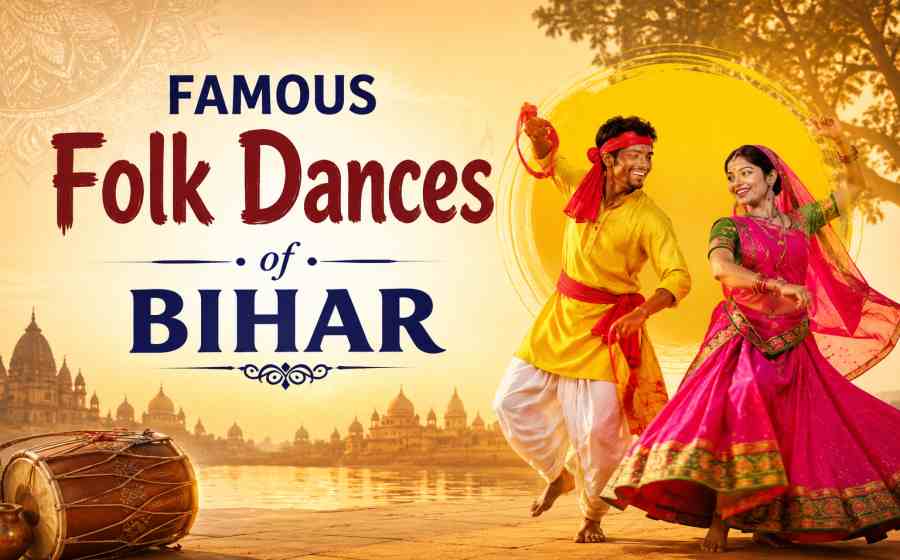
The folk dances of Bihar are usually performed during festivals, weddings, harvest seasons, religious ceremonies, and community celebrations. Most of these dances are accompanied by traditional musical instruments such as the dholak, nagara, manjira, harmonium, flute, and shehnai. Colorful costumes, expressive movements, and energetic performances make these dances an important part of Bihar’s cultural identity.
Table of Contents
List of Famous Folk Dances
1. Jat-Jatin Dance
Jat-Jatin is one of the most popular folk dances of North Bihar, especially in the Mithila and Koshi regions. It is generally performed during the monsoon season by married men and women.
The dance narrates the emotional story of a husband (Jat) and wife (Jatin), who are separated due to poverty, migration, or other social circumstances. Through songs and graceful movements, the performers express love, separation, hope, and reunion.
Key Features:
- Popular in Mithila region
- Performed during the rainy season
- Focuses on family life and emotional relationships
- Includes traditional Maithili songs
2. Jhijhiya Dance
Jhijhiya is a famous ritual dance performed mainly by women during the festival of Durga Puja. It is especially popular in the Mithila region.
Women dance while balancing decorated earthen pots with several holes on their heads. A lamp is placed inside the pot, creating a beautiful glowing effect during night performances. The dance is believed to protect the village from evil spirits and natural disasters.
Key Features:
- Performed by women
- Associated with Durga worship
- Earthen pots with lamps are used
- Symbolizes devotion and protection
3. Bidesia Dance
Bidesia is one of Bihar’s most famous folk theatre and dance traditions. It was popularized by the legendary playwright Bhikhari Thakur, often called the “Shakespeare of Bihar.”
The performances combine dance, music, acting, and storytelling. The stories usually highlight social issues such as migration, poverty, women’s struggles, dowry, and social inequality while entertaining the audience.
Key Features:
- Created by Bhikhari Thakur
- Mix of dance, drama, and music
- Highlights social awareness
- Popular in Bhojpur region
4. Domkach Dance
Domkach is a joyful folk dance performed during marriage ceremonies. Women usually perform this dance in groups after the wedding rituals begin.
The dance is accompanied by humorous songs, playful conversations, and rhythmic clapping. It strengthens social bonds and brings happiness to family celebrations.
Key Features:
- Wedding dance
- Mostly performed by women
- Full of fun and entertainment
- Popular across rural Bihar
5. Paika Dance
Paika is a traditional martial folk dance that represents courage, discipline, and warfare. It originated from the warrior communities of Bihar.
The performers wear traditional warrior costumes and carry swords and shields while dancing. The movements resemble combat techniques and display physical strength and bravery.
Key Features:
- Martial dance
- Uses swords and shields
- Represents bravery and valor
- Performed during cultural festivals
6. Kajari Dance
Kajari dance is associated with the arrival of the monsoon season. It is mainly performed by women who sing beautiful Kajari songs expressing love, longing, and the beauty of nature.
The dance reflects the emotional connection between human life and seasonal changes.
Key Features:
- Monsoon dance
- Focuses on love and nature
- Accompanied by Kajari folk songs
- Popular in rural Bihar
7. Sohar Dance
Sohar dance celebrates the birth of a child, especially the birth of a son in traditional families. Women gather together to sing Sohar songs and perform simple dance movements to express happiness and blessings.
Though modern society celebrates the birth of every child equally, Sohar remains an important cultural tradition in Bihar.
Key Features:
- Celebrates childbirth
- Women-centered performance
- Includes traditional blessing songs
- Symbolizes family joy
8. Karma Dance
Karma dance is performed by tribal communities living in parts of southern Bihar. It is celebrated during the Karma festival, dedicated to the worship of the Karma tree.
Men and women dance together in circles while singing traditional songs accompanied by drums and other instruments.
Key Features:
- Tribal folk dance
- Celebrated during Karma festival
- Represents prosperity and unity
- Community participation
9. Chhau Dance (Border Regions)
Although Chhau dance is mainly associated with Jharkhand, Odisha, and West Bengal, some border areas of southern Bihar also appreciate and perform this dance during cultural events.
Chhau combines martial arts, storytelling, and colorful masks to depict stories from the Ramayana, Mahabharata, and other Indian epics.
Key Features:
- Semi-classical folk dance
- Uses elaborate masks
- Based on mythological stories
- Combines dance and martial movements
Traditional Costumes
The costumes vary according to the dance form and region.
- Women generally wear colorful sarees with traditional jewelry, bangles, nose rings, and flowers.
- Men wear dhoti-kurta, turbans, and sometimes warrior attire in martial dances like Paika.
- Bright colors and traditional ornaments enhance the beauty of the performances.
Musical Instruments Used
Music is an essential part of Bihar’s folk dances. Some commonly used instruments include:
- Dholak
- Nagara
- Manjira
- Harmonium
- Flute
- Shehnai
- Kartal
- Jhanjh
The rhythm of these instruments creates energy and excitement during performances.
Cultural Importance
Folk dances of Bihar are more than just entertainment. They preserve the state’s traditions, language, history, and values. These dances teach younger generations about their cultural roots and strengthen community relationships.
Today, many of these folk dances are performed during state festivals, school programs, cultural fairs, tourism events, and national celebrations. Government organizations and cultural institutions are also working to preserve these traditional art forms.
Interesting Facts
- Bihar has different folk dances for weddings, festivals, childbirth, and harvest celebrations.
- Bhikhari Thakur played a major role in promoting Bidesia dance and theatre.
- Jhijhiya dance is famous for its beautifully decorated illuminated pots.
- Paika dance showcases Bihar’s ancient martial traditions.
- Most folk dances are accompanied by live singing rather than recorded music.
- Folk dances help preserve regional languages such as Maithili, Bhojpuri, Magahi, and Angika.
Summary
The famous folk dances of Bihar beautifully showcase the state’s rich cultural heritage, traditions, and social values. Whether it is the emotional storytelling of Jat-Jatin, the devotional spirit of Jhijhiya, the social message of Bidesia, the festive joy of Domkach, or the bravery displayed in Paika, each dance has its own unique identity.
These traditional dance forms continue to connect people with their roots while promoting Bihar’s cultural richness across India and the world. Preserving and celebrating these folk dances ensures that future generations can continue to experience the vibrant artistic heritage of Bihar.
Also Check: Bihar GK