Croatia – History, Culture, Famous Landmarks, Sports and Key Facts
Discover Croatia – History, Culture, Sports and Key Facts, including geography, traditions, famous landmarks, sports achievements and interesting facts.
Croatia
Croatia is a beautiful country located in Southeast Europe along the eastern coast of the Adriatic Sea. Known for its stunning coastline, ancient cities, rich cultural heritage, and remarkable sporting achievements, Croatia has become one of Europe’s most popular travel destinations. Although relatively small in size, the country has played an important role throughout European history and has preserved its traditions while embracing modern development.
From medieval castles and Roman ruins to crystal-clear beaches and national parks, Croatia offers a unique combination of natural beauty and historical significance. The country is also recognized worldwide for producing exceptional athletes, especially in football, tennis, basketball, and water sports.
Table of Contents
Geography of Croatia
Croatia covers an area of approximately 56,594 square kilometers and shares borders with Slovenia, Hungary, Serbia, Bosnia and Herzegovina, and Montenegro. The country has more than 1,200 islands, though only a small number are permanently inhabited.
The capital city is Zagreb, which serves as the country’s political, cultural, and economic center. Croatia enjoys a Mediterranean climate along the coast, while inland regions experience a continental climate with warm summers and cold winters.
Some of Croatia’s most famous natural attractions include:
- Plitvice Lakes National Park
- Krka National Park
- Adriatic Sea coastline
- Dinaric Alps
- Blue Cave on Biševo Island
The country’s diverse landscape supports tourism, agriculture, and outdoor recreation throughout the year.
A Brief History of Croatia
Croatia’s history dates back thousands of years. Ancient civilizations such as the Illyrians first inhabited the region before it became part of the Roman Empire. The Romans built impressive cities, roads, and monuments, many of which still exist today.
During the 7th century, Slavic tribes settled in the area and eventually established the Croatian kingdom. In 925 AD, King Tomislav became the first recognized king of Croatia, marking the beginning of an independent Croatian kingdom.
Over the centuries, Croatia came under the influence or control of several powerful empires, including:
- The Kingdom of Hungary
- The Venetian Republic
- The Ottoman Empire
- The Habsburg Monarchy
- Austria-Hungary
After World War I, Croatia became part of the Kingdom of Yugoslavia. Following World War II, it became one of the republics of socialist Yugoslavia.
Croatia declared independence on 25 June 1991, leading to the Croatian War of Independence. After several years of conflict, the country gained full international recognition and gradually rebuilt its economy and infrastructure. Today, Croatia is a democratic nation and became a member of the European Union in 2013.
Croatian Culture and Traditions
Croatian culture reflects influences from Central Europe, the Mediterranean, and the Balkans. Family values, hospitality, music, and traditional celebrations remain an important part of everyday life.
Croatians celebrate numerous festivals throughout the year, including religious holidays, local fairs, music festivals, and cultural events. Folk dances performed in colorful traditional costumes continue to preserve regional customs.
Music ranges from traditional folk songs to modern pop, classical, and rock. The tamburica, a traditional string instrument, is closely associated with Croatian folk music.
Handcrafted lace, wooden toys, and decorative embroidery are also famous examples of Croatian craftsmanship.
Language and Religion
The official language of Croatia is Croatian, written using the Latin alphabet.
Most of the population follows Roman Catholic Christianity, making it the country’s largest religion. Religious traditions influence many national celebrations, festivals, and customs.
English is widely spoken in tourist destinations, making travel convenient for international visitors.
Famous Croatian Cuisine
Croatian cuisine varies from region to region.
Popular dishes include:
- Ćevapi
- Peka
- Black risotto
- Grilled seafood
- Soparnik
- Sarma
- Fresh olive oil
- Local cheeses
The Adriatic coast is particularly famous for seafood, while inland regions specialize in meat dishes and homemade pastries.
Croatia also produces excellent wines and olive oil, both of which enjoy international recognition.
Sports in Croatia
Sports are deeply rooted in Croatian society. Despite its relatively small population, Croatia consistently performs well in international competitions.
Football
Football is the country’s most popular sport. Croatia gained worldwide admiration by finishing as runners-up in the 2018 FIFA World Cup and securing third place in the 2022 FIFA World Cup.
Many Croatian footballers have played for Europe’s top clubs and inspired young athletes across the world.
Tennis
Croatia has produced several successful tennis players who have won prestigious international tournaments and represented the country in the Davis Cup.
Basketball
Basketball enjoys a long tradition, with Croatian players achieving success in both European leagues and the NBA.
Water Sports
With its long Adriatic coastline, Croatia is an ideal destination for:
- Sailing
- Rowing
- Water polo
- Diving
- Kayaking
Croatia’s water polo teams have consistently ranked among the world’s strongest.
Economy of Croatia
Croatia has a mixed economy based on tourism, manufacturing, agriculture, shipbuilding, and services.
Tourism contributes significantly to national income, attracting millions of visitors every year. Beautiful beaches, historical towns, national parks, and island destinations make Croatia one of Europe’s leading holiday destinations.
Other important industries include:
- Food processing
- Pharmaceuticals
- Information technology
- Renewable energy
- Transportation
Croatia adopted the Euro (€) as its official currency in 2023.
Education in Croatia
Education is compulsory for children and follows European educational standards. The country has several respected universities, including the University of Zagreb, one of the oldest universities in Southeast Europe. Croatia also promotes scientific research, innovation, and international academic cooperation.
Tourism and Famous Places
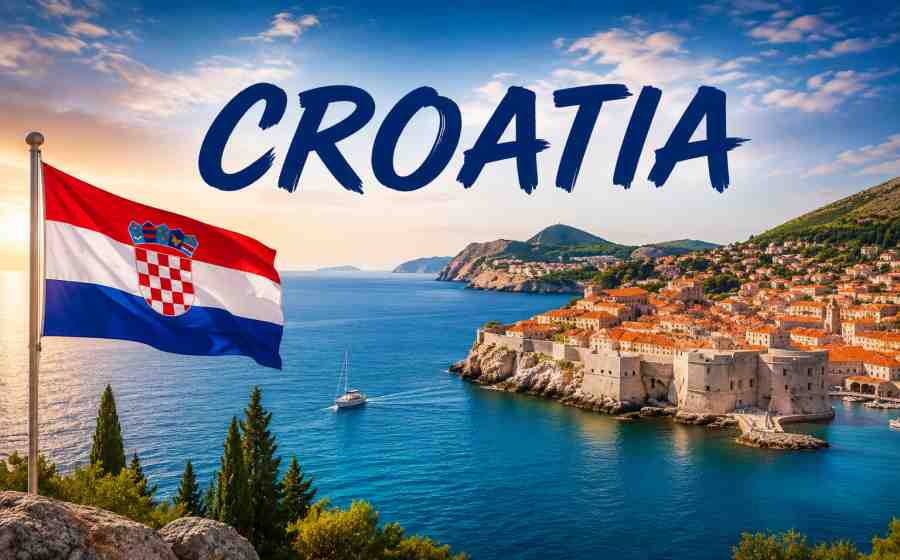
Croatia is famous for its breathtaking natural beauty and historic cities. Major tourist attractions include:
- Dubrovnik Old Town
- Split and Diocletian’s Palace
- Plitvice Lakes National Park
- Krka National Park
- Hvar Island
- Rovinj
- Zadar
- Pula Arena
Many visitors also recognize Croatia as a filming location for the popular television series Game of Thrones.
Interesting Facts About Croatia
- Croatia has more than 1,200 islands along the Adriatic Sea.
- The necktie, known as the “cravat,” originated from Croatian soldiers.
- Dubrovnik is one of the best-preserved medieval cities in Europe.
- Croatia has eight UNESCO World Heritage Sites.
- The country is home to numerous national parks and protected natural areas.
- Nikola Tesla was born in the territory of present-day Croatia.
- Croatian athletes have won medals in football, tennis, skiing, rowing, handball, and water polo.
- The Adriatic coastline stretches for thousands of kilometers, including its islands.
- Croatia is among Europe’s safest tourist destinations.
- Tourism is one of the country’s largest economic sectors.
Why Croatia Matters
Croatia is a country where history, culture, and natural beauty come together in remarkable harmony. From ancient Roman architecture and medieval towns to crystal-clear seas and world-class sporting achievements, it offers something for everyone. Its successful transition into a modern European nation while preserving its cultural heritage makes Croatia an inspiring example of resilience and progress. Whether admired for its historical significance, scenic landscapes, or international sports success, Croatia continues to capture the attention of travelers, students, and history enthusiasts across the globe.
Summary
Croatia is a vibrant European nation known for its rich history, diverse culture, stunning Adriatic coastline, and impressive sporting achievements. Its historical landmarks, UNESCO World Heritage Sites, delicious cuisine, welcoming people, and successful athletes have earned it global recognition. As a member of the European Union and a leading tourist destination, Croatia continues to preserve its traditions while embracing modern growth, making it one of the most fascinating countries in Southeast Europe.
Also Check: General Knowledge