Estonia – History, Culture, Sports, Tourist Places, Geography and Fascinating Facts
Explore Estonia through its rich history, vibrant culture, popular sports, scenic landscapes and fascinating facts that make this Baltic nation truly unique.
Estonia
Estonia is a small yet highly developed country located in Northern Europe along the eastern coast of the Baltic Sea. Despite its modest size, Estonia has gained worldwide recognition for its advanced digital society, well-preserved medieval heritage, breathtaking forests, and high quality of life. It is one of the three Baltic nations, alongside Latvia and Lithuania, and is known for blending centuries-old traditions with cutting-edge technology.
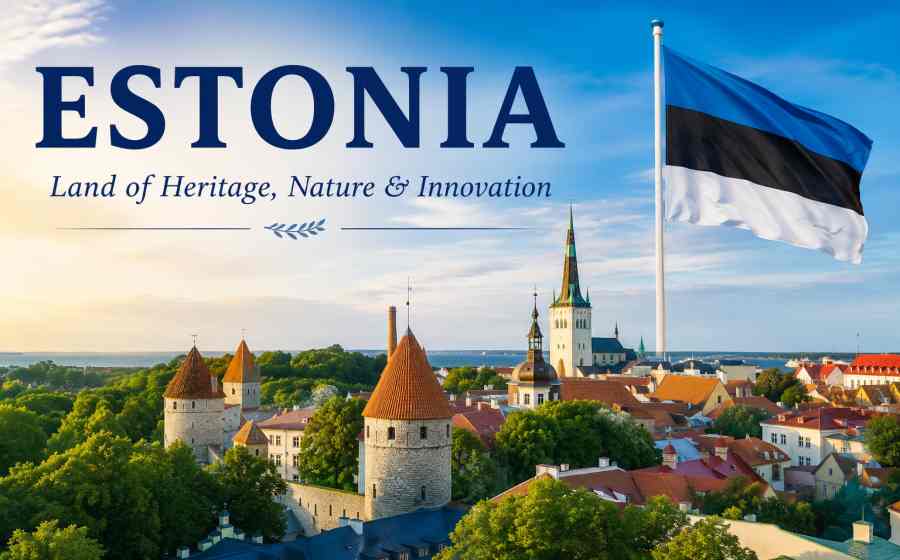
The capital city, Tallinn, is famous for its beautifully preserved medieval Old Town, which attracts visitors from around the world. Estonia is also recognized as one of the world’s most digitally connected countries, offering many public services online and even providing e-Residency to global entrepreneurs.
Table of Contents
Geography of Estonia
Estonia covers an area of approximately 45,335 square kilometers, making it one of Europe’s smaller countries. It shares borders with Latvia to the south and Russia to the east, while the Baltic Sea and the Gulf of Finland surround much of its coastline.
More than half of Estonia is covered by forests, making it one of Europe’s greenest countries. The country also has over 2,000 islands, with Saaremaa and Hiiumaa being the largest. Numerous lakes, rivers, wetlands, and national parks contribute to Estonia’s rich natural beauty. The climate is temperate, with warm summers and cold, snowy winters.
History of Estonia
Estonia has a long and fascinating history dating back thousands of years. Ancient Estonian tribes inhabited the region before foreign powers arrived during the medieval period.
In the 13th century, German crusaders conquered the area, bringing Christianity and establishing strong German influence. Over the centuries, Estonia came under the control of Denmark, Sweden, and later the Russian Empire.
Estonia declared independence on 24 February 1918 following the collapse of the Russian Empire during World War I. However, during World War II, it was occupied first by the Soviet Union, then Nazi Germany, and again by the Soviet Union.
After decades under Soviet rule, Estonia peacefully regained its independence on 20 August 1991. Since then, the nation has transformed into a prosperous democracy and joined both the European Union and NATO in 2004. Today, Estonia is considered one of Europe’s most innovative and technologically advanced countries.
People and Language
Estonia has a population of around 1.4 million people. Most residents are ethnic Estonians, while Russian is also widely spoken due to historical reasons.
The official language is Estonian, which belongs to the Finno-Ugric language family and is closely related to Finnish rather than the Indo-European languages spoken by most European nations. English is commonly spoken among younger generations, particularly in cities and tourist areas.
Government and Economy
Estonia is a parliamentary republic with a democratically elected government. It has earned an international reputation for transparency, digital governance, and efficient public administration.
The country’s economy is based on:
- Information technology
- Digital services
- Manufacturing
- Electronics
- Forestry
- Agriculture
- Tourism
- Financial services
Estonia introduced the Euro (€) as its official currency in 2011. Its technology sector has become especially important, producing globally recognized startups and innovative digital solutions.
Culture of Estonia
Estonian culture reflects influences from Nordic, German, Russian, and Baltic traditions while maintaining a unique national identity.
Music holds a special place in Estonian society. The country hosts one of the world’s largest choral festivals, the Estonian Song Festival, where thousands of singers perform together. This event symbolizes national unity and cultural pride.
Traditional handicrafts such as weaving, embroidery, wood carving, and folk costumes remain important during festivals and celebrations.
Literature, theater, and contemporary art continue to flourish, supported by a strong education system and widespread appreciation for culture.
Traditional Food of Estonia
Estonian cuisine emphasizes simple, hearty meals prepared with fresh local ingredients. Popular dishes include:
- Black rye bread
- Smoked fish
- Pork dishes
- Potatoes
- Sauerkraut
- Blood sausage
- Mushroom soup
- Barley porridge
- Dairy products
- Berry desserts
Seasonal ingredients like wild mushrooms, blueberries, lingonberries, and fresh seafood are commonly enjoyed.
Festivals and Celebrations
Estonians celebrate numerous traditional and national festivals throughout the year. Some important celebrations include:
- Independence Day (24 February)
- Midsummer Festival (Jaanipäev)
- Christmas
- New Year
- Estonian Song and Dance Festival
- Victory Day
Many festivals feature folk dancing, traditional music, bonfires, and community gatherings.
Sports in Estonia
Sports are an important part of Estonian life, with many citizens participating in outdoor and winter activities.
Popular sports include:
- Football
- Basketball
- Volleyball
- Athletics
- Cross-country skiing
- Ice hockey
- Wrestling
- Cycling
Due to its snowy winters, Estonia has produced successful athletes in skiing and other winter sports. The country has also achieved international success in athletics, fencing, and wrestling.
Education and Digital Innovation
Estonia is frequently recognized for having one of the world’s strongest education systems. Students consistently perform well in international assessments.
The country is often called the Digital Republic because nearly every government service is available online. Citizens can vote electronically, pay taxes online, access medical records digitally, and establish businesses quickly through secure internet services.
Estonia also pioneered the concept of e-Residency, allowing entrepreneurs worldwide to manage European businesses remotely.
Wildlife and Environment
Nature plays an essential role in Estonian life. Wildlife found across the country includes:
- Brown bears
- Wolves
- Lynx
- Moose
- Deer
- Foxes
- Beavers
- Seals
- Eagles
- Cranes
Protected national parks and nature reserves preserve Estonia’s forests, wetlands, islands, and coastal ecosystems. Environmental conservation remains a national priority.
Tourism in Estonia
Tourists visit Estonia for its mix of history, nature, and modern attractions. Major attractions include:
- Tallinn Old Town
- Kadriorg Palace
- Lahemaa National Park
- Saaremaa Island
- Hiiumaa Island
- Pärnu Beach
- Narva Castle
- Toompea Castle
- Medieval churches
- Scenic coastal villages
Adventure activities such as hiking, kayaking, cycling, birdwatching, and winter sports are also popular.
Interesting Facts About Estonia
- Estonia has over 2,000 islands.
- More than 50% of the country is covered by forests.
- Tallinn’s Old Town is one of Europe’s best-preserved medieval city centers.
- Estonia became one of the first countries to offer nationwide internet voting.
- Skype was originally developed by engineers working in Estonia.
- The country has one of the highest startup rates per capita in Europe.
- Estonia regained independence in 1991 after the collapse of the Soviet Union.
- The Estonian Song Festival brings together tens of thousands of singers.
- Public services are almost entirely available online.
- Estonia ranks among the world’s leading countries for digital innovation and internet freedom.
Summary
Estonia is a remarkable country where ancient traditions coexist with world-leading digital innovation. Its medieval cities, peaceful forests, vibrant cultural heritage, and forward-thinking governance make it one of Europe’s most unique destinations. From its inspiring journey to independence and commitment to education to its breathtaking landscapes and technological achievements, Estonia offers valuable lessons in resilience, sustainability, and innovation. Whether exploring its history, experiencing its festivals, or learning about its digital transformation, Estonia stands out as a nation that successfully connects its rich past with a modern and progressive future.
Also Check: General Knowledge