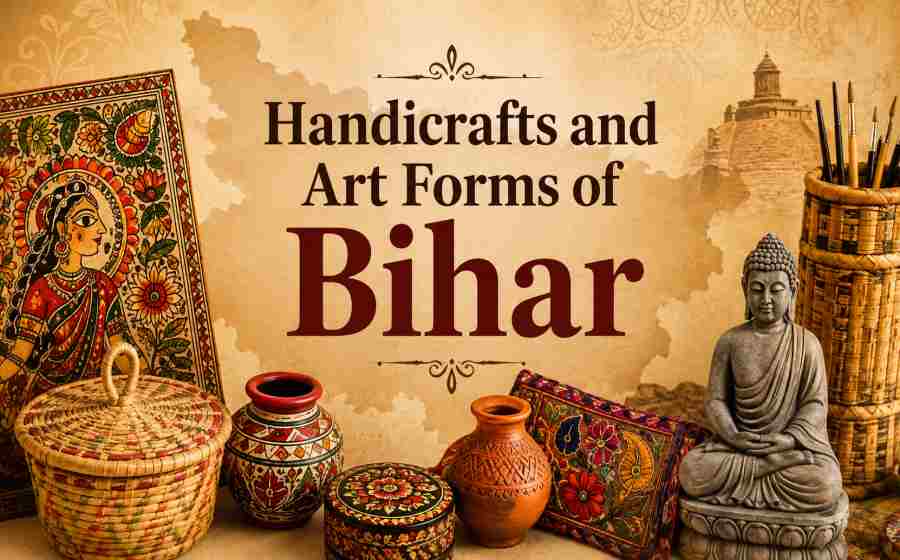
Handicrafts and Art Forms of Bihar – State’s Rich Cultural Heritage
Discover the rich handicrafts and art forms of Bihar, including Madhubani painting, Sikki craft, Sujani embroidery, Tikuli art, stone carving and more.
Handicrafts and Art Forms of Bihar
Bihar is one of India’s oldest cultural centers, known for its rich traditions, historical significance, and artistic heritage. The state’s handicrafts and folk art forms reflect centuries of creativity, religious beliefs, and local customs. Skilled artisans from different regions of Bihar continue to preserve these traditional crafts using age-old techniques passed down through generations.
From the world-famous Madhubani paintings to the delicate Sikki grass products, Bihar offers a remarkable variety of handicrafts that are admired across India and internationally. These art forms not only represent the cultural identity of Bihar but also provide employment and livelihood to thousands of artisans.
Table of Contents
Importance of Handicrafts in Bihar
Handicrafts have always played an important role in Bihar’s economy and culture. Rural families have practiced these crafts for centuries, creating products used in homes, religious ceremonies, festivals, and celebrations.
The importance of Bihar’s handicrafts includes:
- Preserving ancient traditions
- Providing employment in rural areas
- Promoting local craftsmanship
- Supporting tourism
- Showcasing Bihar’s cultural identity worldwide
Many of these crafts are now recognized nationally and internationally for their artistic excellence.
List of Handicrafts and Art Forms
1. Madhubani Painting
Madhubani Painting is the most famous art form of Bihar. It originated in the Mithila region, especially in Madhubani and Darbhanga districts.
Traditionally, women painted walls and floors of their homes during weddings and festivals using natural colors made from flowers, leaves, turmeric, charcoal, and other natural materials.
Features
- Bright natural colours
- Intricate floral and geometric patterns
- Double-line borders
- No empty spaces
- Mythological themes
- Religious symbols
Common Subjects
- Lord Rama and Sita
- Lord Krishna
- Goddess Durga
- Sun and Moon
- Nature
- Fish
- Peacock
- Tree of Life
Today, Madhubani paintings are created on paper, canvas, fabric, and various decorative items and are exported worldwide.
2. Sikki Grass Craft
Sikki craft is one of Bihar’s oldest traditional handicrafts. It is made from golden-colored Sikki grass found mainly in North Bihar.
The grass is dried, colored naturally, and woven into beautiful decorative and utility items.
Popular Products
- Baskets
- Jewellery boxes
- Decorative plates
- Dolls
- Flower vases
- Wall hangings
- Pen stands
Sikki craft is especially popular among women artisans and serves as an important source of income.
3. Sujani Embroidery
Sujani is a traditional embroidery art that originated in villages of Bihar.
Initially, old sarees and dhotis were stitched together to make quilts for newborn babies. Over time, the embroidery developed into a recognized folk art.
Characteristics
- Fine hand embroidery
- Bright colourful threads
- Animal motifs
- Birds
- Floral designs
- Village life scenes
- Religious themes
Today, Sujani embroidery is used on:
- Bedcovers
- Cushion covers
- Wall hangings
- Sarees
- Dupattas
- Bags
4. Tikuli Art
Tikuli art originated in Patna and has become one of Bihar’s most admired crafts.
Originally, Tikuli referred to decorative bindis worn by women. Later, artists transformed this style into painted artworks on hardboard and wooden surfaces.
Features
- Bright enamel colours
- Gold detailing
- Mythological stories
- Traditional Indian motifs
- Fine brushwork
Tikuli paintings are popular as decorative pieces and gifts.
5. Manjusha Art
Manjusha Art is associated with the Anga region of Bihar, especially Bhagalpur.
It is connected with the worship of Goddess Bishahari during the Bishahari festival.
Distinctive Features
- Snake motifs
- Religious stories
- Geometric borders
- Bright colours
- Human figures
Manjusha painting is considered one of Bihar’s oldest folk painting traditions.
6. Stone Carving
Stone carving is a famous handicraft of Gaya and nearby regions.
Local artisans carve black stone and sandstone into beautiful sculptures.
Popular Items
- Buddha statues
- Hindu deity idols
- Decorative sculptures
- Religious artifacts
- Temple carvings
The craftsmanship reflects Bihar’s long association with Buddhism and ancient temples.
7. Wooden Craft
Wood carving has been practiced in Bihar for generations.
Artisans create decorative and functional wooden products using traditional hand tools.
Common products include:
- Toys
- Furniture
- Religious idols
- Decorative panels
- Home décor items
These handcrafted wooden pieces are appreciated for their durability and artistic designs.
8. Bamboo and Cane Craft
Bamboo grows abundantly in many parts of Bihar, making bamboo craft an important rural industry.
Products Made
- Baskets
- Mats
- Furniture
- Storage containers
- Agricultural tools
- Decorative items
The craft is eco-friendly and supports sustainable livelihoods.
9. Lac Craft
Lac is a natural resin used to create colorful decorative products.
Bihar’s artisans prepare:
- Bangles
- Jewellery
- Decorative items
- Home décor products
The bright colours and handcrafted designs make lac products highly attractive.
10. Pottery and Terracotta
Traditional pottery remains an essential craft in Bihar.
Skilled potters produce:
- Earthen pots
- Diyas
- Water pitchers
- Decorative figurines
- Clay toys
- Religious idols
Terracotta products are especially popular during festivals such as Diwali and Chhath Puja.
Traditional Motifs Used in Bihar’s Art
Many traditional crafts share common themes inspired by religion and daily life.
Popular motifs include:
- Lotus flower
- Peacock
- Fish
- Elephant
- Sun
- Moon
- Tree of Life
- Parrots
- Geometric designs
- Village scenes
These motifs symbolize prosperity, nature, fertility, spirituality, and harmony.
Natural Colours Used Traditionally
Earlier, artisans prepared colours from natural sources such as:
- Turmeric for yellow
- Indigo for blue
- Leaves for green
- Charcoal for black
- Rice paste for white
- Flowers for red and orange
Natural colours made the artworks environmentally friendly and long-lasting.
Government Support for Handicrafts
The Government of Bihar and various organizations are working to preserve traditional crafts through:
- Artisan training programs
- Craft exhibitions
- Financial assistance
- Skill development initiatives
- Marketing support
- Export promotion
- Handicraft fairs
- Online marketplaces
These efforts help artisans reach national and international buyers while preserving traditional techniques.
Challenges Faced by Artisans
Despite their popularity, Bihar’s handicrafts face several challenges:
- Competition from machine-made products
- Limited market access
- Rising raw material costs
- Declining interest among younger generations
- Lack of modern marketing skills
- Seasonal demand
Addressing these issues is essential for the long-term survival of these traditional crafts.
Why Bihar’s Handicrafts Are Unique
Several factors make Bihar’s handicrafts special:
- Ancient cultural roots
- Handmade using traditional techniques
- Rich religious and historical themes
- Eco-friendly materials
- Vibrant colours and intricate designs
- Strong connection with festivals and local traditions
- Recognition in national and international markets
These qualities give Bihar’s art forms a distinct identity that continues to attract collectors, tourists, and art enthusiasts.
Summary
The handicrafts and art forms of Bihar represent the state’s rich cultural heritage, artistic excellence, and centuries-old traditions. Whether it is the globally admired Madhubani painting, the elegant Sikki grass craft, the intricate Sujani embroidery, or the colorful Tikuli and Manjusha arts, each craft tells a unique story of Bihar’s history and people. By supporting local artisans and promoting traditional craftsmanship, these remarkable art forms can continue to thrive for future generations while preserving the cultural identity of one of India’s most historically significant states.
Also Check: Bihar GK