Equatorial Guinea – History, Culture, Wildlife, Sports and Key Facts
Discover Equatorial Guinea through its history, culture, geography, sports, economy, wildlife and key facts in this informative overview.
Equatorial Guinea
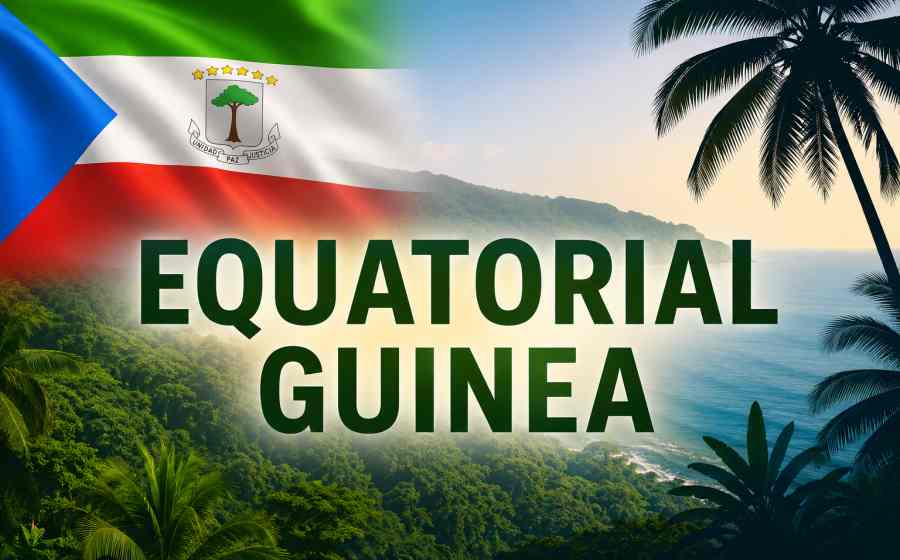
Equatorial Guinea is one of Africa’s most unique countries. It is the only African nation where Spanish is the primary official language. Located on the west coast of Central Africa, the country consists of a mainland region called Río Muni and several islands, including Bioko, where the capital city Malabo is located. Despite being one of Africa’s smallest countries, Equatorial Guinea has a rich cultural heritage, diverse wildlife, and significant natural resources.
The country gained global attention after the discovery of large offshore oil reserves, which transformed its economy. However, agriculture, fishing, and forestry continue to play important roles in the lives of many people. Today, Equatorial Guinea is known for its tropical rainforests, beautiful islands, ethnic diversity, and growing participation in international sports.
Table of Contents
History of Equatorial Guinea
The history of Equatorial Guinea dates back thousands of years when various indigenous communities settled in the region. The Bubi people were among the earliest inhabitants of Bioko Island, while the Fang people later became the largest ethnic group on the mainland.
Portuguese explorers first reached the islands during the 15th century. In 1472, explorer Fernão do Pó discovered Bioko Island, which was originally named Fernando Pó in his honor. During the late 18th century, Portugal transferred control of the territory to Spain through treaties.
Spanish colonial rule lasted for nearly two centuries. During this period, cocoa plantations became an important part of the economy. Equatorial Guinea finally gained independence from Spain on 12 October 1968.
Following independence, the country experienced political instability before gradually moving toward greater economic development after offshore oil discoveries in the 1990s.
Geography and Climate
Equatorial Guinea covers approximately 28,000 square kilometers, making it one of Africa’s smallest countries.
Major Geographic Features
- Mainland region: Río Muni
- Largest island: Bioko
- Other islands: Annobón, Corisco, Elobey Grande, and Elobey Chico
- Highest mountain: Pico Basile (over 3,000 meters)
- Coastline along the Gulf of Guinea
The country experiences a tropical climate with high temperatures throughout the year. Heavy rainfall supports dense rainforests filled with unique plants and wildlife.
Culture and Traditions
Equatorial Guinea has a vibrant multicultural society influenced by African traditions and Spanish colonial heritage.
The major ethnic groups include:
- Fang
- Bubi
- Ndowe
- Annobonese
- Bisio
Spanish remains the most widely used official language, while French and Portuguese are also official languages. Indigenous languages are commonly spoken in local communities.
Traditional dances, storytelling, music, and colorful festivals remain important parts of daily life. Wooden masks, carvings, and handmade crafts reflect the country’s artistic traditions.
Religion also plays an important role, with Christianity, especially Roman Catholicism, being the dominant faith.
Economy
Equatorial Guinea possesses one of Africa’s largest oil reserves relative to its size.
Major industries include:
- Petroleum production
- Natural gas
- Forestry
- Fishing
- Agriculture
- Construction
Oil exports contribute significantly to national income. However, the government has also encouraged economic diversification by investing in agriculture, tourism, and infrastructure.
Important agricultural products include:
- Cocoa
- Coffee
- Cassava
- Bananas
- Palm oil
- Timber
Fishing remains an important source of food and employment along the country’s coastline.
Wildlife and Natural Beauty
Equatorial Guinea is home to remarkable biodiversity thanks to its tropical forests and protected areas.
Wildlife includes:
- Gorillas
- Chimpanzees
- Forest elephants
- Monkeys
- Crocodiles
- Sea turtles
- Colorful tropical birds
The country contains several national parks and nature reserves dedicated to protecting endangered species and rainforest ecosystems.
Bioko Island is internationally recognized for its important sea turtle nesting beaches and unique primate populations.
Education
Education has expanded significantly since independence.
The government has invested in:
- Primary schools
- Secondary education
- Universities
- Technical institutions
Spanish remains the main language of instruction. Increasing emphasis has been placed on improving literacy, science education, and vocational training.
Sports in Equatorial Guinea
Football is by far the most popular sport in Equatorial Guinea. The national football team, known as Nzalang Nacional, has made notable appearances in the Africa Cup of Nations (AFCON) and has earned respect for strong performances against larger footballing nations.
Equatorial Guinea successfully co-hosted the 2012 Africa Cup of Nations with Gabon and independently hosted the 2015 Africa Cup of Nations, showcasing its ability to organize major international sporting events.
Other popular sports include:
- Basketball
- Athletics
- Volleyball
- Handball
- Swimming
Youth sports programs continue to encourage participation across the country.
Government
Equatorial Guinea is a presidential republic.
The President serves as both the head of state and head of government. The country has a constitution and a multi-party political system, although politics has been dominated by a single leadership for many years.
The capital city is Malabo, while Ciudad de la Paz has been developed as a planned administrative city on the mainland.
Tourism
Although tourism remains relatively small, Equatorial Guinea offers many attractions for nature lovers and adventure travelers.
Popular attractions include:
- Malabo’s colonial architecture
- Pico Basile National Park
- Bioko Island beaches
- Tropical rainforests
- Waterfalls
- Wildlife reserves
- Volcanic landscapes
Visitors enjoy birdwatching, hiking, photography, and eco-tourism experiences.
Interesting Facts About Equatorial Guinea
- Equatorial Guinea is the only African country where Spanish is the primary official language.
- It gained independence from Spain on 12 October 1968.
- The country consists of both mainland territory and several islands.
- Malabo is located on Bioko Island rather than the mainland.
- Oil production transformed the national economy during the 1990s.
- Pico Basile is the country’s highest mountain.
- The nation has rich rainforest biodiversity.
- Football is the most popular sport.
- Cocoa was once the country’s leading export before oil.
- Three official languages are recognized: Spanish, French, and Portuguese.
Key Facts About Equatorial Guinea
| Category | Information |
|---|---|
| Country | Equatorial Guinea |
| Continent | Africa |
| Capital | Malabo |
| Largest City | Bata |
| Official Languages | Spanish, French, Portuguese |
| Currency | Central African CFA Franc (XAF) |
| Independence | 12 October 1968 |
| Area | About 28,000 sq km |
| Highest Peak | Pico Basile |
| Major Industries | Oil, Gas, Agriculture, Forestry, Fishing |
| National Sport | Football |
| Climate | Tropical |
Summary
Equatorial Guinea stands out as one of Africa’s most distinctive nations because of its Spanish-speaking heritage, island geography, rich rainforests, and abundant natural resources. From the traditions of the Fang and Bubi communities to the modern influence of the oil industry, the country offers a fascinating blend of history and progress. Its growing sports culture, diverse wildlife, and strategic location along the Gulf of Guinea make Equatorial Guinea an important and interesting nation to study for anyone interested in world geography.
Also Check: General Knowledge