Luxembourg – History, Culture, Tourist Places, Sports and Fascinating Facts
Luxembourg is a fascinating European country known for its rich history, unique culture, scenic landscapes, sports and remarkable key facts.
Luxembourg
Luxembourg, officially known as the Grand Duchy of Luxembourg, is one of Europe’s smallest countries, yet it has an important place in European history, politics and economics. Located in Western Europe, Luxembourg shares borders with Belgium, Germany and France. Despite its small geographical size, the country is known for its prosperous economy, multilingual population, beautiful landscapes, historic fortifications and strong role in European institutions.
Luxembourg is a constitutional monarchy and has Luxembourg City as its capital. The country combines medieval heritage with modern architecture, international institutions and a highly multicultural society. Its location at the heart of Europe has also influenced its language, traditions, cuisine and cultural identity.
Table of Contents
History of Luxembourg
The history of Luxembourg is closely connected with the development of medieval Europe. The foundation of Luxembourg as a political territory is traditionally associated with Siegfried, Count of Ardennes, who acquired the rocky site of present-day Luxembourg City in 963. A castle was established there, and the settlement gradually developed around this strategic location.
During the Middle Ages, Luxembourg became increasingly important because of its position between major European powers. The House of Luxembourg produced several influential rulers, including Charles IV, who became Holy Roman Emperor in the 14th century.
In later centuries, Luxembourg came under the influence or control of different European powers, including Spain, France and Austria. Its strong fortifications made Luxembourg City one of the most important fortified locations in Europe. The city was sometimes described as the “Gibraltar of the North” because of its formidable defensive position.
The political status of Luxembourg changed significantly during the 19th century. Following the Congress of Vienna in 1815, Luxembourg became a grand duchy and was placed in a personal union with the Dutch monarchy. In 1839, the Treaty of London established Luxembourg’s modern territorial boundaries and strengthened its position as an independent state.
Luxembourg became fully independent from the Netherlands in 1890, when Grand Duke Adolphe came to the throne. The country later faced German occupation during both World Wars, with the Second World War leaving a particularly strong mark on national memory.
After the Second World War, Luxembourg became an active supporter of European cooperation. It was one of the founding members of major European institutions and played an important role in the development of European integration.
Geography of Luxembourg
Luxembourg covers approximately 2,586 square kilometres, making it one of the smallest sovereign states in Europe.
The northern part of the country is known as the Oesling, a region characterized by hills, forests and valleys. The southern part, known as the Gutland, is generally more developed and includes many important towns and industrial areas.
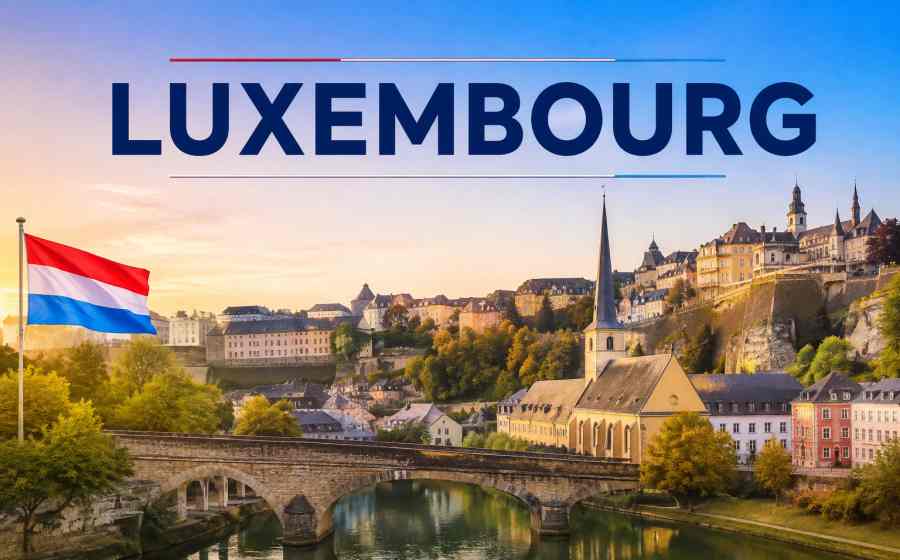
The capital, Luxembourg City, is famous for its dramatic landscape. The historic city is built around a rocky plateau and deep valleys, creating a distinctive combination of cliffs, bridges, fortifications and old buildings. Its Old Town and fortifications have been recognized as a UNESCO World Heritage Site since 1994.
Culture and Languages
Luxembourg has a remarkably multicultural society. The country’s location between France, Germany and Belgium has contributed to strong French and German cultural influences, while Luxembourg has maintained its own national identity. Official government information describes Luxembourg as a cultural crossroads with people from more than 160 nationalities.
The country has three official administrative languages: Luxembourgish, French and German. Luxembourgish, or Lëtzebuergesch, is particularly important as a symbol of national identity.
Luxembourg’s cultural life includes museums, theatres, music venues, festivals and traditional celebrations. Luxembourg City has institutions such as the National Museum of History and Art, the Museum of Modern Art Grand Duke Jean, and other cultural centers.
Traditional festivals remain an important part of life. Some customs have roots in religious traditions and rural society, while modern celebrations increasingly reflect the country’s multicultural population.
Food and Traditional Cuisine
Luxembourg’s cuisine reflects influences from neighboring France, Germany and Belgium. Traditional dishes often feature potatoes, meat and locally available ingredients.
Popular Luxembourgish foods include Judd mat Gaardebounen, a smoked pork dish traditionally served with broad beans, and Gromperekichelcher, crispy potato pancakes commonly enjoyed at markets and festivals. Bamkuch, a layered cake, is another well-known specialty.
Because Luxembourg is highly multicultural, its food scene today extends far beyond traditional dishes and includes cuisines from many parts of the world.
Sports in Luxembourg
Sports are an important part of Luxembourgish society, with football and cycling among the country’s best-known sporting activities.
Football
Football is the most popular team sport in Luxembourg. The Luxembourg national football team competes internationally and has experienced gradual development over the years. Domestic football is organized through the country’s national competitions, with clubs representing different towns and communities.
Cycling
Cycling has a particularly strong tradition in Luxembourg. The country has produced several notable cyclists, including Charly Gaul, who won the Tour de France in 1958 and became one of Luxembourg’s most celebrated sporting figures.
More recently, Andy Schleck won the 2010 Tour de France following the retrospective adjustment of the result, while his brother Fränk Schleck also achieved major success in professional cycling.
Cycling remains closely associated with Luxembourg’s sporting identity, supported by its scenic roads and varied terrain.
Other Sports
Tennis, athletics, basketball, swimming and motorsport also have their followers. Luxembourg has participated in the Olympic Games and international sporting competitions, and its athletes have represented the country on the global stage.
Economy of Luxembourg
Luxembourg is one of the world’s most prosperous economies. Its economy has historically been connected to the steel industry, particularly during the country’s industrial development. Over time, the economy diversified considerably.
Today, Luxembourg is internationally recognized as an important financial centre. Banking, investment funds, insurance and other financial services make significant contributions to the economy. The country also has strong logistics, technology, communications and professional services sectors.
Its central location within Europe and its membership in the European Union have helped Luxembourg develop into an important international business and administrative centre.
Luxembourg and the European Union
Luxembourg has played an important role in European integration. It is one of the founding countries of the European communities that eventually developed into today’s European Union.
Several important European institutions and offices are located in Luxembourg City. The country therefore has an influence on European affairs that is much greater than its physical size might suggest.
This international role is one of the most distinctive characteristics of modern Luxembourg.
Important Tourist Attractions
Luxembourg offers a mixture of historic sites, castles, forests and modern cultural attractions. Some notable places include:
- Luxembourg City Old Town and Fortifications
- Casemates du Bock
- Grand Ducal Palace
- Vianden Castle
- Mullerthal region
- Moselle Valley
- Echternach
- National museums and cultural centers
The historic fortifications and underground casemates are especially associated with Luxembourg City’s past. The capital’s old military structures, narrow streets and dramatic scenery make it one of the country’s most recognizable attractions.
Key Facts About Luxembourg
- Official Name: Grand Duchy of Luxembourg
- Capital: Luxembourg City
- Location: Western Europe
- Neighbouring Countries: Belgium, Germany and France
- Area: Approximately 2,586 km²
- Government: Constitutional monarchy
- Official Languages: Luxembourgish, French and German
- Currency: Euro (€)
- Major Economic Sector: Financial services
- Famous For: Fortifications, finance, castles, European institutions and cycling
- UNESCO Heritage: Luxembourg City’s Old Town and fortifications
- National Identity: Strongly influenced by French, German and Luxembourgish traditions
Summary
Luxembourg is a remarkable country where a small territory contains a rich mixture of history, culture, nature and modern international influence. From its medieval castle origins and powerful fortifications to its role in European integration and global finance, Luxembourg has developed a distinctive identity in the heart of Europe.
Its multilingual society, traditional festivals, historic architecture, cycling heritage and beautiful countryside make it especially interesting. Luxembourg City combines centuries-old fortifications with modern European institutions, while regions such as Vianden and Mullerthal showcase the country’s natural and historical beauty. For anyone interested in European geography, history, culture and current affairs, Luxembourg offers a fascinating example of how a small nation can have an influence far beyond its borders.
Also Check: General Knowledge