Comoros – History, Culture, Sports and Key Facts About This Indian Ocean Island Nation
Discover Comoros through its history, culture, sports, geography, traditions, economy and key facts about this fascinating African island nation.
Comoros
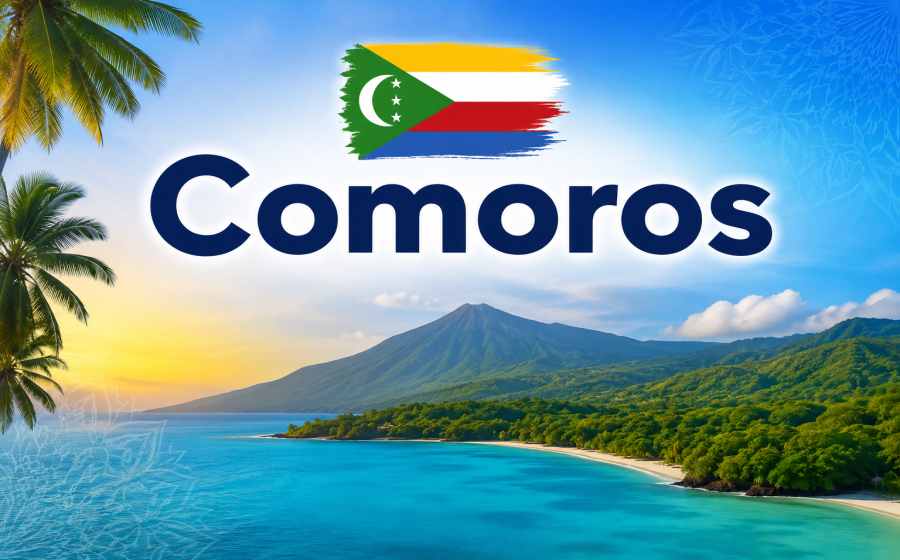
Comoros, officially known as the Union of the Comoros, is a small island nation situated in the Indian Ocean, off the eastern coast of Africa and near the northern end of the Mozambique Channel. The country is located between northern Madagascar and the African mainland. Its capital and largest city is Moroni, situated on Grande Comore, also known as Ngazidja. Comoros is famous for its volcanic landscapes, tropical climate, beautiful beaches, Islamic traditions and a culture shaped by African, Arab, Persian, Malagasy and French influences.
The present-day Union of the Comoros consists of three main islands under its administration: Grande Comore, Mohéli and Anjouan. Mayotte, another island of the Comoro archipelago, is administered by France. The Comoros archipelago is therefore historically and geographically connected, while its political administration is divided.
Table of Contents
History of Comoros
The history of Comoros reflects centuries of interaction between peoples from different parts of the Indian Ocean. Early inhabitants included communities connected with the African coast, while later migrations brought Arab, Persian, Malagasy and other influences to the islands. The islands became part of important Indian Ocean trading networks linking East Africa, Madagascar, Arabia and other regions.
Islam has played a major role in Comorian history and society. Historical evidence indicates that Islam reached the islands many centuries ago, with Muslim communities becoming established through contacts with Arab and Persian traders. The National Tourism Office of Comoros notes that Islamic influence can be traced back to the early centuries of the archipelago’s history and that Shirazi migrants played an important role in the development of sultanates.
From roughly the medieval period onward, various sultanates developed across the islands. These political communities were connected to Indian Ocean trade and helped shape the distinctive cultural identity of the Comoros.
European involvement increased from the early modern period. Portuguese explorers visited the islands in the 16th century, while French influence gradually became dominant during the 19th century. France established control over the islands during the colonial era, and Comoros eventually became a French colony. Internal autonomy was granted in 1961.
The Comoros declared independence from France on 6 July 1975. However, Mayotte chose to remain associated with France, creating a political and territorial issue that continues to distinguish the Comoros archipelago. The Union of the Comoros became an independent state and joined the Organisation of African Unity, the predecessor of the African Union, in July 1975.
Geography and Natural Beauty
Comoros is a volcanic island nation with striking mountains, forests, beaches and coastal scenery. Grande Comore is the largest island and is home to Mount Karthala, one of the world’s notable active volcanoes. Its volcanic character has strongly influenced the landscape and settlement patterns.
The islands have tropical surroundings and marine ecosystems that make them attractive for nature lovers. Beaches, hiking areas, underwater environments and traditional settlements contribute to the country’s tourism potential. The National Tourism Office promotes activities including beaches, hiking, water-based activities, museums and heritage sites.
Comoros is also known for ylang-ylang, a fragrant flower used in the perfume industry. Agriculture remains important to the country’s economy, alongside fishing, trade, tourism and remittances.
Culture and Traditions of Comoros
Comorian culture is a fascinating mixture of African, Arab-Islamic, Malagasy and French influences. Islam is the dominant religion and has a strong influence on family life, traditions, celebrations and social customs.
The African Union describes Comorian society as traditionally matrilineal, with strong family ties and a rich tradition of music and performing arts. Traditional crafts include sculpture, pottery, embroidery and basketry.
Music and dance occupy an important place in community celebrations. Traditional ceremonies can include singing, dancing, storytelling and performances that preserve historical memories and local traditions. Weddings and other important social events are often elaborate occasions involving families and communities.
Comoros is also linguistically diverse. Comorian, French and Arabic are important official languages, while Comorian varieties are closely related to Swahili. The country’s location along historic Indian Ocean trade routes helps explain its mixture of linguistic and cultural influences.
Traditional clothing, Islamic garments, jewelry and embroidered items are also significant aspects of Comorian cultural identity. Local handicrafts continue to provide both cultural value and economic opportunities.
Sports in Comoros
Football is the most popular sport in Comoros and plays an important role in national identity. The country has a national football team that represents Comoros in international competitions.
Comoros achieved a memorable milestone at the 2021 Africa Cup of Nations, played in 2022 after being postponed because of the COVID-19 pandemic. The team reached the knockout stage and defeated Ghana in the round of 16, marking one of the most notable achievements in Comorian football history.
Football has also become an important avenue for Comorian players to gain experience in professional leagues outside the country. Because of its strong popularity among young people, the sport contributes significantly to national sporting culture.
In addition to football, athletics and other sports are practiced across the islands. Comoros participates in international sporting events, including the Olympic Games and regional Indian Ocean competitions.
The country is also preparing for the 2027 Indian Ocean Island Games, with infrastructure development forming part of recent economic activity. The World Bank reported that construction connected with preparations for the Games contributed to industrial growth in 2025.
Economy of Comoros
Comoros has a developing island economy in which agriculture, fishing, trade, tourism and remittances are important. Agricultural products include cloves, vanilla and ylang-ylang, with the latter being particularly associated with the country’s perfume-related exports.
Remittances from Comorians living abroad are also an important source of household income. Tourism offers further potential because of the country’s beaches, volcanic scenery, marine environment and cultural heritage.
The economy has shown signs of growth in recent years. According to the World Bank, real GDP growth was estimated at 3.8% in 2025, compared with 3.3% in 2024. Agriculture, construction and other sectors contributed to this expansion.
Tourism and Important Attractions
Comoros offers a relatively less-explored destination compared with many better-known Indian Ocean islands. Visitors can experience volcanic landscapes, tropical beaches, traditional villages, historic sites and marine environments.
Moroni, the capital, is an important cultural and commercial centre. Its historic areas reflect the country’s Islamic and Indian Ocean heritage. The islands also offer opportunities for hiking, water activities and exploring natural landscapes.
Comoros’ historical importance is increasingly being recognized internationally. In 2026, the Medinas of the Historic Sultanates of the Comoros were inscribed on the UNESCO World Heritage List, giving the country’s cultural heritage greater international recognition.
Key Facts About Comoros
- Official name: Union of the Comoros
- Capital: Moroni
- Location: Indian Ocean, off the eastern coast of Africa
- Main islands: Grande Comore, Anjouan and Mohéli
- Independence: 6 July 1975
- Currency: Comorian franc (KMF)
- Official languages: Comorian, French and Arabic
- Major religion: Islam
- Largest city: Moroni
- Main popular sport: Football
- Major agricultural products: Vanilla, cloves and ylang-ylang
- Population: About 866,628 in 2024
- Continent: Africa
- Major geographical feature: Volcanic islands
- International calling code: +269
Summary
Comoros is a small but culturally rich African island nation with a remarkable history shaped by African, Arab, Persian, Malagasy and European connections. Its Islamic heritage, traditional arts, music, family-centered society and Indian Ocean location give it a distinctive identity. From the volcanic landscapes of Grande Comore to the historic settlements of the former sultanates, the country offers an interesting combination of history, culture and natural beauty.
Football has provided Comoros with memorable moments on the international sporting stage, while tourism and agriculture continue to offer opportunities for future development.
Also Check: General Knowledge