Singapore – History, Culture, Tourism, Sports, Geography and Key Facts
Discover Singapore’s history, culture, geography, sports, economy, government and key facts about this remarkable Southeast Asian city-state.
Singapore
Singapore is one of the world’s most remarkable city-states and a major hub of commerce, finance, technology, tourism and transportation in Southeast Asia. Located near the southern tip of the Malay Peninsula, Singapore is known for its modern skyline, efficient public transport, multicultural society, clean urban environment and strong economy. Although small in geographical size, the country has developed into an influential global centre.
Singapore became an independent and sovereign nation on 9 August 1965. Today, it is a parliamentary republic with a highly developed economy and a population representing diverse cultural communities. Chinese, Malays, Indians and Eurasians have all contributed to Singapore’s distinctive national identity.
Table of Contents
Geography of Singapore
Singapore is an island country in Southeast Asia. It consists of the main island along with numerous smaller islands. Its strategic position at the crossroads of major sea routes has played an important role in its historical and economic development.
The country covers roughly 710 square kilometres and has a tropical climate. Singapore experiences warm, humid weather throughout the year, with rainfall occurring during different periods of the year. Its location close to the equator gives it a relatively consistent climate compared with countries farther from the tropics.
Despite its limited land area, Singapore has carefully developed residential areas, business districts, parks, transport infrastructure and recreational spaces. Its urban planning has helped the country accommodate a large population while maintaining extensive greenery.
History of Singapore
The history of Singapore goes back centuries, with the island known by different names and connected to regional trading networks. Its modern history changed significantly during the colonial period.
In 1819, Stamford Raffles established a British trading settlement in Singapore. The settlement rapidly developed as a commercial centre because of its location along important maritime routes. Trade attracted people from China, India, the Malay Archipelago and other parts of Asia, creating the multicultural character that remains an important feature of Singapore today.
During the 19th and early 20th centuries, Singapore expanded as a major port and trading centre. British colonial influence also shaped its administration, education, architecture and legal institutions.
Singapore experienced a major turning point during the Second World War when Japanese forces occupied the island from 1942 to 1945. After the war, Singapore gradually moved toward self-government. It achieved internal self-government in 1959.
In 1963, Singapore joined the Federation of Malaysia. However, political, economic and social differences contributed to its separation from Malaysia. On 9 August 1965, Singapore became an independent republic.
The post-independence period was marked by rapid nation-building. Singapore invested heavily in housing, education, infrastructure, public health, industrial development and national security. These efforts transformed the country from a developing trading centre into one of Asia’s most advanced economies.
Government and Political System
Singapore is a sovereign republic with a written Constitution that provides the framework for its government. The country’s system consists of three main organs of state: the Executive, Legislature and Judiciary.
The President is the Head of State and is directly elected by the people. The Prime Minister is the effective head of the Executive and leads the Cabinet. Parliament is responsible for making laws, while the Judiciary administers justice independently within the constitutional framework.
Singapore’s political and administrative system is widely associated with strong institutions, long-term planning and an emphasis on public administration.
Culture of Singapore
Singapore has a rich multicultural heritage. Its society has been shaped by Chinese, Malay, Indian and Eurasian communities, along with influences from many other parts of the world. This diversity can be seen in its languages, festivals, religious traditions, architecture, music and food.
Singapore recognizes four official languages: English, Malay, Mandarin and Tamil. Malay is the national language, while English plays a major role in education, administration and business.
Major cultural and religious celebrations include Chinese New Year, Hari Raya Aidilfitri, Deepavali and Christmas. Different communities also maintain their own religious institutions, traditions and cultural practices.
Food is another important part of Singaporean identity. Popular dishes and food traditions include Hainanese chicken rice, laksa, satay, chilli crab, kaya toast and roti prata. Hawker centres are particularly important to Singapore’s food culture. Singapore’s hawker culture was added to UNESCO’s Representative List of the Intangible Cultural Heritage of Humanity in 2020.
Sports in Singapore
Sports have played an important role in Singapore’s nation-building and community development. Popular sports include football, swimming, badminton, table tennis, athletics, basketball, cricket and tennis. Sport Singapore promotes participation in sports at both community and competitive levels.
Singapore’s sporting history can be traced to the 19th century, when colonial communities and immigrant groups established sports clubs. Cricket, swimming and other activities became organized through clubs representing different communities.
After independence, the government placed greater emphasis on sports as a way to promote fitness and social cohesion. A Sports Division was established in 1966, and the development of the National Stadium became part of the country’s broader sporting strategy.
Singapore has also achieved notable international sporting success. Joseph Schooling won Singapore’s first Olympic gold medal in 2016 in swimming. Yip Pin Xiu became Singapore’s first Paralympic gold medallist in 2008. Singapore also earned its first Olympic medal in kitefoiling at the Paris 2024 Olympics through Maximilian Maeder, according to the country’s SG101 historical record.
Economy of Singapore
Singapore has a highly developed and globally connected economy. Its strategic location has helped it become an important international centre for shipping, logistics, finance and trade.
Major sectors include financial services, manufacturing, electronics, biotechnology, information technology, tourism, aviation, maritime services and professional services. Singapore’s port and airport are important components of its international connectivity.
The country’s limited natural resources encouraged it to focus on human capital, technology, education, infrastructure and international trade. Singapore has therefore become an important destination for multinational companies and a major business centre in Asia.
Tourism in Singapore
Tourism is another important part of Singapore’s international identity. The country combines modern attractions with historic neighbourhoods and multicultural heritage.
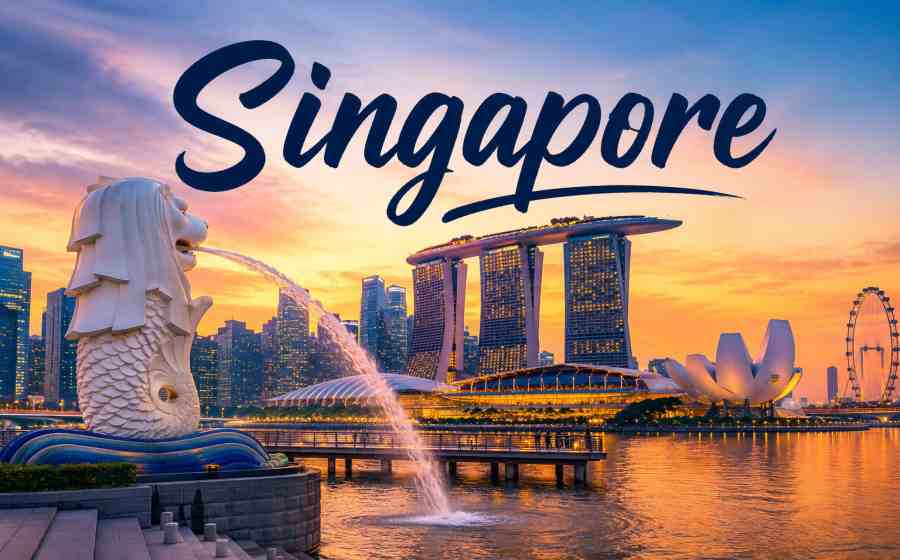
Some well-known attractions include Marina Bay Sands, Gardens by the Bay, Sentosa Island, Merlion Park, Singapore Zoo, Chinatown, Little India and Kampong Glam. The city is also known for its modern architecture, shopping districts, museums, parks and waterfront areas.
Visitors can experience modern Singapore alongside historic communities, religious sites and traditional food markets, making the country an interesting destination for people interested in both contemporary development and cultural heritage.
Education and Innovation
Singapore places strong emphasis on education, skills development and research. Its universities and research institutions contribute to science, technology, medicine, engineering and business.
The country has also developed a reputation for technological innovation and digital infrastructure. Its investment in education and human capital has supported its transformation into a knowledge-based economy.
Important Facts About Singapore
- Official Name: Republic of Singapore
- Capital: Singapore
- Region: Southeast Asia
- Independence Day: 9 August 1965
- National Language: Malay
- Official Languages: English, Malay, Mandarin and Tamil
- Currency: Singapore Dollar (SGD)
- Government: Parliamentary republic
- Main Communities: Chinese, Malay, Indian and Eurasian
- Major Industries: Finance, manufacturing, technology, trade, shipping and tourism
- Famous Food: Chicken rice, laksa, satay and chilli crab
- Famous Landmark: Merlion
- Major Sporting Achievement: Joseph Schooling’s Olympic gold medal in 2016
- UNESCO Recognition: Singapore’s hawker culture was inscribed on the UNESCO Intangible Cultural Heritage list in 2020.
Summary
Singapore is a fascinating example of how a small country can achieve significant economic and social development through long-term planning, education, infrastructure and international cooperation. Its history reflects colonialism, migration, war, self-government and independence, while its modern identity is shaped by multiculturalism, technology and global connectivity.
Also Check: General Knowledge