Micronesia – History, Culture, Tourist Places, Sports and Key Facts
Learn about Micronesia, its history, culture, geography, sports, traditions, islands, economy, people and fascinating facts from around the world.
Micronesia
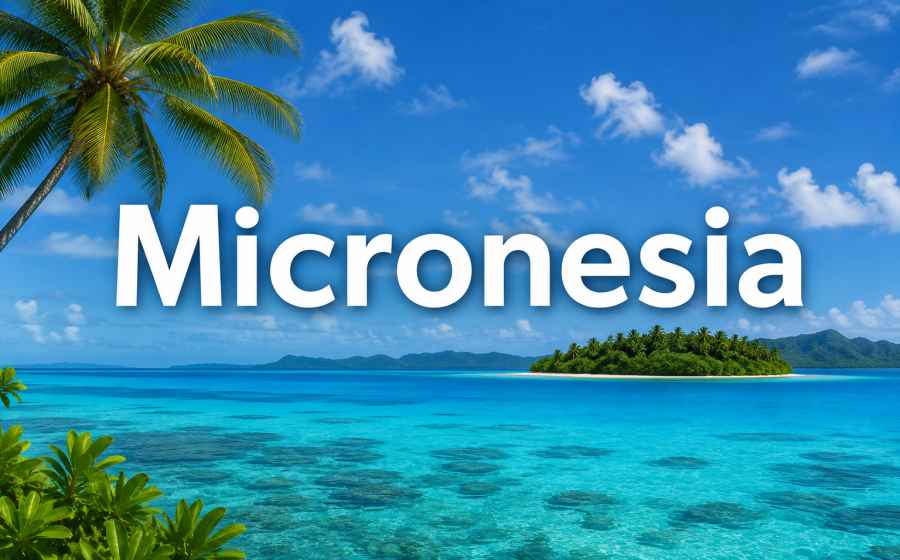
Micronesia is a fascinating island region in the western Pacific Ocean, known for its beautiful tropical islands, rich traditions, ancient communities and remarkable marine biodiversity. The name Micronesia comes from Greek words meaning “small islands,” an appropriate description of a region made up of thousands of islands and islets scattered across the Pacific.
It is important to understand that Micronesia can refer to a geographical region as well as the Federated States of Micronesia (FSM), an independent country. The wider geographical region includes several island countries and territories, while the Federated States of Micronesia is one particular nation made up of four states: Yap, Chuuk, Pohnpei and Kosrae. The country consists of hundreds of islands spread across a huge area of the Pacific Ocean.
Micronesia has a distinctive identity shaped by the sea. Fishing, navigation, agriculture, traditional knowledge and community life have played important roles in the development of its societies. Today, the region attracts attention for its natural beauty, cultural heritage, diving opportunities and unique history.
Table of Contents
Geography of Micronesia
Micronesia lies in the western Pacific Ocean, north of the equator. The Federated States of Micronesia is particularly notable for having a relatively small land area but an enormous maritime zone. Its four states stretch across a large portion of the Pacific.
The FSM consists of 607 islands, with landscapes ranging from volcanic islands and mountainous interiors to coral atolls and small low-lying islands. Its highest elevations are found on the larger volcanic islands, while many smaller islands are only slightly above sea level.
The tropical environment supports extensive forests, mangroves, coral reefs and marine ecosystems. The country’s waters contain an extraordinary variety of fish and coral species, making the ocean an essential part of both the environment and the economy.
The climate is generally warm and tropical throughout the year. Rainfall can be extremely heavy, particularly on islands such as Pohnpei and Kosrae. The region can also experience typhoons, droughts and other climate-related challenges.
History of Micronesia
The history of Micronesia stretches back thousands of years. Long before European explorers arrived, Pacific Islanders established communities across the islands and developed sophisticated methods of navigation. Skilled seafarers used knowledge of stars, winds, waves, currents and natural landmarks to travel between islands.
Over centuries, individual island communities developed their own languages, customs, social systems and traditions. Although the islands were geographically separated, extensive connections existed through trade, migration and seafaring.
European contact began during the period of Pacific exploration. Later, different colonial powers established influence over parts of Micronesia. Spain controlled several islands before territories were transferred to Germany and subsequently Japan in different historical circumstances.
During World War II, Micronesia became strategically important because of its location in the Pacific. Several islands experienced major military operations and battles, leaving behind historical sites, shipwrecks and other reminders of the conflict.
After the war, much of Micronesia became part of the United Nations Trust Territory of the Pacific Islands, administered by the United States. The Federated States of Micronesia later developed its own political institutions and entered into a Compact of Free Association with the United States in 1986. The United Nations trusteeship formally ended in 1991.
The Federated States of Micronesia became a member of the United Nations on 17 September 1991, marking its full participation in the international community.
Culture and Traditions
Micronesian culture is diverse because different islands and communities have developed their own traditions. Extended families and community relationships remain important in many areas. Traditional institutions, customary land practices and connections to the sea continue to influence everyday life.
Traditional dances, songs, storytelling, handicrafts and ceremonies are important expressions of cultural identity. Oral traditions have historically helped communities pass knowledge and history from one generation to another.
Traditional navigation is another remarkable part of Pacific heritage. Generations of islanders developed detailed knowledge of the ocean, enabling them to travel long distances without modern navigation equipment.
Food traditions are closely connected with local agriculture and the sea. Coconut, breadfruit, taro, bananas, fish and other locally available foods have traditionally been important components of island diets.
Marine Life and Natural Beauty
One of Micronesia’s greatest treasures is its marine environment. Coral reefs provide habitat for a huge variety of marine organisms and are important for coastal protection, fishing and tourism.
The Federated States of Micronesia has nearly 1,000 recorded fish species and more than 350 species of hard coral, according to government biodiversity information. Its terrestrial environment is also highly diverse, with numerous native and endemic plant species.
The region’s clear waters and coral ecosystems make it popular among divers, snorkelers and marine enthusiasts. Chuuk, in particular, is internationally known for its underwater World War II wrecks.
Environmental conservation is especially important because many communities depend directly on marine and terrestrial resources. Climate change, rising sea levels, coral bleaching, storms and other environmental pressures present significant challenges for island communities.
Sports in Micronesia
Sports are an important part of modern life in Micronesia, particularly among young people. Athletics, swimming, basketball, football and baseball are among the sports that have attracted participation.
Because many Micronesian islands have strong connections with the ocean, water-based activities such as swimming, canoeing, boating and diving are also culturally and recreationally significant.
The Federated States of Micronesia has participated in international sporting events, including the Olympic Games. Athletes from the country have represented their islands on the international stage, helping introduce Micronesia to audiences around the world.
Sports also provide opportunities for young people to develop teamwork, discipline and international connections. Local competitions and regional sporting events contribute to community life and national pride.
Economy of Micronesia
The economy of the Federated States of Micronesia is closely linked to its natural environment. Fishing, agriculture and tourism are particularly important sectors because they depend heavily on healthy marine and terrestrial ecosystems.
Fishing provides food, employment and economic opportunities, while agriculture supports local communities. Tropical products such as coconut and other traditional crops have long been part of the island economy.
Tourism is another promising sector. Visitors are attracted by coral reefs, tropical landscapes, cultural experiences, historical sites and underwater attractions.
The country’s relationship with the United States also plays an important economic role through the Compact of Free Association.
Important Cities and Places
Palikir is the capital of the Federated States of Micronesia and is located in Pohnpei State. Pohnpei is known for its lush mountainous landscape, abundant rainfall and historical attractions.
Kolonia, also on Pohnpei, has historically served as an important population and commercial center.
Weno, located in Chuuk State, is another major population center and is particularly associated with Chuuk Lagoon, one of the world’s notable wreck-diving destinations.
Yap is famous for its traditional culture and distinctive stone money, while Kosrae is celebrated for its forests, mountains, coral reefs and relatively undeveloped natural landscapes.
Key Facts About Micronesia
- Official country name: Federated States of Micronesia
- Region: Western Pacific Ocean
- Capital: Palikir
- States: Yap, Chuuk, Pohnpei and Kosrae
- Number of islands in FSM: 607
- Currency: United States dollar
- Official languages: English, alongside numerous indigenous languages
- Government: Federal constitutional republic
- UN membership: Since 1991
- Major economic sectors: Fishing, agriculture, tourism and services
- Major natural feature: Extensive coral reef and marine ecosystems
- Famous cultural symbol: Yapese stone money
- Major sports: Athletics, basketball, baseball, football and swimming
- Major environmental concerns: Climate change, sea-level rise, coral bleaching and extreme weather
Why Micronesia Is Important
Micronesia is important not only because of its geography but also because of its cultural and environmental significance. Its islands demonstrate how human societies can adapt to isolated environments and develop sophisticated relationships with the ocean.
The region also highlights the challenges faced by small island nations. Rising sea levels, changing weather patterns and damage to coral ecosystems can have serious effects on food security, infrastructure and traditional ways of life. The FSM has therefore placed significant emphasis on environmental sustainability and international cooperation.
Summary
Micronesia is a remarkable part of the Pacific world, combining ancient traditions, fascinating history, beautiful islands and extraordinary marine biodiversity. The Federated States of Micronesia, with its four states, Yap, Chuuk, Pohnpei and Kosrae, represents an important part of this broader region.
Also Check: General Knowledge