
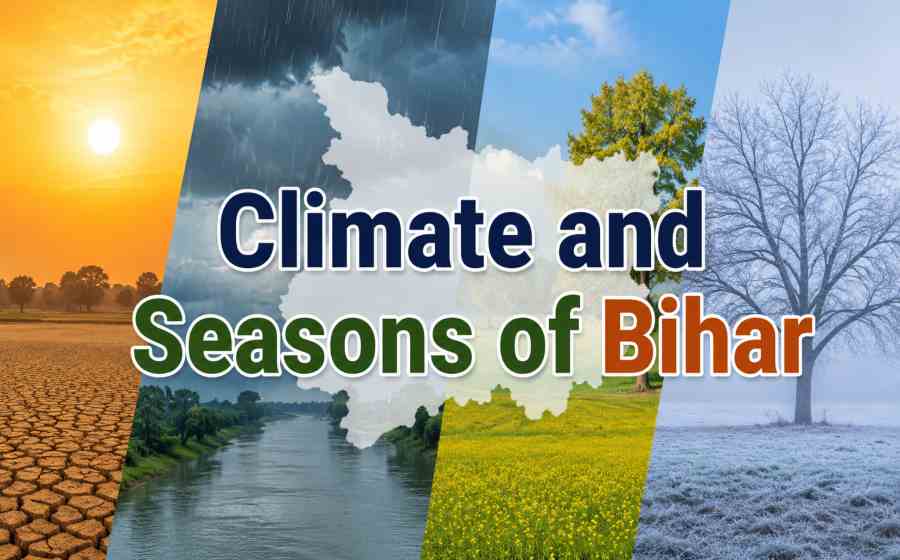
Climate and Seasons of Bihar – Weather Patterns, Rainfall and Seasonal Changes
Learn about the climate and seasons of Bihar, including summer, monsoon, winter, rainfall patterns, temperature variations and their impact on daily life.
Climate and Seasons of Bihar
Bihar, one of India’s most historically and culturally significant states, is located in the eastern part of the country. The state’s climate plays a crucial role in shaping its agriculture, economy, lifestyle, and natural environment. Due to its location in the fertile Indo-Gangetic Plain, Bihar experiences a humid subtropical climate characterized by distinct seasonal changes throughout the year.
Understanding Bihar’s climate and seasons is important for students, competitive exam aspirants, and anyone interested in the state’s geography. The weather patterns directly influence crop production, water resources, and the daily lives of millions of people.
Table of Contents
Geographic Factors Influencing Bihar’s Climate
Several geographical features affect Bihar’s climate:
- The state lies in the fertile Gangetic Plain.
- The River Ganga flows through the center of Bihar.
- The Himalayan Mountains are located to the north, influencing wind patterns and rainfall.
- The Bay of Bengal contributes moisture-laden winds during the monsoon season.
These factors collectively create a climate that is generally hot in summer, rainy during monsoon, and cool in winter.
Major Seasons of Bihar
Bihar mainly experiences three major seasons:
- Summer Season
- Monsoon (Rainy) Season
- Winter Season
Some climatologists also consider spring and post-monsoon periods as transitional seasons.
1. Summer Season (March to June)
The summer season begins in March and continues until June.
Temperature
- Average temperatures range between 30°C and 45°C.
- May is usually the hottest month.
- Southern districts often experience higher temperatures than northern areas.
Weather Conditions
During summer, Bihar experiences intense heat and dry winds known as Loo. These hot winds blow mainly during May and June, making outdoor activities difficult.
Impact on Life
- Increased demand for water and electricity.
- Heatwaves occasionally affect various districts.
- Farmers prepare fields before the arrival of monsoon rains.
Despite the harsh conditions, summer is an important period for harvesting certain crops and preparing agricultural land.
2. Monsoon Season (June to September)
The monsoon season is the most important climatic period in Bihar.
Arrival of Monsoon
The southwest monsoon usually reaches Bihar during the second half of June. Moisture-laden winds from the Bay of Bengal bring substantial rainfall across the state.
Rainfall Distribution
- Average annual rainfall ranges from 1,000 mm to 1,500 mm.
- Northern Bihar generally receives more rainfall than southern Bihar.
- Districts close to the Himalayan foothills receive heavier precipitation.
Importance of Monsoon
The monsoon is considered the backbone of Bihar’s agricultural economy because:
- It provides water for paddy cultivation.
- It replenishes rivers, ponds, and groundwater reserves.
- It supports the growth of various crops.
Flood Challenges
While monsoon rains are beneficial, excessive rainfall often causes floods, especially in northern Bihar. Rivers such as the Kosi, Gandak, and Bagmati frequently overflow during heavy rains.
Floods can lead to:
- Damage to crops.
- Loss of property.
- Displacement of people.
- Disruption of transportation and communication networks.
3. Winter Season (November to February)
Winter begins in November and lasts until February.
Temperature
- Temperatures generally range between 5°C and 20°C.
- January is the coldest month.
- Northern districts experience colder conditions than southern regions.
Weather Characteristics
Winter in Bihar is generally pleasant and dry. Cold waves occasionally affect the state, especially in December and January.
Morning fog is a common feature during winter and can sometimes disrupt transportation, including train and flight schedules.
Importance of Winter
The winter season is favorable for:
- Tourism and outdoor activities.
- Cultivation of wheat, mustard, gram, and vegetables.
- Educational and cultural events.
Many people consider winter the most comfortable season in Bihar due to moderate temperatures.
Transitional Seasons
Spring Season (February to March)
Spring is a short transitional period between winter and summer.
Features include:
- Pleasant weather.
- Blooming flowers and greenery.
- Gradual increase in temperature.
Post-Monsoon Season (October)
October serves as a transition from monsoon to winter.
Characteristics include:
- Reduced rainfall.
- Clear skies.
- Comfortable temperatures.
- Harvesting of several crops.
This period is often associated with major festivals such as Durga Puja and Diwali.
Climate and Agriculture in Bihar
Agriculture is the backbone of Bihar’s economy, and climatic conditions strongly influence farming activities.
Major Cropping Seasons
Kharif Crops
Grown during the monsoon season:
- Rice
- Maize
- Pulses
Rabi Crops
Cultivated during winter:
- Wheat
- Mustard
- Gram
- Lentils
Zaid Crops
Grown during the summer period:
- Watermelon
- Muskmelon
- Vegetables
A timely monsoon and favorable winter temperatures are essential for good agricultural production.
Rainfall Patterns in Bihar
Rainfall varies significantly across different regions.
Northern Bihar
- Receives higher rainfall.
- More prone to floods.
- Rich agricultural productivity.
Southern Bihar
- Receives comparatively less rainfall.
- Faces occasional drought-like conditions.
- Relies more on irrigation systems.
The uneven distribution of rainfall creates both opportunities and challenges for farmers.
Climate-Related Challenges
Bihar faces several climate-related issues:
Floods
Recurring floods affect millions of people annually, especially in northern districts.
Droughts
Some southern regions experience insufficient rainfall, leading to water shortages.
Heatwaves
Extreme summer temperatures can impact health, agriculture, and productivity.
Climate Change
Changing weather patterns have increased the unpredictability of rainfall and temperature fluctuations. This poses challenges for agriculture, water management, and disaster preparedness.
Importance of Understanding Bihar’s Climate
Knowledge of Bihar’s climate is important because it helps:
- Farmers plan agricultural activities.
- Authorities manage disaster risks.
- Students prepare for geography and competitive examinations.
- Policymakers develop climate adaptation strategies.
The state’s economy and livelihood systems remain closely connected to seasonal weather patterns.
Summary
Bihar experiences a humid subtropical climate with three major seasons, summer, monsoon, and winter. Summers are hot and dry, monsoons bring vital rainfall for agriculture, and winters offer cool and pleasant weather. The climate significantly influences farming, water resources, festivals, and daily life across the state.
Although Bihar benefits from fertile land and adequate rainfall, it also faces challenges such as floods, droughts, and climate variability. Understanding the state’s climate and seasonal patterns provides valuable insights into its geography, economy, and overall development. The climate of Bihar continues to play a central role in shaping the lives of its people and the future of the state.
Also Check: Bihar GK