Mauritania – History, Culture, Sports and Fascinating Facts of the Nation
Discover Mauritania’s history, culture, sports, geography and key facts in this informative overview of one of Africa’s most fascinating nations.
Mauritania
Mauritania is one of the most intriguing countries in North Africa. Known for its vast deserts, ancient trading cities, and rich cultural heritage, this nation offers a fascinating blend of Arab and African influences. Despite being less discussed in mainstream global conversations, Mauritania holds immense historical and geographical importance. Understanding this country helps broaden our knowledge of the diverse civilizations that have shaped the African continent.
Table of Contents
Introduction to Mauritania
Mauritania is officially known as the Islamic Republic of Mauritania. It is located in northwestern Africa and forms part of the Maghreb region. The country shares borders with Algeria to the northeast, Mali to the east and southeast, Senegal to the southwest, and Western Sahara to the northwest. The Atlantic Ocean lies along its western coast.
The capital and largest city of Mauritania is Nouakchott, which serves as the country’s political, economic, and cultural center. Arabic is the official language, while French is widely used in administration and education.
Historical Background
Mauritania has a long and fascinating history. Ancient trade routes once crossed its desert landscapes, connecting sub-Saharan Africa with North Africa and the Mediterranean world. These routes facilitated the exchange of gold, salt, ivory, and other valuable goods.
During the medieval period, the region was influenced by powerful Islamic empires and Berber tribes. Islam gradually became deeply rooted in Mauritanian society and remains central to its identity today.
In the late nineteenth century, Mauritania came under French colonial rule as part of French West Africa. The colonial administration introduced new systems of governance and infrastructure but also reshaped local political structures.
Mauritania gained independence from France on 28 November 1960. Since independence, the country has experienced periods of political transition and efforts to strengthen democratic institutions while addressing economic and social challenges.
Geography and Climate
Mauritania covers an area of over one million square kilometers, making it one of Africa’s largest countries. Much of its territory is dominated by the Sahara Desert, creating dramatic landscapes of sand dunes, rocky plateaus, and arid plains.
The climate is generally hot and dry, especially in the northern and central regions. Rainfall is limited and occurs mainly in the southern areas during the brief rainy season. Desertification remains a major environmental concern, affecting agriculture and livelihoods.
Despite harsh conditions, Mauritania possesses unique ecosystems and natural beauty that attract researchers and adventurous travelers.
Culture and Traditions
Mauritanian culture reflects a blend of Arab, Berber, and African influences developed over centuries of interaction.
Traditional Clothing
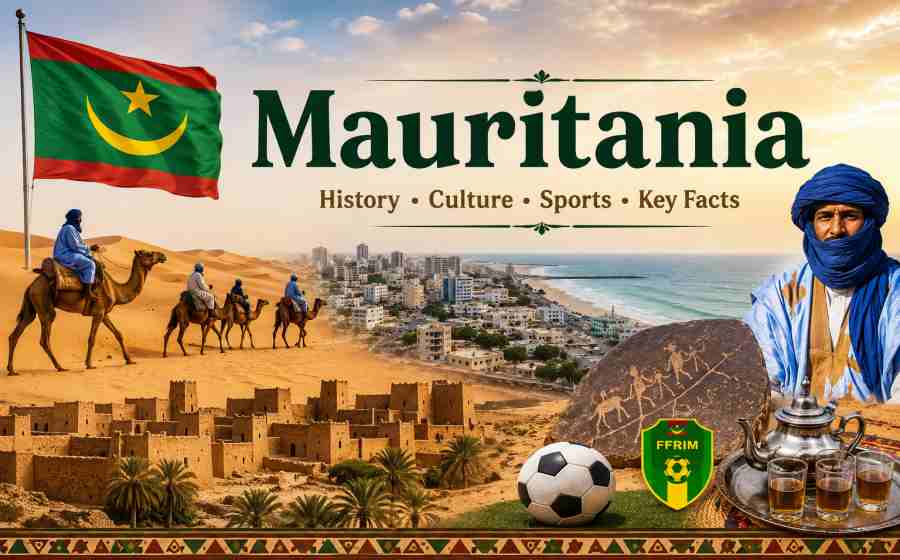
Men often wear a flowing blue robe known as the daraa, while women traditionally wear colorful garments called melhafa. These outfits are both practical for desert life and significant expressions of cultural identity.
Music and Arts
Music occupies an important place in Mauritanian society. Traditional musicians preserve oral histories and perform at weddings, festivals, and social gatherings. Instruments such as the tidinit and ardin are commonly used in folk performances.
Religion and Social Life
Islam plays a central role in daily life. Religious values influence customs, celebrations, and social interactions. Hospitality is highly valued, and welcoming guests with tea is a cherished tradition.
Economy of Mauritania
Mauritania’s economy relies heavily on natural resources. The country possesses significant reserves of iron ore, which represent one of its major exports. Mining activities contribute substantially to national revenue.
Fishing is another important sector due to the country’s long Atlantic coastline rich in marine resources. Agriculture and livestock farming support rural communities, although these sectors face challenges from drought and environmental changes.
In recent years, Mauritania has explored opportunities in energy development and infrastructure improvement to diversify its economy and promote sustainable growth.
Sports in Mauritania
Sports are increasingly popular in Mauritania and contribute to youth engagement and national pride.
Football
Football is undoubtedly the country’s most loved sport. Children and adults alike play the game in urban neighborhoods and rural communities. The national football team has gained greater recognition in African competitions and symbolizes national unity.
Traditional Activities
Traditional forms of recreation, including camel racing and equestrian activities, continue to reflect the country’s nomadic heritage. These events celebrate historical lifestyles that remain part of Mauritania’s cultural identity.
Emerging Interest in Other Sports
Basketball, athletics, and martial arts are gradually attracting younger generations, supported by schools and local sporting organizations.
Education and Society
Mauritania has made efforts to improve educational access and literacy rates. Schools have expanded across different regions, though disparities between urban and rural areas still exist.
Higher education institutions continue to develop, aiming to equip young people with skills needed for national development. The government and international partners have worked together on initiatives addressing health, education, and poverty reduction.
Key Facts About Mauritania
- Official Name: Islamic Republic of Mauritania
- Capital City: Nouakchott
- Continent: Africa
- Official Language: Arabic
- Widely Used Language: French
- Currency: Mauritanian Ouguiya (MRU)
- Independence Day: 28 November 1960
- Major Religion: Islam
- Largest Desert: Sahara Desert covers most of the country.
- Main Exports: Iron ore and fish.
- Time Zone: Greenwich Mean Time (GMT).
Interesting Facts
- Mauritania is one of the least densely populated countries in the world due to its vast desert terrain.
- Ancient desert towns in Mauritania once served as important centers of Islamic learning and trade.
- Tea ceremonies remain an essential part of social gatherings and hospitality.
- The country’s cultural heritage reflects centuries of interaction between African and Arab civilizations.
Summary
Mauritania is a nation of remarkable contrasts, where ancient traditions coexist with modern aspirations. From its historical trade routes and desert landscapes to its vibrant cultural practices and growing passion for sports, the country offers countless lessons for students and general knowledge enthusiasts. Learning about Mauritania not only expands our understanding of Africa’s diversity but also highlights the resilience and richness of societies that thrive in some of the world’s most challenging environments. Through its history, culture, and achievements, Mauritania continues to occupy a unique place on the global stage.
Also Check: General Knowledge