Indian States and Their Famous Dances – List with Cultural Insights
Explore Indian States and Their Famous Dances with cultural insights, classical and folk traditions and the rich heritage of India.
Indian States and Their Famous Dances
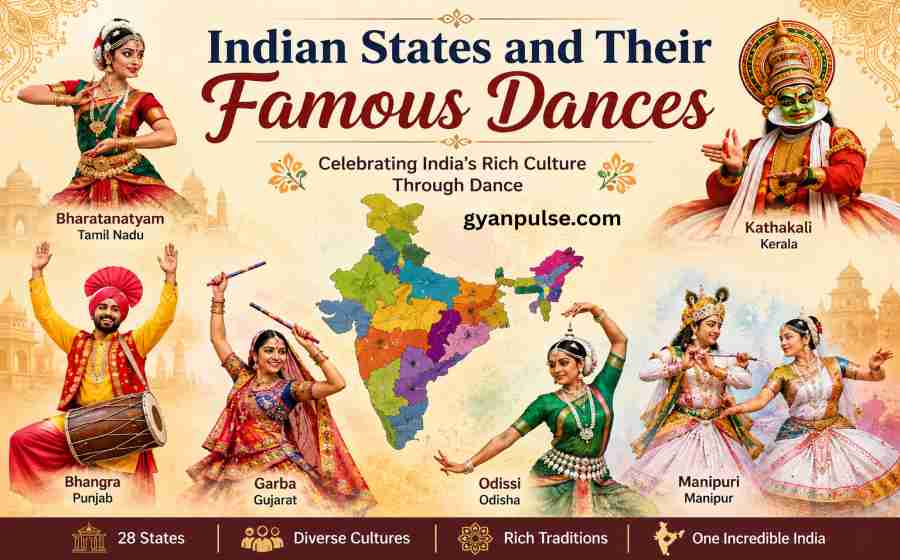
India is a country full of rich variety, and its traditional dances are one of the most colorful and lively ways this diversity comes to life. Each state in India has its own distinct dance forms, which are often deeply rooted in local history, traditions, festivals, and mythology. From the classical dances of the south to the folk traditions of the north, Indian dances showcase the nation’s colorful soul. Here is a comprehensive list of Indian states and their famous dances, along with insights into their cultural significance.
Table of Contents
List of Famous Dances
1. Andhra Pradesh – Kuchipudi
Kuchipudi is one of India’s classical dance forms, known for its graceful movements and strong narrative character. It originated in the village of Kuchipudi and often includes storytelling through expressive gestures.
2. Arunachal Pradesh – Ponung Dance
Ponung is performed by women before the harvest season. It is a rhythmic and group dance that reflects harmony and prayer to nature for prosperity.
3. Assam – Bihu
Bihu is an energetic and vibrant dance performed during the Bihu festival. It reflects Assamese joy and is accompanied by dhol, pepa, and traditional songs.
4. Bihar – Jat-Jatin
This folk dance is performed by rural couples, symbolizing love, monsoon, and hardships faced by farmers. It beautifully shows the everyday life and culture of the people in Bihar.
5. Chhattisgarh – Panthi Dance
Panthi is a ritualistic dance of the Satnami community, performed during religious occasions with devotional songs and synchronized movements.
6. Goa – Fugdi
Fugdi is a traditional dance from Goa, performed only by women during festivals and special gatherings. It is characterized by spinning and clapping movements.
7. Gujarat – Garba and Dandiya Raas
Garba and Dandiya are performed during Navratri and involve circular dancing with rhythmic claps (Garba) or sticks (Dandiya). It’s a global cultural symbol of Gujarat.
8. Haryana – Ghoomar
Originally from Rajasthan but widely performed in Haryana, Ghoomar is a graceful dance involving circular patterns and traditional attire.
9. Himachal Pradesh – Nati
Nati is a folk dance known for its slow, rhythmic movements and is performed during festivals and celebrations.
10. Jharkhand – Jhumar
Jhumar is performed during the harvest season, showcasing tribal traditions with gentle swaying movements and folk music.
11. Karnataka – Yakshagana
Yakshagana is a traditional art form that blends dance, music, and storytelling through live performances. It depicts mythological stories with elaborate costumes and expressions.
12. Kerala – Kathakali and Mohiniyattam
Kathakali is famous for its elaborate makeup and dramatic storytelling.
Mohiniyattam is a soft and graceful dance, usually performed by women, known for its gentle movements and elegance.
13. Madhya Pradesh – Tertali
Tertali is performed by Kamar tribes and involves balancing pots and swords while dancing, showcasing strength and balance.
14. Maharashtra – Lavani
Lavani is a powerful dance known for its strong rhythm, sensuality, and energetic expressions, often performed to the beats of the dholki.
15. Manipur – Manipuri
Manipuri is a gentle and devotional dance that tells the love stories of Lord Krishna and Radha through graceful movements. It involves gentle movements and beautiful costumes.
16. Meghalaya – Wangala Dance
Performed during the Wangala festival, this dance honors the Sun God and is accompanied by tribal instruments.
17. Mizoram – Cheraw (Bamboo Dance)
Cheraw is also known as the Bamboo Dance. Women dance in between bamboo sticks rhythmically moved by men, showcasing coordination and grace.
18. Nagaland – Chang Lo
Chang Lo is a warrior dance performed to celebrate victories in battles and show bravery and strength.
19. Odisha – Odissi
Odissi is one of India’s oldest classical dances, known for its graceful steps, flowing movements, and spiritual expressions through hand gestures.
20. Punjab – Bhangra and Giddha
- Bhangra is a lively and energetic dance performed by men, celebrating the joy of the harvest season.
- Giddha is a joyful dance by women, using rhythmic claps and playful stories to express everyday life and emotions.
21. Rajasthan – Kalbelia
Kalbelia is a sensuous dance performed by the Kalbelia tribe, also known as the snake charmer dance. It mimics serpent movements.
22. Sikkim – Maruni
Maruni is a bright and joyful dance performed during celebrations like festivals and weddings. It involves traditional instruments like the madal and harmonium.
23. Tamil Nadu – Bharatanatyam
Bharatanatyam is one of the oldest classical dance forms, known for its fixed upper torso, bent legs, hand gestures (mudras), and spiritual themes.
24. Telangana – Perini Shivatandavam
Known as the warrior dance, this powerful art was performed before battles as a tribute to Lord Shiva.
25. Tripura – Hojagiri
Hojagiri is performed by the Reang tribe, where female dancers balance lamps, bottles, or pitchers while dancing on a pitcher or metal plate.
26. Uttar Pradesh – Kathak
Kathak is a classical dance form known for its fast footwork, graceful spins, and expressive storytelling through facial movements. It has both Hindu and Mughal influences.
27. Uttarakhand – Barada Nati
Barada Nati is a local folk dance from the Jaunsar-Bawar area, performed during festivals and community events. It is popular during local fairs and festivals.
28. West Bengal – Chhau Dance
Chhau combines martial arts, storytelling, and folk traditions. It uses elaborate masks and is often based on mythological themes.
Importance of Traditional Dances in Indian Culture
Traditional dances in India are not only forms of entertainment but also powerful symbols of cultural identity and historical heritage. These dance forms help preserve ancient customs, religious beliefs, and regional traditions that have been passed down through generations. Many dances are connected to harvest festivals, temple rituals, seasonal celebrations, and social gatherings, making them an important part of community life.
Through colorful costumes, music, facial expressions, and rhythmic movements, Indian dances continue to educate people about the nation’s rich cultural legacy while promoting unity in diversity across different states and communities.
Summary
India’s dances are more than just performances, they are expressions of heritage, belief, joy, and identity. From the majestic classical styles to the spirited folk dances, each state contributes a unique rhythm to India’s cultural harmony.
Whether you are preparing for a competitive exam or simply exploring Indian traditions, knowing about Indian states and their famous dances helps you appreciate the country’s immense artistic diversity.
Also Check: General Knowledge