Nigeria – History, Culture, Sports and Fascinating Facts About Africa’s Giant Nation
Explore Nigeria’s rich history, vibrant culture, sporting achievements and key facts that make it one of Africa’s most influential nations.
Nigeria
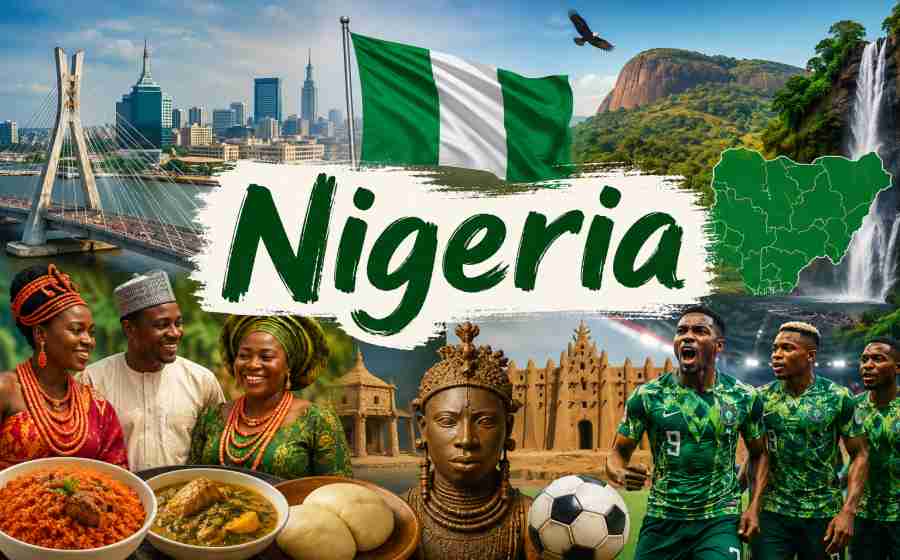
Nigeria is one of Africa’s most influential and diverse countries. Often referred to as the “Giant of Africa,” it is known for its large population, rich cultural heritage, thriving entertainment industry, and remarkable sporting achievements. Located in West Africa, Nigeria plays a significant role in the continent’s economy, politics, and cultural development. From ancient kingdoms to modern innovations, Nigeria offers a fascinating blend of tradition and progress.
Table of Contents
Historical Background of Nigeria
The history of Nigeria stretches back thousands of years. Archaeological discoveries reveal that ancient civilizations flourished in the region long before European contact. Among the earliest known societies was the Nok civilization, famous for its terracotta sculptures dating from around 1000 BC to 300 AD.
Several powerful kingdoms and empires later emerged across the area. The Hausa city-states dominated the northern region, while the Oyo Empire became a major political and military force in the southwest. The Kingdom of Benin gained international recognition for its sophisticated administration and extraordinary bronze artworks.
European traders arrived along Nigeria’s coast in the fifteenth century. Over time, the region became involved in the transatlantic slave trade. During the late nineteenth century, Britain gradually established colonial control, eventually merging various territories to form modern Nigeria in 1914.
After decades of nationalist movements and political activism, Nigeria gained independence from British rule on 1 October 1960. Since then, the country has experienced military governments, democratic transitions, economic reforms, and continuous efforts toward national development.
Geography and Population
Nigeria is situated on the Gulf of Guinea in West Africa. It shares borders with Niger to the north, Chad to the northeast, Cameroon to the east, and Benin to the west.
Covering approximately 923,768 square kilometres, Nigeria features diverse landscapes, including tropical rainforests, savannah grasslands, plateaus, rivers, and coastal regions. The Niger River and the Benue River are among the country’s most important waterways.
Nigeria is Africa’s most populous nation, with more than 200 million people. This vast population contributes to the country’s dynamic economy and cultural richness.
Cultural Diversity
One of Nigeria’s greatest strengths is its extraordinary cultural diversity. More than 250 ethnic groups live within the country, each preserving unique customs, traditions, and languages.
The three largest ethnic groups are:
- Hausa-Fulani in the north
- Yoruba in the southwest
- Igbo in the southeast
English serves as the official language due to the colonial legacy, but many indigenous languages continue to thrive in everyday life.
Traditional festivals remain an important aspect of Nigerian culture. Events featuring colourful costumes, drumming, dancing, and rituals celebrate community identity and ancestral heritage. Respect for family values, elders, and communal relationships also plays a central role in Nigerian society.
Nigerian Cuisine
Nigeria’s cuisine reflects its cultural diversity and abundant agricultural resources. Meals are often rich in flavour and prepared using locally available ingredients.
Popular Nigerian dishes include:
- Jollof Rice
- Pounded Yam
- Egusi Soup
- Suya
- Moi Moi
- Akara
Jollof Rice, in particular, has gained international popularity and is often associated with friendly culinary rivalries among West African nations.
Music and Entertainment
Nigeria has become a global cultural powerhouse through its entertainment industry. Afrobeats, a contemporary music genre blending African rhythms with pop, hip-hop, and dance influences, has introduced Nigerian artists to worldwide audiences. Musicians such as Burna Boy, Wizkid, and Davido have achieved international recognition and helped promote African music globally.
Nigeria’s film industry, commonly known as Nollywood, is among the largest movie industries in the world by production volume. Nollywood films entertain millions across Africa and beyond while showcasing Nigerian stories, values, and experiences.
Sports in Nigeria
Sports occupy a special place in Nigerian society, uniting people across ethnic and regional lines.
Football: The National Passion
Football is undoubtedly Nigeria’s most beloved sport. Streets, schools, and communities frequently host informal matches, reflecting the country’s deep enthusiasm for the game.
The Nigerian national football team, popularly called the Super Eagles, has earned international respect through numerous achievements, including victories in the Africa Cup of Nations. Nigeria has also qualified for several FIFA World Cup tournaments.
Athletics and Other Sports
Nigeria has produced exceptional athletes who have excelled in international competitions, including the Olympic Games and Commonwealth Games.
Other popular sports include:
- Basketball
- Boxing
- Wrestling
- Table Tennis
- Weightlifting
Nigerian athletes continue to inspire younger generations through dedication and perseverance.
Economy and Natural Resources
Nigeria possesses one of Africa’s largest economies. The country is richly endowed with natural resources, particularly petroleum and natural gas.
Oil exports have long contributed significantly to national revenue. However, Nigeria is increasingly diversifying its economy through sectors such as:
- Agriculture
- Telecommunications
- Entertainment
- Manufacturing
- Financial services
- Technology and innovation
Lagos, Nigeria’s largest city, has emerged as a major commercial and technological hub, attracting entrepreneurs and investors from around the world.
Education and Innovation
Nigeria has a growing educational sector, with numerous universities, colleges, and research institutions serving millions of students.
Young Nigerians are increasingly making contributions in technology, business, literature, medicine, and scientific research. The country’s expanding startup ecosystem demonstrates its potential as a centre for innovation within Africa.
Despite challenges related to infrastructure and educational access, continued investment in human capital remains a national priority.
Key Facts About Nigeria
- Capital City: Abuja
- Largest City: Lagos
- Official Language: English
- Currency: Nigerian Naira (NGN)
- Independence Day: 1 October 1960
- Population: Over 200 million people
- Continent: Africa
- Major Rivers: Niger and Benue
- National Football Team: Super Eagles
- Nickname: Giant of Africa
Summary
Nigeria stands as a nation of resilience, diversity, and immense potential. Its ancient kingdoms, vibrant traditions, delicious cuisine, world-renowned entertainment industry, and impressive sporting achievements contribute to its unique identity. As Africa’s most populous country, Nigeria continues to shape the continent’s future through innovation, culture, and determination. Learning about Nigeria provides valuable insight into one of the world’s most dynamic and influential nations.
Also Check: General Knowledge