
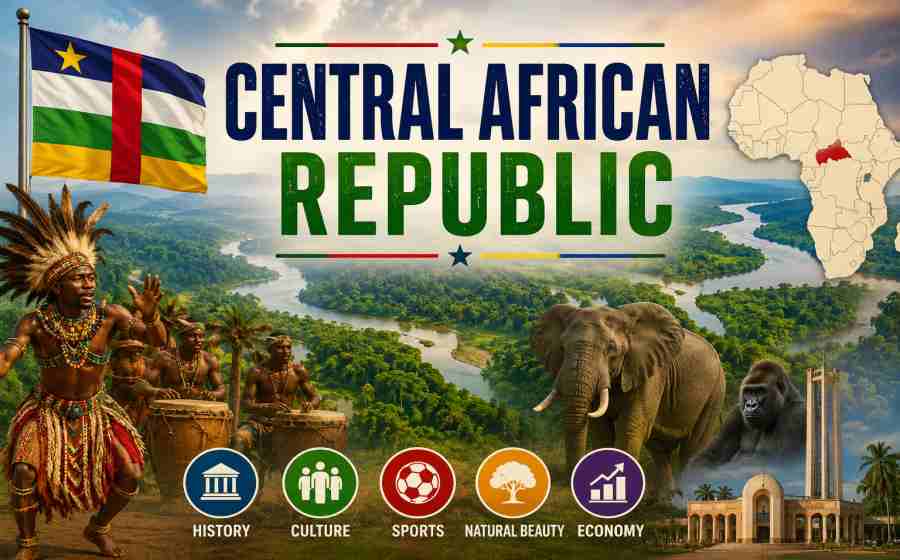
Central African Republic – History, Culture, Sports and Key Facts about this African Nation
Learn about the Central African Republic’s rich history, diverse culture, popular sports, unique wildlife, geography, economy and important facts.
Central African Republic
The Central African Republic (CAR) is a landlocked country located in the heart of Africa. Despite being one of the lesser-known nations of the continent, it possesses a rich cultural heritage, diverse ethnic communities, abundant natural resources, and fascinating history. The country is known for its dense rainforests, wildlife, traditional customs, and resilient people.
The Central African Republic covers an area of approximately 622,984 square kilometers and shares borders with Chad, Sudan, South Sudan, the Democratic Republic of the Congo, the Republic of the Congo, and Cameroon. Its capital city is Bangui, which serves as the country’s political, economic, and cultural center.
Table of Contents
History of the Central African Republic
The region that is now the Central African Republic has been inhabited for thousands of years by indigenous communities. Before European colonization, various ethnic groups lived in the area and engaged in trade with neighboring regions.
During the late 19th century, France expanded its colonial influence into Central Africa and incorporated the territory into French Equatorial Africa. The region was known as Ubangi-Shari under French rule. Colonial policies often focused on resource extraction, which significantly affected local communities.
Following years of political development and nationalist movements, the country gained independence from France on 13 August 1960. The first president was David Dacko. Since independence, the nation has experienced periods of political instability, military coups, and civil conflicts. However, the people of the country continue to work toward peace, development, and national unity.
Today, the Central African Republic remains an important part of Africa’s cultural and geographical landscape.
Geography and Climate
The Central African Republic lies near the geographical center of Africa, which inspired its name. The country’s landscape includes:
- Tropical forests
- Savannah grasslands
- Rivers and wetlands
- Rolling hills and plateaus
Major rivers include the Ubangi River and the Sangha River, which play vital roles in transportation and local livelihoods.
The climate is generally tropical, with distinct wet and dry seasons. Southern areas receive more rainfall due to their proximity to equatorial forests, while northern regions are comparatively drier.
People and Culture
The Central African Republic is home to more than 80 ethnic groups, making it one of Africa’s culturally diverse countries. Some of the major ethnic communities include:
- Baya
- Banda
- Mandjia
- Sara
- Mboum
- Yakoma
The official languages are French and Sango. Sango is widely spoken across the country and serves as a unifying language among different ethnic groups.
Traditional Culture
Music and dance play an important role in everyday life. Traditional drums, songs, and community dances are commonly performed during festivals, ceremonies, and celebrations.
Storytelling is another important cultural tradition. Elders often pass down historical knowledge, moral lessons, and folklore through oral narratives.
Clothing
Traditional attire varies among ethnic groups. Colorful fabrics, handmade jewelry, and decorative accessories are commonly worn during cultural events and special occasions.
Religion
Religion is an important part of life in the Central African Republic. The population includes:
- Christians
- Muslims
- Followers of indigenous traditional beliefs
Many communities practice a blend of traditional customs and organized religions, reflecting the country’s cultural diversity.
Economy
The economy of the Central African Republic is largely based on agriculture and natural resources.
Major Agricultural Products
- Cassava
- Maize
- Millet
- Peanuts
- Cotton
- Coffee
Agriculture provides employment for a large portion of the population.
Natural Resources
The country possesses valuable natural resources, including:
- Diamonds
- Gold
- Timber
- Uranium
These resources contribute significantly to the economy, although challenges related to infrastructure and political stability have limited their full economic potential.
Wildlife and Natural Beauty
The Central African Republic is rich in biodiversity. Large portions of the country are covered by forests that support numerous animal species.
Common wildlife includes:
- Forest elephants
- Gorillas
- Chimpanzees
- Buffalo
- Leopards
- Antelopes
Protected areas and national parks help preserve these species and their habitats.
One of the most notable conservation areas is the Dzanga-Sangha region, which attracts researchers and nature enthusiasts from around the world.
Sports in the Central African Republic
Sports play an important role in promoting youth participation, community engagement, and national pride.
Football
Football (soccer) is the most popular sport in the country. Children and adults alike enjoy playing football in schools, villages, and urban areas.
The national football team represents the Central African Republic in international competitions and regional tournaments organized within Africa.
Basketball
Basketball has also gained popularity, particularly in urban centers. Local clubs and youth programs encourage participation and skill development.
Athletics
Track and field events are practiced in schools and sports organizations. Talented athletes often compete in regional competitions and contribute to the country’s sporting reputation.
Education
Education is viewed as a key factor in national development. The government and international organizations continue to work toward improving educational access and literacy rates.
Schools provide instruction primarily in French, while Sango remains widely used in everyday communication.
Higher education institutions, especially those located in Bangui, offer opportunities for advanced learning and professional development.
Key Facts About the Central African Republic
| Fact | Details |
|---|---|
| Official Name | Central African Republic |
| Capital City | Bangui |
| Independence | 13 August 1960 |
| Official Languages | French and Sango |
| Continent | Africa |
| Currency | Central African CFA Franc (XAF) |
| Area | About 622,984 sq km |
| Major Resources | Diamonds, Gold, Timber, Uranium |
| Popular Sport | Football |
| Climate | Tropical |
Summary
The Central African Republic is a nation rich in history, culture, natural beauty, and human diversity. From its indigenous traditions and vibrant cultural heritage to its vast forests and valuable natural resources, the country offers much to learn and appreciate. Although it has faced numerous challenges throughout its history, the resilience of its people continues to shape its future. Understanding the Central African Republic helps broaden our knowledge of Africa and highlights the importance of cultural diversity, conservation, and sustainable development.
Also Check: General Knowledge