Papua New Guinea – A Land of Ancient Traditions, Diverse Cultures and Natural Wonders
Discover Papua New Guinea, a nation known for its rich cultural diversity, history, unique traditions, sports achievements and remarkable natural beauty.
Papua New Guinea
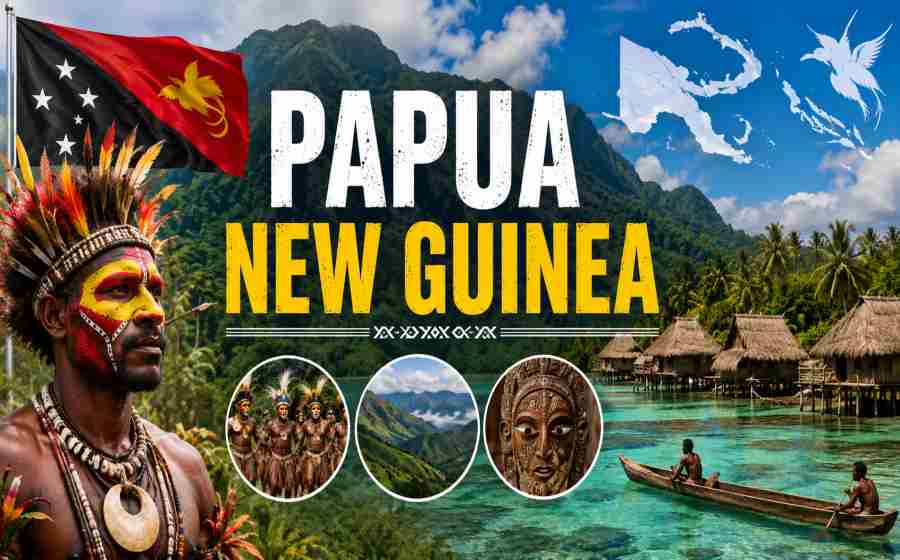
Papua New Guinea (PNG) is one of the most culturally diverse countries in the world. Located in the southwestern Pacific Ocean, it occupies the eastern half of the island of New Guinea and numerous surrounding islands. The country is famous for its stunning landscapes, dense rainforests, active volcanoes, and rich tribal heritage. With hundreds of ethnic groups and languages, Papua New Guinea offers a unique blend of ancient traditions and modern development.
Despite being one of the world’s less-populated nations, PNG is recognized globally for its cultural richness, biodiversity, and resilient communities. The country plays an important role in the Pacific region and continues to preserve many customs that have existed for centuries.
Table of Contents
History of Papua New Guinea
The history of Papua New Guinea dates back more than 40,000 years, making it one of the oldest continuously inhabited regions on Earth. Archaeological evidence suggests that early human settlements developed independently, creating distinct cultures and traditions over thousands of years.
European explorers first arrived in the 16th century. The northern part of the territory was later controlled by Germany, while the southern region became a British protectorate before being administered by Australia.
During the Second World War, Papua New Guinea became a major battleground in the Pacific campaign. The famous Kokoda Track Campaign witnessed intense fighting between Allied and Japanese forces. The bravery shown by local people during this period remains an important part of the nation’s history.
On September 16, 1975, Papua New Guinea gained independence from Australia. Since independence, the country has maintained a democratic system of government while preserving its traditional cultural values.
Geography and Natural Environment
Papua New Guinea covers approximately 462,840 square kilometers, making it one of the largest island nations in the world. The country features rugged mountain ranges, tropical rainforests, rivers, swamps, and coral reefs.
The central highlands are home to many communities that lived in relative isolation until the twentieth century. Mount Wilhelm, the highest peak in Papua New Guinea, rises to over 4,500 meters above sea level.
The nation is also part of the Pacific Ring of Fire, resulting in active volcanoes and occasional earthquakes. Despite these natural challenges, the country’s environment supports extraordinary biodiversity, including many species found nowhere else on Earth.
Culture and Traditions
Papua New Guinea is often described as the world’s most culturally diverse nation. More than 800 languages are spoken across the country, representing about ten percent of all languages worldwide.
Traditional customs remain important in daily life. Many communities continue to practice ancestral ceremonies, traditional dances, and tribal rituals. Colorful body paint, feathered headdresses, and handcrafted ornaments are commonly seen during cultural festivals.
One of the most famous cultural events is the Sing-Sing Festival, where tribes from different regions gather to showcase their music, dances, and traditional attire. These festivals celebrate unity while preserving cultural identity.
Family and community relationships play a significant role in Papua New Guinean society. Respect for elders and traditional leaders remains deeply valued.
Languages and Religion
English is one of the official languages of Papua New Guinea. However, Tok Pisin and Hiri Motu are also widely spoken and serve as important means of communication among people from different linguistic backgrounds.
Christianity is the dominant religion, practiced by the majority of the population. Churches are active in education, healthcare, and community development. Traditional beliefs and customs also continue to influence local culture in many regions.
Economy
PNG’s economy is largely based on natural resources. Mining, petroleum, natural gas, agriculture, forestry, and fishing contribute significantly to national income.
The country is known for exporting gold, copper, coffee, cocoa, palm oil, and liquefied natural gas. Agriculture remains a major source of livelihood, especially in rural communities.
Although Papua New Guinea possesses abundant natural resources, it continues to face challenges related to infrastructure, education, and economic development. Efforts are ongoing to improve living standards and expand opportunities for citizens.
Sports in Papua New Guinea
Sports are an important part of life in Papua New Guinea. The most popular sport is rugby league, which enjoys passionate support across the nation. The national rugby league team, known as the Kumuls, has represented the country in various international competitions.
Soccer, cricket, basketball, and rugby union are also widely played. Many schools encourage participation in sports to promote teamwork, fitness, and community spirit.
PNG has participated in international sporting events, including the Olympic Games and the Commonwealth Games. Athletes from the country continue to gain recognition in regional and international competitions.
Education and Society
Education has expanded considerably since independence. Schools and universities across the country work to improve literacy and provide opportunities for future generations.
The country’s population is relatively young, and educational development remains a national priority. Government initiatives and international partnerships support improvements in access to education, healthcare, and technology.
While urban areas are growing, a large percentage of the population still lives in rural villages, where traditional lifestyles remain strong.
Interesting Facts About Papua New Guinea
- Papua New Guinea has more than 800 languages, the highest linguistic diversity of any country.
- It gained independence on September 16, 1975.
- Port Moresby is the capital and largest city.
- The country occupies the eastern half of the island of New Guinea.
- Many plant and animal species found in Papua New Guinea exist nowhere else on Earth.
- Rugby league is the most popular sport in the country.
- Mount Wilhelm is the highest mountain in Papua New Guinea.
- Traditional tribal cultures continue to thrive in many regions.
- The country is home to vast tropical rainforests and coral reefs.
- Papua New Guinea is one of the most culturally diverse nations in the world.
Summary
Papua New Guinea is a remarkable nation where ancient traditions and modern aspirations coexist. Its rich history, extraordinary cultural diversity, breathtaking landscapes, and strong community values make it one of the most unique countries on Earth. From the vibrant Sing-Sing festivals to the passion for rugby league and the incredible variety of languages spoken across the nation, Papua New Guinea offers a fascinating glimpse into human cultural heritage. As the country continues to develop, it remains committed to preserving the traditions and natural treasures that make it truly special.
Also Check: General Knowledge