Sweden – History, Culture, Sports and Fascinating Facts
Discover Sweden’s rich history, vibrant culture, sporting achievements, geography, economy and key facts that make this Nordic nation unique and influential.
Sweden
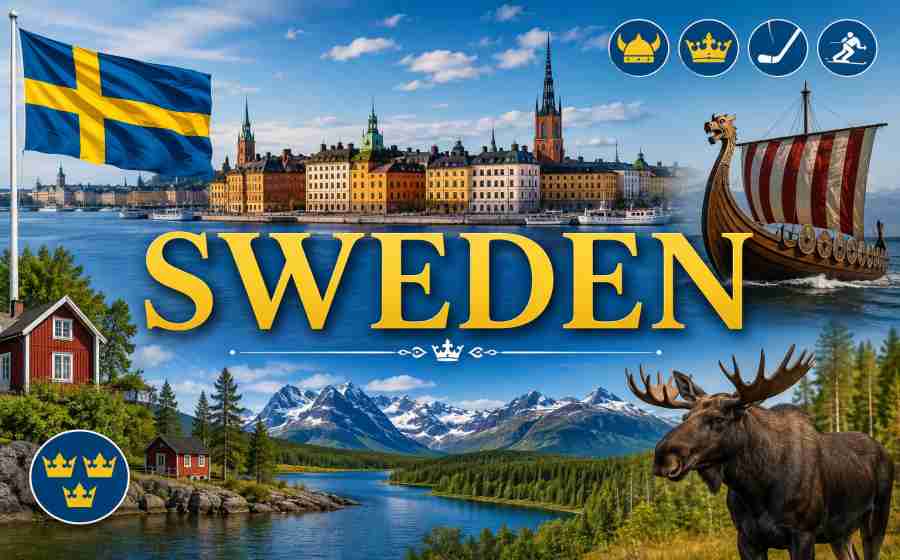
Sweden is one of the most developed and prosperous countries in Northern Europe. Known for its breathtaking natural landscapes, high quality of life, innovative industries, and rich cultural heritage, Sweden has played an important role in European history and global development. From the Viking Age to modern technological advancements, Sweden continues to attract attention for its progressive society and stunning beauty.
Table of Contents
Introduction to Sweden
Sweden is a Nordic country located on the Scandinavian Peninsula in Northern Europe. It shares borders with Norway to the west and Finland to the northeast, while the Baltic Sea lies to its east and south. The country is famous for its forests, lakes, islands, and commitment to environmental sustainability.
- Capital: Stockholm
- Official Language: Swedish
- Currency: Swedish Krona (SEK)
- Population: Around 10.5 million
- Government: Constitutional Monarchy and Parliamentary Democracy
- National Day: 6 June
Sweden is a member of the European Union and is recognized globally for its strong welfare system, education, healthcare, and innovation.
History of Sweden
The history of Sweden stretches back thousands of years. Archaeological evidence suggests that people lived in the region during the Stone Age. However, Sweden became widely known during the Viking Age, which lasted roughly from the 8th to the 11th century.
The Viking Era
Swedish Vikings were skilled sailors, traders, and explorers. Unlike many Vikings who focused on western Europe, Swedish Vikings often traveled eastward through Russia and into parts of Asia and the Byzantine Empire. They established trade routes and influenced cultural exchanges across vast regions.
Rise of the Kingdom
By the Middle Ages, Sweden gradually developed into a unified kingdom. Christianity spread throughout the country, replacing traditional Norse beliefs. During the 17th century, Sweden emerged as a major European power and controlled territories around the Baltic Sea.
Modern Sweden
Sweden remained neutral during both World Wars, avoiding direct involvement in the conflicts. This neutrality helped preserve infrastructure and supported economic growth. Throughout the 20th century, Sweden transformed into one of the world’s most advanced welfare states, emphasizing social equality and public services.
Geography and Climate
Sweden covers an area of approximately 450,000 square kilometers, making it one of Europe’s largest countries. Despite its size, much of the population is concentrated in the southern regions.
The country features:
- Dense forests
- More than 90,000 lakes
- Extensive coastline
- Mountain ranges in the west
- Thousands of islands
The climate varies from temperate in the south to subarctic in the north. Winters can be long and cold, especially in northern areas, while summers are generally mild and pleasant.
One fascinating natural phenomenon in northern Sweden is the Midnight Sun, where the sun remains visible for much of the night during summer. In winter, visitors can witness the spectacular Northern Lights.
Swedish Culture
Swedish culture reflects a blend of tradition and modernity. The country values equality, simplicity, innovation, and respect for nature.
Traditional Celebrations
One of Sweden’s most famous celebrations is Midsummer, held during the summer solstice. People gather outdoors, dance around decorated poles, wear flower crowns, and enjoy traditional foods.
Other important celebrations include:
- Christmas
- Easter
- Walpurgis Night
- Lucia Festival
Food and Cuisine
Swedish cuisine is known for simple yet flavorful dishes.
Popular foods include:
- Meatballs (Köttbullar)
- Gravlax (cured salmon)
- Pickled herring
- Crispbread
- Cinnamon buns
The concept of “Fika”, a coffee break accompanied by pastries and social conversation, is an important part of daily Swedish life.
Music and Arts
Sweden has produced internationally successful musicians and artists. The country gained worldwide recognition through the legendary pop group ABBA. Sweden continues to be a major exporter of music and creative talent. Literature, design, architecture, and film also play significant roles in Swedish cultural identity.
Economy of Sweden
Sweden has one of the strongest economies in Europe. It combines free-market principles with extensive social welfare programs.
Major industries include:
- Manufacturing
- Information Technology
- Telecommunications
- Renewable Energy
- Pharmaceuticals
- Automotive Production
Swedish companies have earned global recognition for innovation and quality. The nation consistently ranks among the world’s most competitive and innovative economies.
Sports in Sweden
Sports are deeply embedded in Swedish society. The country has achieved success in several international competitions.
Football
Football is the most popular sport in Sweden. The national team has participated in multiple international tournaments and achieved notable success on the global stage.
Ice Hockey
Ice hockey is one of Sweden’s strongest sports. The Swedish national team is considered among the world’s elite and has won numerous international championships.
Winter Sports
Due to its northern climate, Sweden excels in winter sports such as:
- Cross-country skiing
- Alpine skiing
- Biathlon
- Snowboarding
Famous Swedish Athletes
Sweden has produced many world-famous athletes, including:
- Zlatan Ibrahimović
- Björn Borg
- Armand Duplantis
- Ingemar Stenmark
These athletes have inspired generations and brought international recognition to Sweden.
Education and Innovation
Sweden is known for its high-quality education system and commitment to research. Universities attract students from around the world, and the country invests heavily in science and technology.
Innovation is a key strength of Sweden. Many groundbreaking inventions and technological advancements have emerged from the country, contributing to global progress in communication, medicine, and engineering.
Interesting Facts About Sweden
- Sweden has one of the highest standards of living in the world.
- Nearly two-thirds of the country is covered by forests.
- Stockholm is built across multiple islands connected by bridges.
- Sweden is known for its commitment to environmental protection.
- The country recycles a large portion of its waste.
- The Northern Lights can often be seen in northern Sweden.
- Sweden consistently ranks high in happiness and quality-of-life surveys.
- The Nobel Prize ceremonies are held annually in Stockholm.
- Sweden has a strong tradition of gender equality.
- It is one of the world’s leading innovation-driven economies.
Summary
Sweden stands out as a nation that successfully combines historical heritage with modern progress. From its Viking roots and royal traditions to its advanced economy, world-class education system, and rich cultural life, Sweden offers a fascinating example of development and innovation. Whether admired for its natural beauty, sporting achievements, or social values, Sweden continues to hold an important place on the global stage and remains one of the most respected countries in the world.
Also Check: General Knowledge