Cameroon – History, Culture, Sports, Natural Attractions and Fascinating Facts
Discover Cameroon’s rich history, culture, popular sports, diverse geography and important national facts in this informative overview of the African nation.
Cameroon
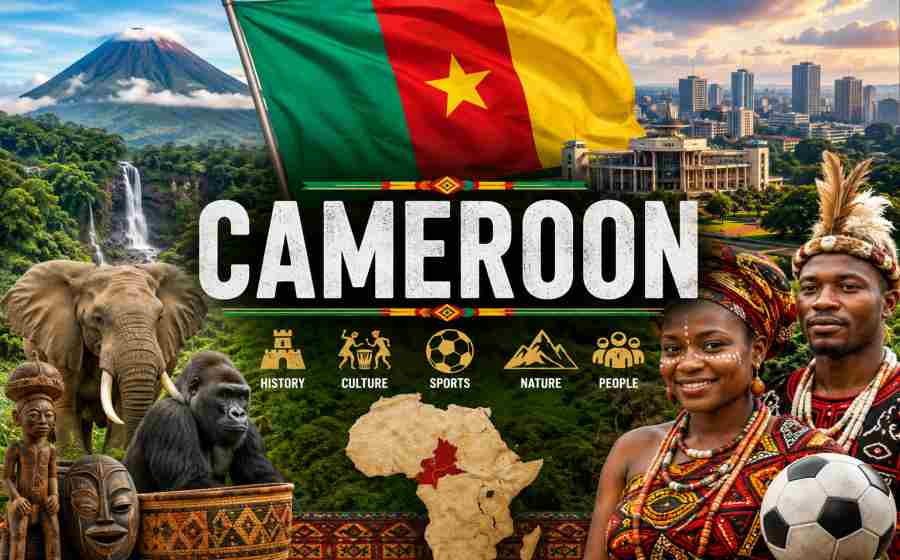
Cameroon is a beautiful country located in Central Africa, often called “Africa in Miniature” because it reflects many of the continent’s geographical and cultural features within its borders. From mountains and rainforests to savannas and coastal regions, Cameroon offers remarkable diversity. The country is known for its rich traditions, ethnic diversity, sporting achievements, and natural beauty.
Table of Contents
Introduction to Cameroon
Cameroon is situated along the Gulf of Guinea and shares borders with Nigeria, Chad, the Central African Republic, Equatorial Guinea, Gabon, and the Republic of the Congo. Its capital city is Yaoundé, while Douala serves as the largest city and main economic center.
The country covers approximately 475,000 square kilometers and has a population of over 29 million people. Cameroon is unique in Africa because it has both English and French as official languages, reflecting its colonial history.
History of Cameroon
The history of Cameroon dates back thousands of years. Archaeological evidence suggests that various communities lived in the region long before European contact. The area became an important center for migration, trade, and cultural development.
In the late 19th century, Cameroon became a German colony known as Kamerun. German rule lasted from 1884 until the end of World War I. After Germany’s defeat, the territory was divided between France and Britain under mandates from the League of Nations.
French Cameroon gained independence on January 1, 1960. In 1961, the southern part of British Cameroon voted to join the newly independent nation, creating the Federal Republic of Cameroon. Over time, the country developed into a unified republic.
Today, Cameroon remains one of Africa’s most influential nations due to its strategic location, natural resources, and cultural diversity.
Geography and Climate
Cameroon features a wide variety of landscapes, making it one of Africa’s most geographically diverse countries.
Some major geographical features include:
- Mount Cameroon, the highest peak in Central and West Africa
- Dense tropical rainforests in the south
- Savannah grasslands in the north
- Coastal plains along the Atlantic Ocean
- Rivers and lakes supporting agriculture and wildlife
The climate varies significantly from region to region. Coastal areas experience heavy rainfall, while northern regions are generally hotter and drier.
People and Culture
Cameroon is home to more than 250 ethnic groups, each with its own customs, traditions, and languages. This diversity has created a rich cultural heritage that is celebrated throughout the country.
Traditional music and dance play important roles in community life. Various cultural festivals showcase local art, storytelling, costumes, and performances.
Family values remain central to Cameroonian society. Respect for elders, community cooperation, and hospitality are deeply rooted traditions.
The country is also known for its colorful clothing, handcrafted artworks, wood carvings, beadwork, and traditional masks.
Languages
Although French and English are the official languages, Cameroon has hundreds of indigenous languages spoken across different regions.
Some widely spoken local languages include:
- Fulfulde
- Ewondo
- Duala
- Basaa
- Bamileke languages
This linguistic diversity makes Cameroon one of the most multilingual countries in Africa.
Traditional and Modern Cuisine
Cameroonian cuisine reflects influences from different ethnic groups and regions. Meals often include locally grown ingredients such as cassava, maize, plantains, rice, yams, and vegetables.
Popular dishes include:
- Ndolé (a traditional vegetable and peanut dish)
- Eru
- Achu soup
- Grilled fish
- Jollof rice
- Fufu with various sauces
Food is an important part of celebrations, family gatherings, and cultural events.
Economy of Cameroon
Cameroon has one of the more diversified economies in Central Africa. Agriculture remains a major source of employment and income.
Key agricultural products include:
- Cocoa
- Coffee
- Cotton
- Bananas
- Palm oil
- Rubber
The country also possesses natural resources such as oil, natural gas, timber, and minerals. Manufacturing, trade, and services contribute significantly to economic growth.
Sports in Cameroon
Sports are an important part of national life, and football is by far the most popular sport in Cameroon. The national football team, known as the Indomitable Lions, is one of Africa’s most successful teams. Cameroon has participated in multiple FIFA World Cups and won several Africa Cup of Nations titles.
Some legendary Cameroonian footballers include:
- Roger Milla
- Samuel Eto’o
- Rigobert Song
Football achievements have made Cameroon a respected sporting nation worldwide.
Other popular sports include:
- Basketball
- Athletics
- Boxing
- Volleyball
- Handball
Young athletes across the country continue to represent Cameroon in international competitions.
Wildlife and Natural Attractions
Cameroon is rich in biodiversity and is home to numerous wildlife species.
Notable animals found in Cameroon include:
- Forest elephants
- Gorillas
- Chimpanzees
- Antelopes
- Crocodiles
- Various bird species
National parks and protected areas help conserve these species and attract tourists from around the world.
Popular attractions include:
- Mount Cameroon
- Waza National Park
- Korup National Park
- Limbe coastal region
Key Facts About Cameroon
- Capital: Yaoundé
- Largest City: Douala
- Continent: Africa
- Official Languages: English and French
- Currency: Central African CFA Franc (XAF)
- Independence: January 1, 1960
- Nickname: “Africa in Miniature”
- Highest Point: Mount Cameroon
- Major Exports: Cocoa, coffee, oil, timber, and cotton
Summary
Cameroon is a nation of remarkable diversity, combining rich history, vibrant cultures, stunning landscapes, and impressive sporting achievements. Its mix of languages, traditions, natural resources, and ethnic communities has earned it the title of “Africa in Miniature.” Whether through its famous football stars, unique cultural heritage, or breathtaking natural scenery, Cameroon continues to hold an important place in Africa and on the global stage. Its story is one of resilience, diversity, and national pride, making it a fascinating country to explore and understand.
Also Check: General Knowledge