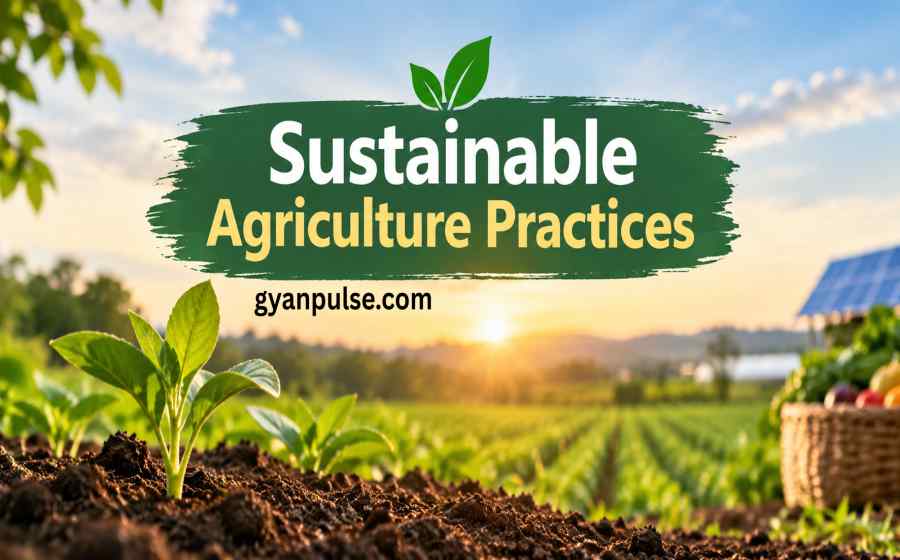
Sustainable Agriculture Practices – Smart Farming for a Greener Future
Sustainable Agriculture Practices help boost productivity, conserve resources, protect environment and support long-term food security for future generations.
Sustainable Agriculture Practices
Sustainable agriculture is no longer just an option, it has become a necessity in today’s world. With rising population, climate change, soil degradation, and water scarcity, traditional farming methods are putting immense pressure on natural resources. Sustainable agriculture practices aim to meet current food needs without compromising the ability of future generations to meet theirs. These methods focus on environmental health, economic profitability, and social equity, creating a balanced and resilient agricultural system.
Table of Contents
What is Sustainable Agriculture?
Sustainable agriculture refers to farming techniques that protect the environment, conserve natural resources, and support farmers’ livelihoods. It involves reducing dependency on chemical inputs, enhancing biodiversity, and maintaining soil fertility. The goal is to create a system that is productive yet environmentally responsible.
Importance of Sustainable Agriculture
The importance of sustainable agriculture cannot be overstated. First, it helps in preserving soil health, which is the foundation of farming. Excessive use of chemical fertilizers and pesticides depletes soil nutrients over time. Sustainable practices restore soil fertility naturally.
Second, it conserves water resources. Agriculture is one of the largest consumers of freshwater, and unsustainable irrigation practices lead to water wastage. Sustainable farming promotes efficient water use.
Third, it supports biodiversity. Monocropping and chemical usage harm beneficial organisms like pollinators and soil microbes. Sustainable methods encourage diverse ecosystems.
Lastly, it ensures long-term food security. By maintaining ecological balance, sustainable agriculture helps produce consistent yields over time.
Key Sustainable Agriculture Practices
1. Crop Rotation
Crop rotation involves growing different types of crops in the same area across different seasons. This practice prevents soil nutrient depletion and reduces pest infestations. For example, legumes can fix nitrogen in the soil, benefiting the next crop.
2. Organic Farming
Organic farming avoids synthetic fertilizers and pesticides, relying instead on natural alternatives like compost, manure, and biological pest control. This improves soil health and reduces environmental pollution.
3. Conservation Tillage
Conservation tillage minimizes soil disturbance, helping retain moisture and prevent erosion. Methods like no-till farming protect soil structure and increase organic matter content.
4. Agroforestry
Agroforestry combines trees with crops or livestock. Trees provide shade, improve soil quality, and reduce carbon dioxide in the atmosphere. This system enhances biodiversity and farm productivity.
5. Integrated Pest Management (IPM)
IPM uses a combination of biological, cultural, and mechanical methods to control pests. It reduces reliance on chemical pesticides, making farming safer for humans and the environment.
6. Water Management Techniques
Efficient irrigation methods like drip irrigation and rainwater harvesting help conserve water. These practices ensure that crops receive adequate moisture without wastage.
7. Use of Renewable Energy
Sustainable agriculture promotes the use of renewable energy sources such as solar-powered irrigation systems. This reduces dependence on fossil fuels and lowers greenhouse gas emissions.
Benefits of Sustainable Agriculture
Sustainable agriculture offers numerous benefits. It improves soil fertility and structure, leading to better crop yields over time. Farmers can reduce input costs by minimizing chemical usage, increasing profitability.
Environmentally, it reduces pollution, conserves water, and protects biodiversity. Socially, it supports rural communities by promoting fair wages and safe working conditions.
Another major benefit is climate resilience. Sustainable farms are better equipped to handle extreme weather conditions like droughts and floods due to healthier soil and diversified crops.
Challenges in Adoption
Despite its advantages, sustainable agriculture faces several challenges. One major issue is the lack of awareness among farmers. Many still rely on conventional methods due to familiarity and immediate results.
Initial costs can also be a barrier. Transitioning to sustainable practices may require investment in new techniques and equipment. Additionally, limited access to training and resources can slow adoption.
Market demand is another challenge. Farmers need proper incentives and support systems to adopt sustainable practices, including fair pricing for eco-friendly products.
The Way Forward
To promote sustainable agriculture, governments and organizations must play a crucial role. Providing subsidies, training programs, and access to modern technology can encourage farmers to adopt eco-friendly methods.
Education and awareness campaigns are essential to inform farmers about the long-term benefits of sustainability. Consumers also have a role to play by supporting organic and sustainably produced food.
Technological advancements like precision farming, data analytics, and smart irrigation systems can further enhance sustainability in agriculture.
Building a Resilient Agricultural Future
Sustainable agriculture provides a practical pathway toward a stronger and more resilient food system. By protecting soil, conserving water, supporting biodiversity, and reducing harmful environmental impacts, these farming methods can benefit both people and nature. Encouraging farmers to adopt sustainable techniques while providing proper education, technology, and financial support can help create productive farms that remain healthy and profitable for generations.
Summary
Sustainable agriculture practices are essential for building a resilient and eco-friendly food system. By adopting methods like crop rotation, organic farming, and efficient water management, farmers can protect the environment while ensuring profitability.
The future of agriculture depends on how well we balance productivity with sustainability. By making conscious choices today, we can secure a healthier planet and a stable food supply for generations to come.
Also Check: Environment