Wetlands – Nature’s Hidden Lifelines and Why their Conservation Matters More than Ever
Wetlands are vital ecosystems that support biodiversity, purify water, control floods, store carbon and protect communities, promoting a sustainable future.
Wetlands
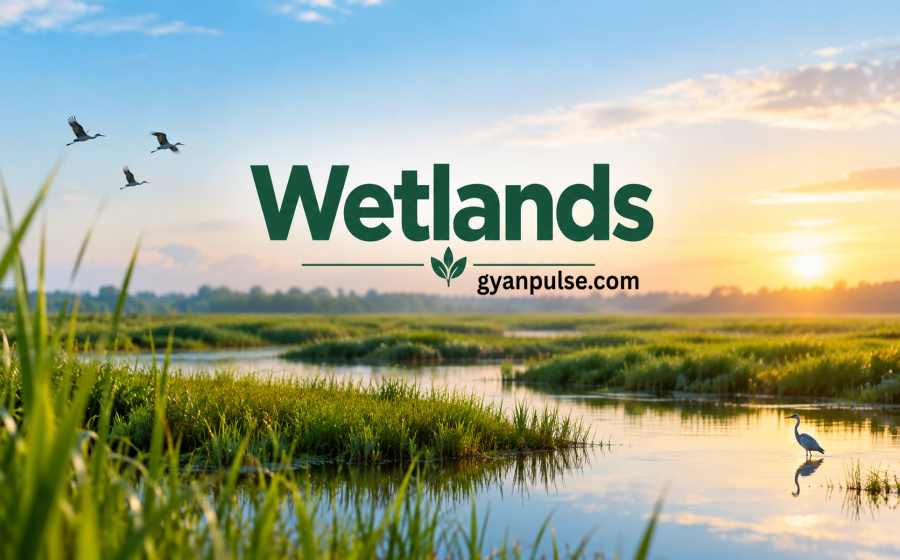
Wetlands are among the most productive and valuable ecosystems on Earth, yet they are often overlooked and misunderstood. Found at the intersection of land and water, wetlands include marshes, swamps, mangroves, peatlands, and floodplains. These ecosystems play a critical role in maintaining environmental balance and supporting both wildlife and human communities. However, despite their immense importance, wetlands are disappearing at an alarming rate due to human activities and climate change. Understanding their value and the need for conservation is essential for a sustainable future.
Table of Contents
What are Wetlands?
Wetlands are areas where water covers the soil either permanently or seasonally. This unique condition creates a distinct ecosystem characterized by water-tolerant plants, rich biodiversity, and complex ecological processes. It can be freshwater, saltwater, or a mix of both, such as estuaries. They exist across all continents except Antarctica and vary greatly in size and type.
Importance of Wetlands
1. Biodiversity Hotspots
Wetlands are home to a wide variety of plant and animal species. They provide breeding, feeding, and nesting grounds for birds, fish, amphibians, and insects. Many migratory bird species depend on wetlands as resting and feeding stops during their long journeys. Without wetlands, numerous species would face extinction.
2. Natural Water Filters
Wet lands act as natural purification systems. They trap sediments, absorb pollutants, and filter harmful chemicals from water before it reaches rivers, lakes, and oceans. This process improves water quality and reduces the need for expensive water treatment systems.
3. Flood Control and Storm Protection
Wet lands function like natural sponges, absorbing excess rainfall and reducing the intensity of floods. During heavy rains or storms, they store water and release it slowly, preventing sudden flooding. Coastal wetlands, such as mangroves, also act as barriers against storm surges, protecting coastal communities from natural disasters.
4. Climate Regulation
Wet lands play a significant role in regulating the Earth’s climate. Peatlands, a type of wetland, store vast amounts of carbon, more than forests in some cases. By capturing and storing carbon dioxide, It help mitigate climate change. However, when these ecosystems are destroyed, the stored carbon is released back into the atmosphere, contributing to global warming.
5. Livelihood Support
Millions of people around the world depend on wet lands for their livelihoods. They provide resources such as fish, rice, reeds, and medicinal plants. Wetlands also support agriculture, tourism, and fisheries, making them economically valuable.
6. Groundwater Recharge
Wet lands help replenish underground water sources by allowing water to seep into the soil. This process is crucial for maintaining water availability, especially in regions facing water scarcity.
Threats to Wetlands
Despite their importance, wet lands are under severe threat due to human activities and environmental changes.
- Urbanization: Expansion of cities leads to the drainage and filling of wet lands for construction.
- Agricultural Activities: Wet lands are often converted into farmland, disrupting natural ecosystems.
- Pollution: Industrial waste, pesticides, and sewage contaminate wetland water, harming wildlife.
- Climate Change: Rising temperatures and changing rainfall patterns affect wetland ecosystems.
- Overexploitation: Excessive fishing, water extraction, and resource use degrade wet lands.
According to environmental studies, a significant percentage of the world’s wet lands have been lost over the past century, making conservation efforts more urgent than ever.
Wetland Conservation Strategies
1. Legal Protection and Policies
Governments play a key role in protecting wet lands through laws and regulations. International agreements like the Ramsar Convention aim to conserve and sustainably use wetlands worldwide. Strong policies can prevent illegal encroachment and pollution.
2. Restoration Projects
Damaged wet lands can often be restored through ecological restoration techniques. This includes reintroducing native plants, improving water flow, and removing pollutants. Restoration helps revive biodiversity and ecosystem functions.
3. Sustainable Use Practices
Encouraging sustainable fishing, farming, and tourism can help protect wet lands while still allowing people to benefit from them. Responsible resource management ensures long-term ecological balance.
4. Community Involvement
Local communities are crucial for successful conservation. Educating people about the value of wet lands and involving them in conservation efforts can lead to better protection and sustainable practices.
5. Pollution Control
Reducing industrial discharge, promoting eco-friendly agriculture and improving waste management systems can significantly decrease pollution levels in wet lands.
6. Climate Action
Addressing climate change through reduced greenhouse gas emissions and promoting renewable energy sources can help protect wet lands from long-term damage.
Why Wetlands Matter for the Future
Wet lands are not just ecosystems; they are life-support systems for the planet. They provide essential services that cannot easily be replaced by human-made solutions. As the global population grows and environmental challenges increase, the role of wetlands becomes even more critical.
Protecting wet lands is not just about saving wildlife, it is about ensuring clean water, reducing disaster risks, supporting livelihoods, and combating climate change. Their conservation is directly linked to human well-being and sustainable development.
The Future of Wetland Conservation
Protecting wetlands is essential for maintaining ecological balance and supporting future generations. Conservation efforts can help preserve these natural ecosystems while ensuring clean water, healthy wildlife habitats, flood protection, and climate benefits. Governments, communities, and individuals all have an important role to play by reducing pollution, preventing unnecessary wetland destruction, supporting restoration projects, and using natural resources responsibly. With greater awareness and effective conservation measures, wetlands can continue providing their valuable environmental and economic benefits for many years to come.
Summary
Wet lands are invaluable ecosystems that offer a wide range of ecological, economic, and social benefits. However, their survival is under threat due to human interference and environmental changes. Immediate and effective conservation efforts are necessary to protect these natural treasures. By understanding their importance and taking responsible actions, we can ensure that wet lands continue to thrive for future generations. Preserving wet lands is not an option, it is a necessity for a balanced and sustainable world.
Also Check: Environment