Impact of Population Growth on Environment – How Rapid Growth is Impacting Our Planet
Impact of Population Growth on Environment: Learn how population growth affects natural resources, pollution, climate change and environmental sustainability.
Impact of Population Growth on Environment
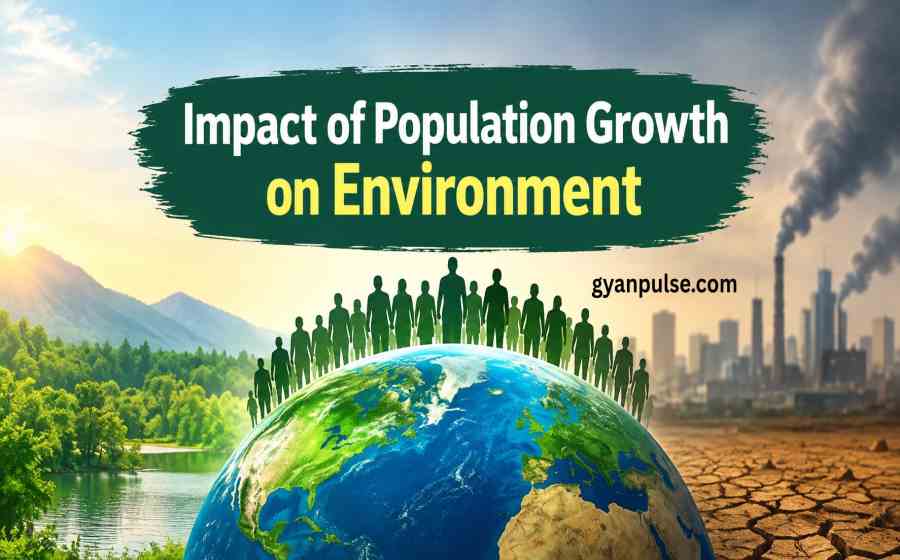
Population growth is one of the most significant factors influencing environmental change across the globe. As the number of people on Earth continues to rise, the demand for natural resources, land, water, and energy increases rapidly. While human development has brought technological and economic progress, it has also placed immense pressure on the environment. Understanding the impact of population growth is essential to creating a sustainable future.
Table of Contents
1. Increased Demand for Natural Resources
A growing population leads to higher consumption of natural resources such as water, fossil fuels, minerals, and forests. More people require more food, shelter, clothing, and energy. This increased demand often results in overexploitation of resources.
For instance, forests are cleared for agriculture and urban development, leading to deforestation. This not only destroys wildlife habitats but also reduces the Earth’s ability to absorb carbon dioxide. Similarly, excessive use of fossil fuels contributes to energy shortages and environmental degradation.
2. Environmental Pollution
Population growth significantly contributes to pollution in various forms—air, water, and soil. As industries expand to meet human needs, they release harmful gases and waste into the environment.
- Air Pollution: More vehicles and industries increase emissions of harmful gases like carbon dioxide and sulfur dioxide, leading to poor air quality and health problems.
- Water Pollution: Growing populations produce more sewage and industrial waste, which often ends up in rivers and oceans.
- Soil Pollution: Increased use of fertilizers and pesticides to boost food production contaminates the soil.
These forms of pollution not only harm ecosystems but also pose serious risks to human health.
3. Climate Change and Global Warming
One of the most critical consequences of population growth is its role in climate change. More people mean higher energy consumption, especially from non-renewable sources like coal, oil, and natural gas.
The burning of these fuels releases greenhouse gases, which trap heat in the atmosphere. This leads to global warming, rising sea levels, and extreme weather conditions such as floods, droughts, and heatwaves. Population growth indirectly accelerates these changes by increasing carbon footprints worldwide.
4. Loss of Biodiversity
As human populations expand, natural habitats are often destroyed to make space for agriculture, housing, and infrastructure. This leads to the extinction of many plant and animal species.
Biodiversity is essential for maintaining ecological balance. The loss of species disrupts food chains and ecosystems, making them less resilient to environmental changes. For example, deforestation in tropical regions has led to the disappearance of countless species that are yet to be studied.
5. Urbanization and Land Degradation
Rapid population growth results in urbanization, where more people move to cities in search of better opportunities. While urban development supports economic growth, it also leads to several environmental problems.
Cities expand into natural areas, causing land degradation and loss of green spaces. Increased construction activities disturb the natural landscape, while poor waste management systems create pollution and health hazards.
Additionally, overcrowded cities often face issues like traffic congestion, inadequate sanitation, and increased waste production, all of which negatively affect the environment.
6. Water Scarcity
Water is a vital resource, but population growth is putting immense pressure on freshwater supplies. As more people need water for drinking, agriculture, and industrial use, water sources are being depleted faster than they can be replenished.
Overuse of groundwater, pollution of rivers, and climate change further worsen water scarcity. Many regions in the world already face severe water shortages, and the situation is expected to become more critical in the future.
7. Food Production and Agricultural Pressure
To feed a growing population, agricultural production must increase. This often leads to the expansion of farmland, excessive use of chemical fertilizers, and intensive farming practices.
While these methods boost food production, they also degrade soil quality, reduce water availability, and harm biodiversity. Overfishing in oceans to meet food demand has also led to a decline in marine life.
8. Waste Generation
More people generate more waste, including plastic, electronic waste, and household garbage. Improper disposal of waste leads to environmental pollution and health risks.
Plastic waste, in particular, has become a major global concern, as it does not decompose easily and accumulates in oceans, harming marine life.
Solutions to Reduce Environmental Impact
Addressing the environmental challenges caused by population growth requires collective efforts at individual, national, and global levels.
1. Promoting Sustainable Living
Encouraging people to adopt eco-friendly lifestyles, such as reducing waste, conserving energy, and using renewable resources, can significantly lower environmental impact.
2. Family Planning and Education
Raising awareness about family planning and providing access to education can help control population growth. Educated communities are more likely to make informed decisions about resource use.
3. Use of Renewable Energy
Switching to renewable energy sources like solar, wind, and hydro power can reduce dependence on fossil fuels and lower greenhouse gas emissions.
4. Conservation of Natural Resources
Governments and organizations should implement policies to protect forests, wildlife, and water resources. Sustainable resource management is key to long-term environmental health.
5. Improved Waste Management
Recycling, composting, and proper waste disposal systems can reduce pollution and conserve resources.
Building a Sustainable Future
Managing the environmental impact of population growth requires a balanced approach that considers both human needs and the planet’s limits. Sustainable resource use, renewable energy, responsible consumption, environmental education, and effective waste management can help reduce pressure on ecosystems. By making informed choices and supporting sustainable development, communities can protect natural resources, preserve biodiversity, and create a healthier environment for future generations.
Summary
Population growth is a major driver of environmental change, influencing everything from resource consumption to climate patterns. While it is a natural phenomenon, its rapid pace poses serious challenges to the planet. Balancing human needs with environmental protection is essential for sustainable development.
By adopting responsible practices, promoting awareness, and implementing effective policies, it is possible to reduce the negative impacts of population growth and ensure a healthier environment for future generations.
Also Check: Environment