Greenhouse Gas Emissions and Control Strategies – Building a Cleaner Future
Learn about greenhouse gas emissions, their causes, environmental impacts and effective control strategies for a cleaner and sustainable future.
Greenhouse Gas Emissions
Climate change has become one of the biggest global challenges of the 21st century. A major reason behind this problem is the rapid increase in greenhouse gas emissions. These gases trap heat in the Earth’s atmosphere, causing global warming and disturbing natural climate patterns. Rising temperatures, melting glaciers, floods, droughts, and extreme weather conditions are all connected to the growing concentration of greenhouse gases.
Today, countries around the world are focusing on reducing emissions and adopting cleaner technologies. Understanding greenhouse gas emissions and the methods used to control them is important for creating a sustainable future.
Table of Contents
What are Greenhouse Gases?
Greenhouse gases (GHGs) are gases present in the atmosphere that trap heat from the sun. This natural process is known as the greenhouse effect, and it helps maintain the Earth’s temperature. Without greenhouse gases, life on Earth would not be possible because the planet would be too cold.
However, excessive greenhouse gas emissions caused by human activities have increased the Earth’s temperature beyond normal levels.
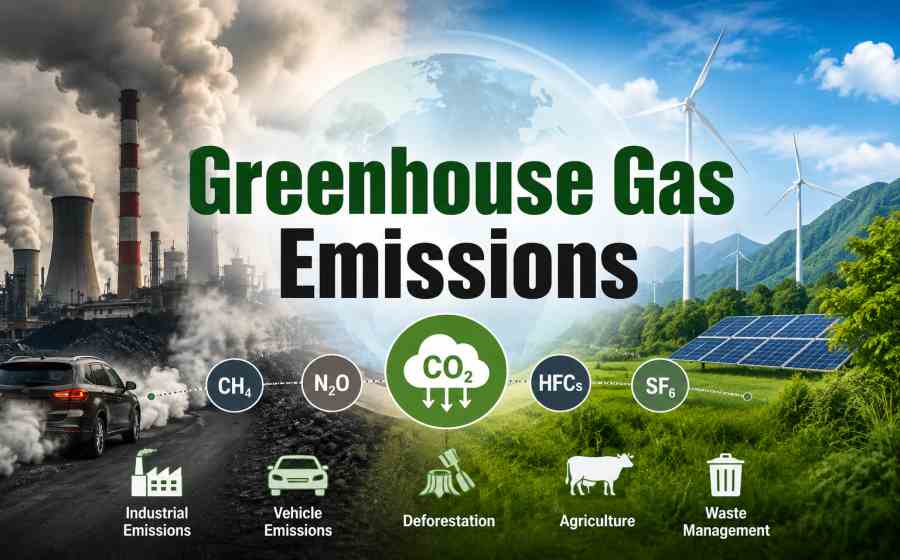
The major greenhouse gases include:
- Carbon dioxide (CO₂)
- Methane (CH₄)
- Nitrous oxide (N₂O)
- Water vapor
- Fluorinated gases
Among these, carbon dioxide is the largest contributor to global warming due to the burning of fossil fuels.
Major Sources of Greenhouse Gas Emissions
Human activities are the primary source of greenhouse gas emissions. Some of the major contributors are discussed below.
1. Burning of Fossil Fuels
Coal, oil, and natural gas are widely used for electricity, transportation, and industries. When these fuels burn, they release large amounts of carbon dioxide into the atmosphere.
Vehicles such as cars, buses, trucks, and airplanes also contribute heavily to emissions.
2. Industrial Activities
Factories and industries release greenhouse gases during manufacturing processes. Cement, steel, and chemical industries are among the highest emitters.
Industrial waste and energy consumption increase the overall pollution level.
3. Deforestation
Forests absorb carbon dioxide from the atmosphere. When trees are cut down for agriculture, construction, or urban development, the stored carbon is released back into the air.
Deforestation also reduces the Earth’s natural ability to absorb emissions.
4. Agriculture
Agricultural activities produce methane and nitrous oxide. Livestock such as cows release methane during digestion, while fertilizers used in farming release nitrous oxide.
Rice cultivation is another significant source of methane emissions.
5. Waste Management
Landfills produce methane when organic waste decomposes without oxygen. Improper disposal of waste increases greenhouse gas emissions and harms the environment.
Effects of Greenhouse Gas Emissions
The rise in greenhouse gases has serious impacts on the planet and human life.
Global Warming
Excess greenhouse gases trap more heat, increasing the Earth’s average temperature. This leads to warmer summers, heatwaves, and changing climate conditions.
Melting Glaciers and Rising Sea Levels
Higher temperatures cause glaciers and polar ice caps to melt. As sea levels rise, coastal areas face flooding and land loss.
Extreme Weather Events
Climate change increases the frequency of storms, floods, droughts, and wildfires. These disasters affect agriculture, water supply, and human safety.
Threat to Biodiversity
Many plant and animal species struggle to survive due to changing temperatures and habitats. Some species may even become extinct.
Health Problems
Air pollution and rising temperatures increase respiratory diseases, heat-related illnesses, and the spread of infections.
Importance of Controlling Greenhouse Gas Emissions
Controlling greenhouse gas emissions is essential for protecting the environment and ensuring a stable climate for future generations.
Reducing emissions can:
- Slow down global warming
- Improve air quality
- Protect ecosystems
- Support sustainable development
- Reduce health risks
- Create cleaner and greener cities
Countries worldwide are now working together through international agreements and climate policies to reduce emissions.
Effective Greenhouse Gas Control Strategies
Several methods can help reduce greenhouse gas emissions and protect the environment.
1. Use of Renewable Energy
Renewable energy sources such as solar, wind, hydroelectric, and geothermal power produce little or no greenhouse gases.
Replacing fossil fuels with clean energy is one of the most effective strategies for reducing emissions.
2. Energy Efficiency
Using energy-efficient appliances, vehicles, and industrial systems helps reduce fuel consumption and emissions.
Simple actions like switching off unused lights and using LED bulbs can also save energy.
3. Afforestation and Reforestation
Planting more trees helps absorb carbon dioxide from the atmosphere. Forest conservation programs are important for maintaining ecological balance.
Governments and organizations are encouraging large-scale tree plantation campaigns worldwide.
4. Sustainable Transportation
Public transport, electric vehicles, cycling, and walking reduce fuel consumption and pollution.
Electric vehicles are becoming increasingly popular because they produce lower emissions compared to traditional vehicles.
5. Waste Management and Recycling
Proper waste disposal, composting, and recycling reduce methane emissions from landfills.
Recycling materials like plastic, paper, and metal also saves energy and natural resources.
6. Carbon Capture and Storage (CCS)
Carbon capture technology collects carbon dioxide emissions from industries before they enter the atmosphere. The captured carbon is then stored underground.
This technology can help reduce industrial emissions significantly.
7. Sustainable Agriculture
Farmers can reduce emissions by using organic fertilizers, efficient irrigation systems, and eco-friendly farming practices.
Improved livestock management can also reduce methane emissions.
8. Government Policies and International Cooperation
Governments play a major role in controlling emissions through laws, environmental regulations, and climate agreements.
International efforts such as the Paris Agreement encourage countries to work together to reduce greenhouse gas emissions and limit global warming.
Role of Individuals in Reducing Emissions
Every person can contribute to controlling greenhouse gas emissions through small but meaningful actions.
Individuals can:
- Save electricity
- Use public transport
- Plant trees
- Reduce plastic usage
- Recycle waste
- Support eco-friendly products
- Avoid unnecessary fuel consumption
Awareness and responsible behavior can create a significant positive impact on the environment.
Summary
Greenhouse gas emissions are one of the main causes of climate change and environmental degradation. Human activities such as burning fossil fuels, deforestation, industrialization, and agriculture have increased the concentration of harmful gases in the atmosphere.
The effects of these emissions are visible through rising temperatures, melting glaciers, extreme weather events, and threats to biodiversity. However, effective control strategies such as renewable energy, sustainable transportation, afforestation, waste management, and international cooperation can help reduce environmental damage.
Protecting the planet requires combined efforts from governments, industries, and individuals. By adopting cleaner technologies and sustainable lifestyles, humanity can create a healthier and greener future for generations to come.
Also Check: Environment