
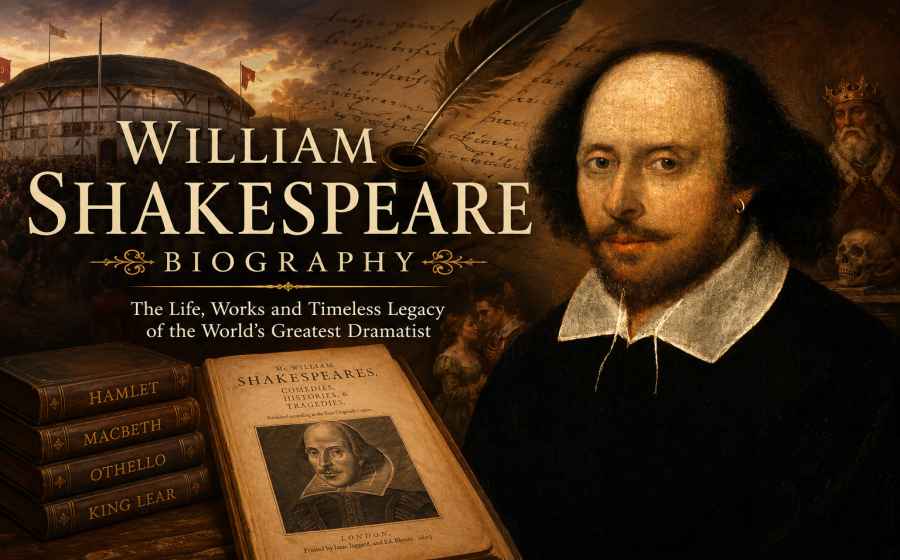
William Shakespeare Biography – The Timeless Genius of English Literature
Discover the inspiring William Shakespeare Biography, his journey, famous works, achievements and lasting impact on literature and drama worldwide.
William Shakespeare Biography
The life of William Shakespeare remains one of the most fascinating stories in literary history. Known as the greatest playwright and poet in the English language, Shakespeare transformed literature and theater with his extraordinary creativity. His works continue to influence writers, actors, filmmakers, and readers across the world even centuries after his death.
William Shakespeare was not born into a wealthy royal family or raised with extraordinary advantages. He came from an ordinary background, yet through talent, imagination, and determination he became one of history’s most celebrated literary figures. His plays and poems reveal deep understanding of human emotions, relationships, ambition, love, jealousy and power.
Table of Contents
Early Life and Childhood
William Shakespeare was born in 1564 in Stratford-upon-Avon, England. His exact date of birth is unknown, but many historians traditionally celebrate it on April 23, 1564. His father, John Shakespeare, worked as a businessman and local official, while his mother, Mary Arden, belonged to a respected farming family.
As a child, Shakespeare likely attended a local grammar school where he studied subjects such as Latin, literature, and classical writings. Although there are few detailed records about his education, scholars believe he gained a strong foundation in language and storytelling during these years.
Even in his early life, Shakespeare may have developed an interest in stories, poetry, and drama. These interests would later shape his future and lead him toward becoming a legendary writer.
Marriage and Family Life
At the age of eighteen, William Shakespeare married Anne Hathaway, who was older than him. The couple had three children: Susanna, and twins Hamnet and Judith.
Family life played an important role in Shakespeare’s journey. However, certain periods of his life remain mysterious because historical records are limited. Historians often refer to some years as the “lost years” because little information exists about his activities during that time.
Journey Toward Literature and Theater
Shakespeare eventually moved to London, where he began working in theater. During that period, London was becoming an important center for entertainment and dramatic performances.
He initially worked in theater companies and gradually gained recognition for his writing skills. Shakespeare later became a member of the famous acting company called Lord Chamberlain’s Men, which eventually became known as King’s Men.
His involvement in acting and theater gave him practical knowledge of audience interests and stage performances. This experience helped him create powerful and engaging plays.
Major Literary Works
William Shakespeare wrote approximately 39 plays, numerous poems, and many sonnets. His works are generally divided into three categories:
Tragedies
These plays often explored themes of ambition, betrayal, conflict, and human weakness.
Some famous tragedies include:
- Hamlet
- Macbeth
- Othello
- King Lear
Comedies
His comedies brought humor and entertaining stories.
Popular examples include:
- A Midsummer Night’s Dream
- Twelfth Night
- The Merchant of Venice
Historical Plays
These plays focused on English kings and important events.
Examples include:
- Henry V
- Richard III
Contribution to Literature
Shakespeare’s influence on literature is enormous. He introduced creative expressions and words that are still used in modern English today. Many common phrases originated from his writings.
His works explored universal themes such as:
- Love
- Friendship
- Power
- Greed
- Revenge
- Human emotions
- Justice
Because these themes remain relevant throughout generations, Shakespeare’s works continue to be studied in schools and universities around the world.
The Globe Theatre and Success
Globe Theatre became one of the most important places connected with Shakespeare’s career. Many of his famous plays were performed there.
The theater attracted large audiences and contributed significantly to Shakespeare’s success. Unlike many writers of his era, Shakespeare also became financially successful through his involvement in theater companies.
Final Years and Death
After years of success, Shakespeare returned to Stratford-upon-Avon and spent his later years there. He died on April 23, 1616, at the age of 52.
Although centuries have passed since his death, his works continue to live on. His plays are performed in countless countries and translated into many languages.
Legacy
William Shakespeare is remembered as a literary genius whose words crossed borders and generations. His ability to understand human nature made his works timeless.
Even today, students, actors, writers, and readers continue discovering new meanings in his writings. Shakespeare proved that talent combined with dedication can create something that survives far beyond a person’s lifetime.
5 Inspirations from William Shakespeare
- Great talent can emerge from ordinary beginnings.
- Creativity can leave a lasting impact on the world.
- Education and learning shape future success.
- Hard work and dedication bring recognition.
- True art remains timeless and meaningful.
Summary
William Shakespeare was one of the greatest writers and playwrights in history. Born in Stratford-upon-Avon, England, he rose from an ordinary background to become a global literary icon. Through masterpieces such as Hamlet, Macbeth, and Othello, he changed the world of literature forever. His works continue inspiring millions and remain an essential part of global culture.
Also Check: Biography