
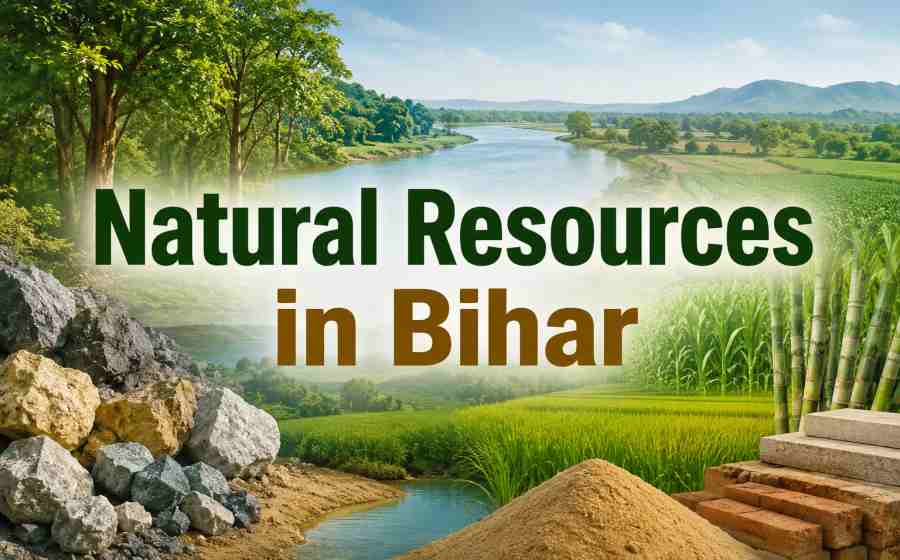
Natural Resources in Bihar – Mineral, Water, Forest and Agricultural Wealth
Explore the natural resources in Bihar, including minerals, fertile soil, forests, water resources and their importance in the state’s economy and development.
Natural Resources in Bihar
Bihar, one of India’s historically significant states, is blessed with a variety of natural resources that contribute to its economy, agriculture, and overall development. Although Bihar is often recognized for its rich cultural heritage and agricultural productivity, the state also possesses valuable mineral deposits, extensive water resources, fertile plains, and forest wealth. These natural resources have supported the livelihoods of millions of people and continue to play a vital role in the state’s growth.
Table of Contents
What are Natural Resources?
Natural resources are materials and substances that occur naturally in the environment and can be utilized by humans for economic and social development. These include water, minerals, forests, soil, wildlife, and energy resources.
Bihar’s natural resources can broadly be divided into the following categories:
- Agricultural resources
- Water resources
- Mineral resources
- Forest resources
- Biodiversity and wildlife resources
1. Agricultural Resources
Agriculture is the backbone of Bihar’s economy. The state possesses some of the most fertile alluvial plains in India, making it highly suitable for farming.
Fertile Alluvial Soil
The fertile soil deposited by rivers such as the Ganga and its tributaries supports the cultivation of numerous crops. Bihar’s soil is rich in nutrients and ideal for intensive agriculture.
Major Crops of Bihar
Some of the important crops grown in Bihar include:
- Rice
- Wheat
- Maize
- Pulses
- Sugarcane
- Mustard
- Potato
- Tobacco
- Lentils
Bihar is among the leading producers of maize and vegetables in India. Horticulture has also expanded significantly, with fruits like mango, litchi, banana, and guava contributing to the agricultural economy.
2. Water Resources
Water is one of Bihar’s most valuable natural assets. Several perennial rivers flow through the state, supporting agriculture, fisheries, and domestic needs.
Major Rivers of Bihar
Important rivers include:
- Ganga
- Kosi
- Gandak
- Son
- Bagmati
- Punpun
- Kamla
- Mahananda
Importance of Water Resources
These rivers provide:
- Irrigation facilities for agriculture.
- Drinking water for rural and urban populations.
- Opportunities for inland fisheries.
- Recharge of groundwater reserves.
- Support for transportation in certain regions.
However, many of these rivers also cause seasonal flooding, especially in northern Bihar, creating both opportunities and challenges for the state.
3. Mineral Resources
Although Bihar lost a significant portion of its mineral-rich areas after the formation of Jharkhand in 2000, the state still possesses several important mineral resources.
Limestone
Limestone is one of Bihar’s notable mineral resources. It is used extensively in:
- Cement manufacturing
- Construction activities
- Chemical industries
Deposits of limestone are found mainly in the Rohtas district.
Pyrite
Bihar has deposits of pyrite, especially in the Rohtas region. Pyrite contains sulfur and is used in:
- Sulfuric acid production
- Fertilizer industries
- Chemical manufacturing
Other Minerals
Limited quantities of the following minerals are also found:
- Quartz
- Sand
- Clay
- Building materials used in construction
River sand extracted from various riverbeds contributes significantly to the construction sector.
4. Forest Resources
Compared to several other Indian states, Bihar has relatively low forest cover. Nevertheless, forests remain an important natural resource.
Major Forest Areas
Forests are mainly concentrated in districts such as:
- West Champaran
- Kaimur
- Rohtas
- Banka
- Jamui
- Nawada
Forest Products
These forests provide numerous products, including:
- Timber
- Fuelwood
- Bamboo
- Medicinal plants
- Fodder for livestock
Forests also help maintain ecological balance by conserving soil, regulating climate, and preserving biodiversity.
5. Biodiversity and Wildlife Resources
Bihar possesses diverse flora and fauna despite limited forest cover.
Important Wildlife Areas
Valmiki Tiger Reserve
Located in West Champaran district, Valmiki Tiger Reserve is Bihar’s only tiger reserve. It is home to:
- Bengal tigers
- Leopards
- Deer species
- Sloth bears
- Various reptiles
Vikramshila Gangetic Dolphin Sanctuary
Situated along the Ganga River, this sanctuary protects the endangered Gangetic dolphin, which is also India’s National Aquatic Animal.
Importance of Biodiversity
Wildlife resources contribute to:
- Ecological stability
- Scientific research
- Eco-tourism development
- Environmental education
6. Fisheries Resources
The abundance of rivers, ponds, and wetlands makes fisheries an important resource in Bihar.
Fish farming has become a growing source of income for rural communities. The state government has also promoted aquaculture to increase fish production and employment opportunities.
Benefits include:
- Nutritional security
- Employment generation
- Rural economic development
Challenges in Resource Management
Despite its rich natural assets, Bihar faces several challenges:
- Frequent floods causing soil erosion and crop damage.
- Deforestation and shrinking forest cover.
- Illegal sand mining in some areas.
- Groundwater depletion in certain regions.
- Pollution of rivers and wetlands.
Sustainable management practices are essential to ensure that these resources continue benefiting future generations.
Importance of Natural Resources in Bihar’s Development
Natural resources significantly influence Bihar’s economy and social well-being. They provide employment opportunities, support agriculture and industries, enhance food security, and contribute to environmental sustainability.
Proper conservation and scientific utilization of these resources can accelerate the state’s development while preserving ecological balance.
Summary
Bihar’s natural resources form the foundation of its economic and environmental strength. Fertile agricultural land, extensive river systems, valuable minerals, forest products, and diverse wildlife collectively support millions of livelihoods across the state. Although challenges such as floods, deforestation, and resource mismanagement exist, effective conservation strategies and sustainable utilization can unlock Bihar’s immense potential. For students preparing for competitive examinations and anyone interested in Bihar General Knowledge, understanding the natural resources found in Bihar is both informative and essential.
Also Check: Bihar GK