Morocco – History, Culture, Sports, Tourism Attractions and Key Facts
Explore Morocco’s history, culture, sports, geography, economy and key facts. Discover what makes this North African nation unique and fascinating.
Morocco
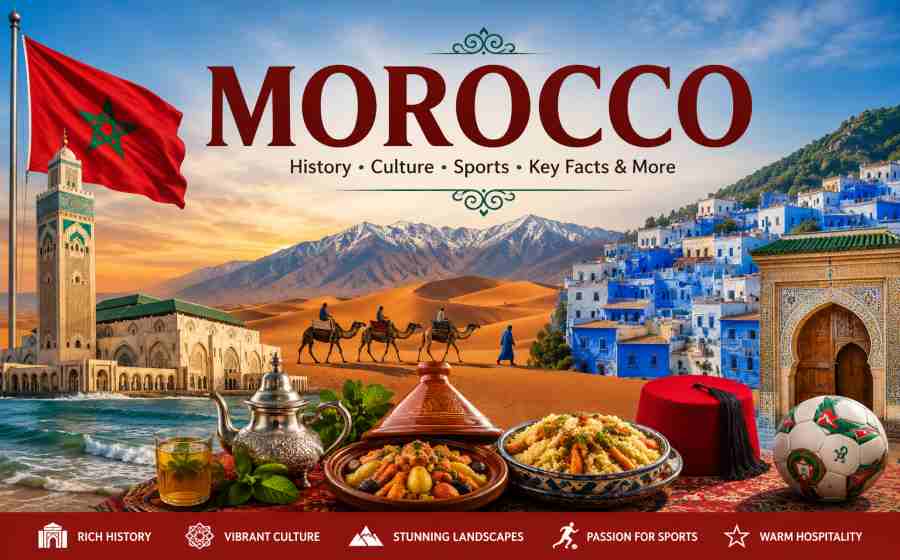
Morocco is a beautiful country located in North Africa, known for its rich history, vibrant culture, stunning landscapes, and strategic location between Europe and Africa. Officially called the Kingdom of Morocco, the country borders the Atlantic Ocean and the Mediterranean Sea, making it an important center for trade and tourism. Morocco is famous for its colorful markets, historic cities, traditional architecture, delicious cuisine, and warm hospitality.
With a history that spans thousands of years, Morocco has been influenced by Berber, Arab, African, and European civilizations. Today, it is one of Africa’s most stable and rapidly developing nations.
Table of Contents
Historical Background of Morocco
Morocco’s history dates back to ancient times when indigenous Berber communities inhabited the region. Over the centuries, Phoenicians, Romans, and Arabs arrived and left lasting influences on the country’s culture and society.
In the 7th century, Islam spread throughout Morocco, shaping its identity and traditions. Several powerful dynasties, including the Almoravids, Almohads, and Marinids, ruled Morocco and expanded their influence across North Africa and parts of Europe.
During the early 20th century, Morocco became a protectorate under France and Spain. However, the country gained independence in 1956 under the leadership of Mohammed V. Since then, Morocco has continued to modernize while preserving its cultural heritage.
Geography and Climate
Morocco covers an area of approximately 446,550 square kilometers. The country features diverse landscapes, including mountains, deserts, forests, plains, and coastlines.
Major geographical features include:
- Atlas Mountains
- Sahara Desert
- Atlantic Ocean coastline
- Mediterranean coastline
The climate varies by region. Coastal areas enjoy mild temperatures, while inland regions experience hotter summers. The Atlas Mountains receive snowfall during winter, making them popular for winter sports.
Capital and Major Cities
The capital city of Morocco is Rabat, which serves as the country’s political and administrative center.
Other important cities include:
- Casablanca – Economic hub and largest city
- Marrakesh – Famous for tourism and historic markets
- Fez – Known for its ancient medina
- Tangier – Strategic port city
- Agadir – Popular beach destination
Culture and Traditions
Moroccan culture reflects a blend of Berber, Arab, African, and European influences. Family values, hospitality, and respect for traditions play an important role in everyday life.
Language
The official languages of Morocco are:
- Arabic
- Amazigh (Berber)
French is also widely used in business, education, and government.
Religion
Islam is the dominant religion in Morocco and influences many aspects of daily life, including festivals, customs, and social practices.
Traditional Clothing
Traditional Moroccan clothing includes:
- Djellaba (long robe)
- Kaftan
- Fez hat
These garments are often worn during festivals and special occasions.
Moroccan Cuisine
Moroccan food is renowned worldwide for its rich flavors and aromatic spices.
Popular dishes include:
- Couscous
- Tagine
- Mint tea
- Harira soup
- Pastilla
The use of saffron, cinnamon, cumin, ginger, and coriander gives Moroccan cuisine its distinctive taste.
Economy of Morocco
Morocco has one of the most diversified economies in Africa. Major sectors include:
- Agriculture
- Tourism
- Manufacturing
- Mining
- Renewable energy
- Automotive production
The country is one of the world’s leading producers of phosphates, an important mineral used in fertilizers. Tourism also contributes significantly to the economy, attracting millions of visitors annually.
Sports in Morocco
Sports play a vital role in Moroccan society, with football being the most popular sport.
Football
The Moroccan national football team has achieved significant success in international competitions. Morocco gained worldwide recognition after reaching the semi-finals of the 2022 FIFA World Cup, becoming the first African nation to achieve this milestone.
Notable Moroccan footballers include:
- Achraf Hakimi
- Hakim Ziyech
- Youssef En-Nesyri
Other Popular Sports
- Athletics
- Basketball
- Tennis
- Handball
- Martial arts
Morocco has produced several internationally recognized athletes in track and field competitions.
Education and Development
Morocco has made significant investments in education and infrastructure over recent decades. Universities and educational institutions continue to expand, helping improve literacy rates and professional skills.
The government has also invested heavily in transportation projects, including modern highways, ports, and high-speed rail networks.
Tourism Attractions
Morocco is among Africa’s most visited countries due to its unique blend of history, nature, and culture.
Popular tourist destinations include:
- Marrakesh
- Fez
- Chefchaouen
- Hassan II Mosque
- Sahara Desert
Visitors enjoy exploring ancient medinas, mountain villages, desert landscapes, and coastal resorts.
Key Facts About Morocco
| Fact | Information |
|---|---|
| Official Name | Kingdom of Morocco |
| Capital | Rabat |
| Largest City | Casablanca |
| Continent | Africa |
| Official Languages | Arabic, Amazigh |
| Currency | Moroccan Dirham (MAD) |
| Government | Constitutional Monarchy |
| Major Religion | Islam |
| Famous Sport | Football |
| Independence | 1956 |
Summary
Morocco is a nation where ancient traditions meet modern development. Its rich history, diverse culture, breathtaking landscapes, thriving economy, and passion for sports make it one of the most fascinating countries in Africa. Whether through its historic cities, flavorful cuisine, successful athletes, or welcoming people, Morocco continues to captivate visitors and learners from around the world. Understanding Morocco provides valuable insight into the cultural and historical richness of North Africa.
Also Check: General Knowledge