Burkina Faso – History, Culture, Sports and Fascinating Facts of the Land of Upright People
Discover Burkina Faso, its rich history, culture, popular sports, diverse wildlife, economy, geography and fascinating facts about this West African nation.
Burkina Faso
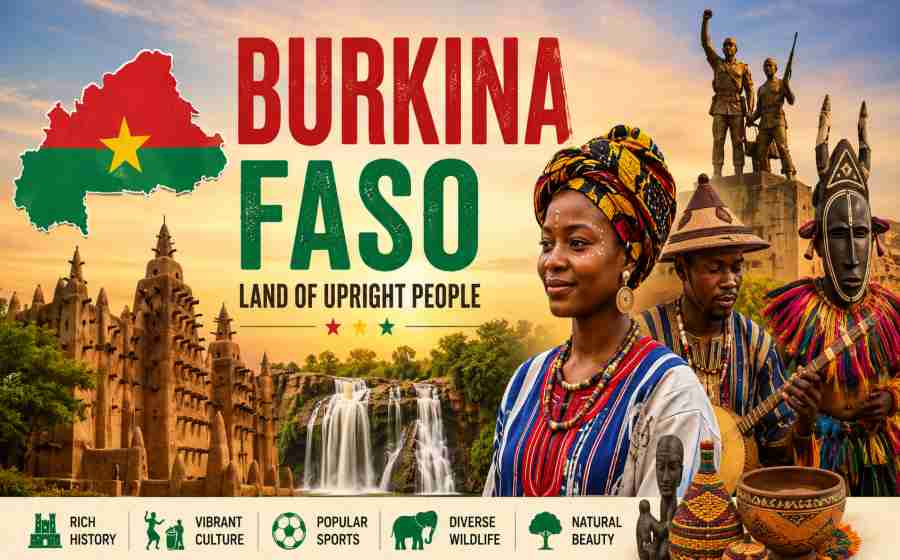
Burkina Faso is a landlocked country in West Africa known for its rich cultural heritage, colorful festivals, traditional music, and resilient people. Although it is one of the developing nations of Africa, Burkina Faso has made a name for itself through its artistic traditions, vibrant handicrafts, and international film festival. The country’s name means “Land of Upright People,” reflecting the values of honesty, dignity, and integrity.
With diverse ethnic communities, fascinating history, and beautiful natural landscapes, Burkina Faso offers much more than many people realize. From ancient kingdoms to modern democratic struggles, the nation has experienced remarkable transformations throughout its history.
Table of Contents
Quick Facts About Burkina Faso
- Continent: Africa
- Region: West Africa
- Capital: Ouagadougou
- Largest City: Ouagadougou
- Official Language: French
- National Languages: Mooré, Dioula, Fulfulde, and several others
- Currency: West African CFA Franc (XOF)
- Population: Approximately 24 million
- Area: Around 274,200 square kilometers
- Time Zone: GMT (UTC+0)
- National Animal: White Horse
- National Motto: Unity – Progress – Justice
History of Burkina Faso
The region that is now Burkina Faso has been inhabited for thousands of years. Archaeological discoveries reveal that ancient farming communities existed here as early as 1500 BC. Several powerful kingdoms later emerged, including the Mossi Kingdoms, which became dominant from the 11th century onward.
The Mossi rulers established organized kingdoms with strong political systems and successfully resisted many outside invasions for centuries. These kingdoms remained influential until European colonial expansion reached West Africa.
In the late 19th century, France colonized the area and incorporated it into French West Africa. The territory became known as Upper Volta due to the Volta River system.
Upper Volta gained independence from France on 5 August 1960. In 1984, revolutionary leader Thomas Sankara renamed the country Burkina Faso, combining words from two local languages to mean “Land of Upright People.”
Since independence, the country has experienced political changes, military coups, and democratic reforms. Despite challenges, Burkina Faso continues working toward peace, development, and economic progress.
Geography and Climate
Burkina Faso is completely landlocked and shares borders with Mali, Niger, Benin, Togo, Ghana, and Côte d’Ivoire.
The country mainly consists of:
- Savannah grasslands
- Low plateaus
- Seasonal rivers
- Small forests
- Rolling plains
The climate is tropical with two major seasons:
- Rainy Season: May to October
- Dry Season: November to April
During the dry months, the Harmattan winds carry dust from the Sahara Desert, making the weather dry and hazy.
People and Culture
Burkina Faso is one of Africa’s most culturally diverse nations, with over 60 ethnic groups.
The largest communities include:
- Mossi
- Fulani
- Bobo
- Gurunsi
- Lobi
- Gourmantché
Each group has its own traditions, music, dances, clothing, and festivals. Family values, respect for elders, hospitality, and community cooperation play an important role in everyday life. Traditional storytelling remains popular, helping preserve history and cultural knowledge across generations.
Languages Spoken and Religion
Although French is the official language used in government and education, many local languages are spoken daily.
Some widely spoken languages include:
- Mooré
- Dioula
- Fulfulde
- Bissa
- Gourmanchéma
Multilingual communication is common throughout the country.
Burkina Faso is religiously diverse. Major religions include:
- Islam
- Christianity
- Traditional African religions
People generally practice religious tolerance, and many communities celebrate festivals together regardless of religious background.
Traditional Food
Burkinabè cuisine is simple, nutritious, and based on locally grown crops.
Popular dishes include:
- Tô – a thick millet or sorghum porridge
- Rice with vegetable sauce
- Grilled chicken
- Peanut sauce
- Beans
- Fish dishes
- Yam and cassava preparations
Fresh mangoes, bananas, papayas, and other tropical fruits are also widely enjoyed.
Music and Dance
Music is an essential part of life in Burkina Faso.
Traditional instruments include:
- Balafon
- Kora
- Talking drums
- Flutes
- Percussion instruments
Dance performances accompany weddings, harvest celebrations, religious ceremonies, and cultural festivals. Modern musicians often blend traditional rhythms with pop, jazz, reggae, and Afrobeat styles.
Arts and Handicrafts
Burkina Faso is internationally recognized for its artistic creativity.
Famous handicrafts include:
- Wood carvings
- Bronze sculptures
- Leather products
- Colorful woven fabrics
- Pottery
- Basket weaving
- Traditional masks
Markets throughout the country display beautiful handmade items created by skilled artisans.
Sports in Burkina Faso
Football is by far the most popular sport. Children and adults play football in villages, towns, schools, and cities across the country.
Other popular sports include:
- Basketball
- Athletics
- Cycling
- Martial arts
- Wrestling
The national football team, known as Les Étalons (The Stallions), has participated in several Africa Cup of Nations tournaments and earned international recognition through strong performances. Cycling competitions are also highly popular and attract enthusiastic spectators.
Education
The government has made efforts to improve education through increased school enrollment and literacy programs.
Educational institutions include:
- Primary schools
- Secondary schools
- Technical institutes
- Universities
Challenges remain in rural areas, but access to education continues to improve.
Economy
Burkina Faso’s economy mainly depends on:
- Agriculture
- Gold mining
- Livestock
- Cotton production
- Small businesses
Major crops include:
- Sorghum
- Millet
- Maize
- Cotton
- Sesame
- Rice
- Groundnuts
Gold is one of the country’s largest export products and plays a significant role in the national economy.
Wildlife and Tourist Attractions
Despite its dry climate, Burkina Faso has impressive wildlife.
Animals found in protected parks include:
- Elephants
- Lions
- Antelopes
- Buffaloes
- Monkeys
- Crocodiles
- Hippos
National parks and wildlife reserves help conserve biodiversity and attract eco-tourists.
Tourist Attractions
Visitors can explore many interesting places, including:
- Ouagadougou – the capital city
- Banfora Cascades
- Karfiguéla Waterfalls
- Sindou Peaks
- Nazinga Game Ranch
- Ruins of Loropéni (UNESCO World Heritage Site)
- Sacred crocodile ponds
These attractions showcase both natural beauty and historical significance.
Interesting Facts About Burkina Faso
- Burkina Faso means “Land of Upright People.”
- It was formerly known as Upper Volta.
- The country has more than 60 ethnic groups.
- It hosts FESPACO, Africa’s largest film festival.
- Gold is the country’s leading export.
- Traditional masks are an important part of cultural ceremonies.
- Burkina Faso has no coastline because it is landlocked.
- Storytelling remains an important cultural tradition.
- Cotton is one of the country’s major agricultural products.
- Hospitality is considered one of the nation’s strongest cultural values.
Summary
Burkina Faso is a country rich in history, cultural diversity, artistic excellence, and community spirit. From the ancient Mossi Kingdoms to its modern identity as the “Land of Upright People,” the nation reflects resilience and pride. Its colorful traditions, thriving arts, popular sports, and remarkable landscapes make it an important part of West Africa. Although Burkina Faso faces developmental challenges, its people continue to preserve their heritage while striving for a brighter future, making it a fascinating country to learn about in the world of general knowledge.
Also Check: General Knowledge