Gabon – History, Culture, Sports, Tourism and Fascinating Key Facts of this African Nation
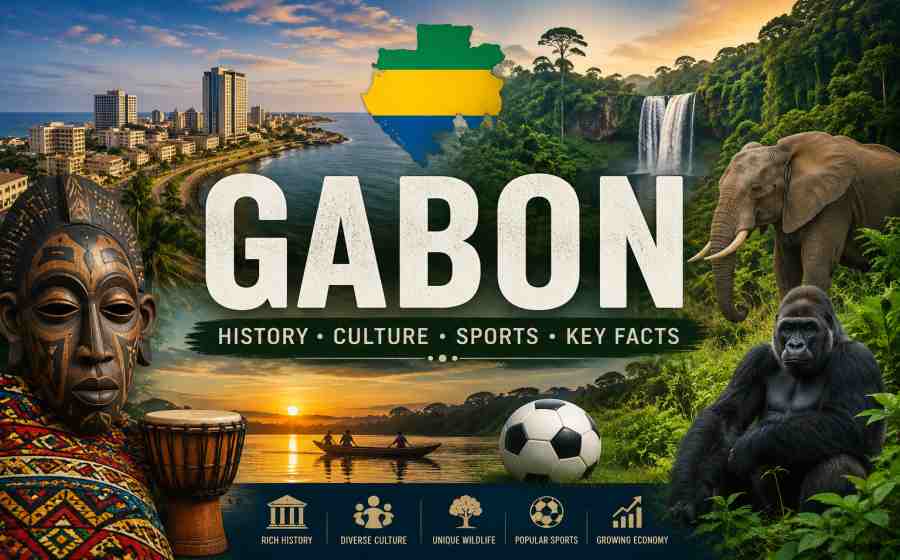
Discover Gabon with its rich history, vibrant culture, unique wildlife, famous sports, diverse geography, growing economy and fascinating key facts.
Gabon
Gabon is a beautiful country located on the west coast of Central Africa. Known for its dense rainforests, diverse wildlife, rich natural resources, and peaceful atmosphere, Gabon is one of Africa’s most environmentally protected nations. Nearly 90% of the country is covered with forests, making it an important destination for nature lovers and conservationists.
Although Gabon has a relatively small population, it possesses abundant oil reserves, mineral wealth, and unique biodiversity. Its colorful traditions, vibrant music, and cultural festivals reflect the heritage of many ethnic groups that have lived in the region for centuries.
Table of Contents
History of Gabon
The history of Gabon dates back thousands of years when indigenous communities such as the Pygmies inhabited the forests. Later, Bantu-speaking peoples migrated into the region and established settlements.
Portuguese explorers reached Gabon’s coast during the 15th century. They named the area “Gabão,” meaning “cloak,” because the shape of the Komo River estuary resembled a hooded cloak.
During the 19th century, France gradually established control over the territory. Gabon became part of French Equatorial Africa and remained under colonial rule for many decades.
On 17 August 1960, Gabon gained independence from France. Since independence, the country has maintained relative political stability compared to many neighboring nations. Its economy grew significantly due to oil production, although diversification remains an important national goal.
Today, Gabon continues investing in environmental conservation, tourism, education, and sustainable development.
Geography of Gabon
Gabon lies along the Atlantic Ocean and shares borders with Equatorial Guinea, Cameroon, and the Republic of the Congo.
Key geographical features include:
- Dense tropical rainforests
- Atlantic coastline stretching over 880 kilometers
- Rivers including the Ogooué River
- Mangrove forests
- Mountains and plateaus
- Rich biodiversity
The country’s climate is tropical with high temperatures and abundant rainfall throughout much of the year. Large national parks protect elephants, gorillas, chimpanzees, leopards, and countless bird species.
Capital and Major Cities
The capital city of Gabon is Libreville, located on the Atlantic coast.
Other important cities include:
- Port-Gentil
- Franceville
- Oyem
- Mouila
- Lambaréné
Libreville serves as the country’s political, educational, and economic center.
Culture of Gabon
Gabon’s culture reflects a blend of African traditions and French influence.
More than 40 ethnic groups live in Gabon, including:
- Fang
- Myene
- Punu
- Nzebi
- Kota
Each group has its own customs, dances, storytelling traditions, and artistic styles. Traditional ceremonies remain an important part of community life, especially during weddings, harvest festivals, and religious events.
Music combines drums, percussion instruments, singing, and dance. Modern Gabonese musicians also perform jazz, hip-hop, gospel, and Afro-pop.
Wood carving and mask-making are highly respected traditional arts. Beautiful ceremonial masks are used during cultural festivals and rituals. French is the official language, while many indigenous languages are spoken across the country.
Traditional Food of Gabon
Gabonese cuisine is influenced by local ingredients, coastal seafood, and French cooking traditions.
Popular dishes include:
- Grilled fish
- Chicken with spicy sauces
- Cassava
- Plantains
- Rice
- Yams
- Smoked meat
- Palm oil dishes
Fresh tropical fruits such as mangoes, bananas, pineapples, and papayas are widely enjoyed. Seafood is especially common along the Atlantic coast.
Economy of Gabon
Gabon has one of the highest per capita incomes in Sub-Saharan Africa due to its natural resources.
Major industries include:
- Oil production
- Mining
- Timber
- Manganese
- Agriculture
- Fishing
- Tourism
Oil has been the backbone of the economy for decades. However, the government is working to diversify economic activities by promoting eco-tourism, forestry management, and manufacturing.
Protected forests also contribute to carbon conservation, giving Gabon international recognition for environmental sustainability.
Wildlife and National Parks
One of Gabon’s greatest treasures is its wildlife. Nearly one-third of the country is protected through national parks and conservation areas.
Animals found in Gabon include:
- Forest elephants
- Western lowland gorillas
- Chimpanzees
- Leopards
- Buffaloes
- Crocodiles
- Sea turtles
- Whales
- Dolphins
The country’s forests are among the richest ecosystems in Africa. National parks attract researchers, photographers, and eco-tourists from around the world.
Sports in Gabon
Football is the most popular sport in Gabon. The national football team has participated in several Africa Cup of Nations tournaments.
Popular sports include:
- Football
- Basketball
- Athletics
- Handball
- Martial arts
- Volleyball
Gabon co-hosted the 2012 Africa Cup of Nations with Equatorial Guinea and later hosted the tournament again in 2017. The government continues investing in sports facilities and youth development programs.
Education in Gabon
Education is compulsory for children, and the government has expanded schools across the country. Higher education institutions provide programs in science, medicine, engineering, business, and humanities. French serves as the primary language of instruction in schools. Efforts continue to improve literacy, vocational education, and digital learning opportunities.
Tourism in Gabon
Gabon is becoming a popular eco-tourism destination.
Tourists visit the country for:
- Rainforest adventures
- Wildlife safaris
- Atlantic beaches
- Whale watching
- National parks
- River cruises
- Bird watching
- Cultural festivals
Unlike many tourist destinations, Gabon’s forests remain largely untouched, offering visitors an authentic natural experience.
Government of Gabon
Gabon is a republic with a president serving as the head of state. The government oversees national development, environmental conservation, education, healthcare, and infrastructure projects. In recent years, political reforms and economic diversification have become important national priorities.
Interesting Facts About Gabon
- Gabon is located in Central Africa along the Atlantic Ocean.
- Nearly 90% of the country is covered by rainforest.
- Libreville is both the capital and largest city.
- French is the official language.
- Gabon has one of Africa’s richest wildlife populations.
- Forest elephants are found in large numbers.
- Oil remains the country’s biggest export.
- More than 40 ethnic groups live in Gabon.
- The Ogooué River is the country’s longest river.
- National parks cover about 11% of Gabon’s land area.
- Whale watching is a major tourist attraction.
- Gabon has one of the lowest population densities in Africa.
- Rich deposits of manganese make Gabon a leading producer of the mineral.
- Eco-tourism is becoming increasingly important to the economy.
- Traditional wooden masks from Gabon are admired worldwide.
Summary
Gabon is a remarkable African nation blessed with extraordinary natural beauty, rich cultural diversity, and abundant wildlife. From its vast rainforests and protected national parks to its vibrant traditions and growing eco-tourism industry, the country offers a unique blend of heritage and conservation. While oil has long supported its economy, Gabon is steadily working toward sustainable development through environmental protection, tourism, and economic diversification. Whether studied for general knowledge or explored as a travel destination, Gabon stands out as one of Africa’s most fascinating and environmentally significant countries.
Also Check: General Knowledge