Guinea – History, Culture, Sports, Geography, Wildlife, Natural Beauty and Essential Facts
Discover Guinea through its history, culture, geography, sports, economy, traditions, wildlife and fascinating facts in this comprehensive overview.
Guinea
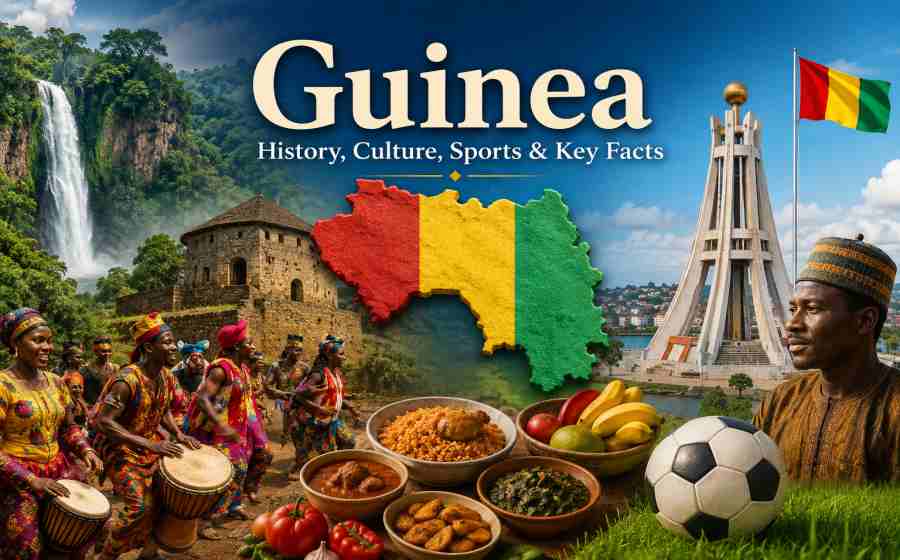
Guinea is a beautiful country located on the western coast of Africa. Officially known as the Republic of Guinea, it is famous for its rich mineral resources, diverse ethnic cultures, lush forests, and vibrant traditions. The country plays an important role in West Africa due to its abundance of natural wealth, especially bauxite, which is used in aluminum production.
Despite facing political and economic challenges throughout its history, Guinea continues to preserve its unique heritage while working toward development. From colorful festivals and traditional music to breathtaking landscapes and passionate football fans, Guinea offers a fascinating blend of history, culture, and natural beauty.
Table of Contents
Geography of Guinea
Guinea lies along the Atlantic Ocean in West Africa. It shares borders with Guinea-Bissau, Senegal, Mali, Côte d’Ivoire, Liberia, and Sierra Leone.
The country covers approximately 245,857 square kilometers, making it one of the larger nations in West Africa. Guinea’s geography is incredibly diverse, including coastal plains, mountainous regions, fertile highlands, rivers, forests, and savannas.
The Niger River, one of Africa’s longest rivers, originates in the highlands of Guinea before flowing through Mali, Niger, Benin, and Nigeria. Because of this, Guinea is often called the “Water Tower of West Africa.”
The climate is generally tropical, with a rainy season from May to October and a dry season from November to April.
Capital and Major Cities
The capital city is Conakry, located on the Atlantic coast. It serves as Guinea’s political, economic, and cultural center.
Other important cities include:
- Kankan
- Kindia
- Labé
- Nzérékoré
- Boké
Each city reflects the country’s ethnic diversity and regional traditions.
Brief History of Guinea
Human settlement in Guinea dates back thousands of years. Various African kingdoms and empires influenced the region, including the Ghana, Mali, and Songhai Empires.
During the late 19th century, Guinea became part of French West Africa under French colonial rule. A historic turning point came in 1958, when Guinea became the first French African colony to vote for immediate independence rather than remain within the French Community.
Under the leadership of Ahmed Sékou Touré, Guinea declared independence on 2 October 1958. Although the country achieved political freedom, it experienced periods of authoritarian rule, military governments, and political instability. Today, Guinea continues to strengthen democratic institutions while pursuing economic development.
People and Culture
Guinea is home to more than 14 million people and is one of Africa’s most culturally diverse countries.
Major ethnic groups include:
- Fulani (Fula)
- Malinké (Mandinka)
- Susu
- Kissi
- Kpelle
- Toma
- Guerzé
French is the official language, while numerous indigenous languages are spoken throughout the country. Family and community relationships play a central role in Guinean society. Respect for elders, hospitality, and strong cultural traditions remain highly valued. Traditional ceremonies often feature music, dance, storytelling, and colorful clothing.
Religion
Islam is the dominant religion, followed by around 85–90% of the population. Christianity is practiced by a smaller percentage, while many communities also preserve traditional African beliefs and customs.
Religious coexistence has generally remained peaceful, with different faiths contributing to Guinea’s cultural identity.
Traditional Music and Dance
Music is an essential part of Guinean life. The country has produced internationally recognized musicians and is famous for preserving traditional African rhythms.
Popular traditional instruments include:
- Djembe drum
- Balafon
- Kora
- Bolon
Dance performances accompany weddings, festivals, harvest celebrations, and community gatherings. Guinea is widely regarded as one of West Africa’s cultural centers for percussion music.
Food of Guinea
Guinean cuisine is simple, nutritious, and flavorful.
Staple foods include:
- Rice
- Cassava
- Plantains
- Maize
- Sweet potatoes
Popular dishes include:
- Jollof rice
- Peanut stew
- Grilled fish
- Leaf sauces
- Fried plantains
Fresh tropical fruits such as mangoes, bananas, oranges, pineapples, and papayas are commonly enjoyed.
Economy
Guinea possesses enormous natural resources.
It has some of the world’s largest reserves of:
- Bauxite
- Gold
- Diamonds
- Iron ore
Mining is the backbone of the economy and contributes significantly to national exports.
Agriculture also provides employment for a large portion of the population. Farmers cultivate:
- Rice
- Coffee
- Cocoa
- Palm oil
- Bananas
- Cassava
Fishing and small-scale industries also contribute to the economy.
Despite its abundant resources, Guinea continues working to improve infrastructure, education, healthcare, and employment opportunities.
Wildlife and Natural Beauty
Guinea features diverse ecosystems ranging from tropical forests to mountains and coastal wetlands.
Wildlife includes:
- Chimpanzees
- Forest elephants
- Hippopotamuses
- Antelopes
- Monkeys
- Numerous bird species
Protected areas help conserve biodiversity and endangered species. The Fouta Djallon Highlands are especially famous for waterfalls, rivers, scenic valleys, and cool mountain landscapes.
Sports in Guinea
Football is by far the most popular sport in Guinea.
Children and adults play football in villages, schools, and cities throughout the country.
The national football team is known as the National Elephants and has participated in several African football competitions.
Basketball, athletics, volleyball, handball, and martial arts are also growing in popularity.
Sports play an important role in promoting youth development and national unity.
Education
Education continues to expand across Guinea.
Primary education is officially compulsory, although challenges remain in rural areas.
The government and international organizations have been working to improve:
- School enrollment
- Teacher training
- Literacy rates
- Educational infrastructure
Higher education institutions are gradually developing to meet the country’s growing needs.
Government
Guinea is a republic with a presidential system of government. The President serves as both the head of state and government, while the National Assembly participates in making laws. Political reforms continue as Guinea works toward strengthening democratic governance and public institutions.
National Symbols
Official Name: Republic of Guinea
Capital: Conakry
Official Language: French
Currency: Guinean Franc (GNF)
National Animal: Elephant (commonly associated)
National Colors: Red, Yellow, and Green
Independence Day: 2 October
Interesting Facts About Guinea
- Guinea is often called the “Water Tower of West Africa.”
- The Niger, Senegal, and Gambia Rivers all originate in Guinea.
- It has one of the world’s richest deposits of bauxite.
- Guinea became the first French colony in Africa to gain immediate independence in 1958.
- More than 20 ethnic groups contribute to the country’s cultural diversity.
- Traditional drumming from Guinea is respected around the world.
- The Fouta Djallon region is famous for spectacular waterfalls and mountain scenery.
- Agriculture and mining remain the country’s largest economic sectors.
- Tropical forests in southeastern Guinea contain rare wildlife.
- Football is the nation’s most popular sport.
Summary
Guinea is a nation blessed with remarkable natural resources, cultural richness, and historical significance. From its role as the source of major African rivers to its vibrant musical traditions and abundant mineral wealth, the country occupies an important place in West Africa. Although Guinea continues to face developmental challenges, its resilient people, diverse heritage, and growing opportunities make it a country with tremendous potential. Understanding Guinea’s history, culture, geography, sports, and key facts provides valuable insight into one of Africa’s most fascinating nations.
Also Check: General Knowledge