
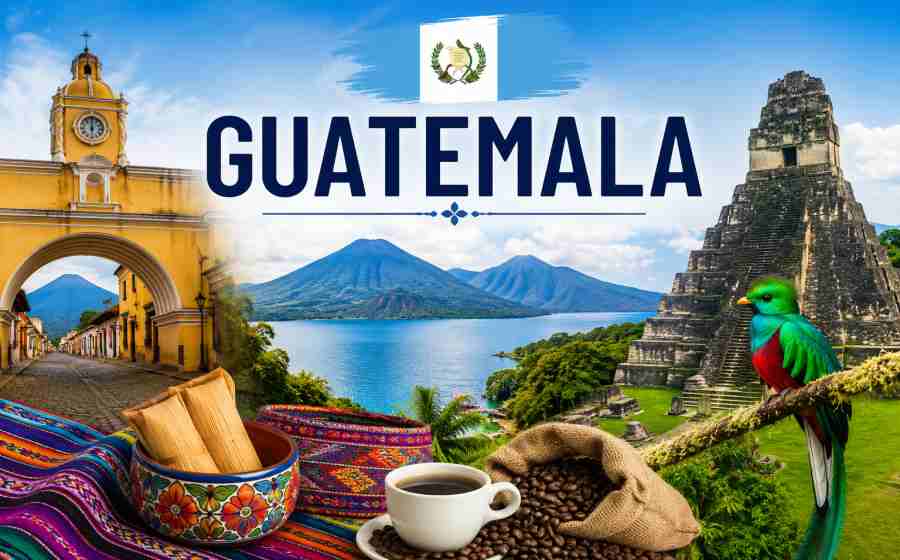
Guatemala – History, Culture, Sports, Tourist Attractions, Geography and Interesting Facts
Discover Guatemala’s rich history, vibrant culture, geography, sports, famous landmarks, economy, traditions and fascinating facts all in one place.
Guatemala
Guatemala is one of the most fascinating countries in Central America. Known for its ancient Maya civilization, colorful traditions, volcanic landscapes, and rich cultural heritage, Guatemala attracts historians, travelers, and nature lovers alike. The country is home to breathtaking mountains, dense rainforests, beautiful lakes, and numerous archaeological sites that reveal the greatness of the ancient Maya people.
Today, Guatemala is a developing nation with a diverse population that proudly preserves centuries-old traditions while embracing modern development. Its unique blend of indigenous and Spanish influences makes it one of the most culturally rich countries in Latin America.
Table of Contents
Location and Geography
Guatemala is located in Central America. It shares borders with:
- Mexico (north and west)
- Belize (northeast)
- Honduras (east)
- El Salvador (southeast)
The country also has coastlines along the Pacific Ocean and the Caribbean Sea.
Its geography includes:
- Volcanic mountain ranges
- Tropical rainforests
- Fertile valleys
- Large lakes
- Rivers and coastal plains
One of its most famous natural attractions is Lake Atitlán, surrounded by volcanoes and traditional villages.
Capital and Basic Information
- Capital: Guatemala City
- Largest City: Guatemala City
- Official Language: Spanish
- Recognized Indigenous Languages: More than 20 Mayan languages, along with Xinca and Garifuna
- Currency: Guatemalan Quetzal (GTQ)
- Government: Presidential Republic
- Population: Around 19 million (2026 estimate)
- Time Zone: Central Standard Time (CST)
History of Guatemala
Guatemala has one of the richest histories in the Americas.
Ancient Maya Civilization
Long before European explorers arrived, Guatemala was the heartland of the Maya civilization. Between approximately 250 and 900 CE, the Maya built magnificent cities, temples, observatories, and pyramids.
They made remarkable achievements in:
- Mathematics
- Astronomy
- Writing
- Architecture
- Agriculture
The famous archaeological site of Tikal remains one of the world’s greatest examples of Maya engineering.
Spanish Colonization
In the early 16th century, Spanish conquistadors conquered the region. Guatemala became part of the Spanish Empire, and Christianity spread throughout the country. Spanish architecture, language, and customs greatly influenced Guatemalan society.
Independence
Guatemala declared independence from Spain on 15 September 1821. After briefly joining the Mexican Empire and later the Federal Republic of Central America, it became an independent republic.
Modern Guatemala
The country experienced political instability during the 20th century, including a long civil conflict from 1960 to 1996. Since then, Guatemala has continued working toward democratic governance, economic growth, and national development.
Culture of Guatemala
Guatemalan culture is a vibrant blend of indigenous Maya traditions and Spanish colonial heritage.
Traditional Clothing
Many indigenous communities continue wearing beautifully woven handmade clothing called trajes, featuring colorful designs unique to each region.
Music and Dance
Traditional music often includes:
- Marimba (national instrument)
- Folk songs
- Religious music
- Indigenous ceremonial performances
The marimba is considered a symbol of Guatemalan identity.
Festivals
Some important celebrations include:
- Independence Day (15 September)
- Holy Week (Semana Santa)
- Day of the Dead
- Christmas celebrations
- Local patron saint festivals
Semana Santa processions are among the most beautiful religious events in Latin America.
Food of Guatemala
Guatemalan cuisine combines indigenous ingredients with Spanish influences.
Popular dishes include:
- Pepián (traditional meat stew)
- Kak’ik (turkey soup)
- Tamales
- Chuchitos
- Black beans and rice
- Corn tortillas
- Plantains
Coffee grown in Guatemala is internationally recognized for its excellent quality.
Economy
Guatemala has one of the largest economies in Central America.
Major industries include:
- Agriculture
- Coffee production
- Banana exports
- Sugar
- Textiles
- Tourism
- Manufacturing
Important export products include:
- Coffee
- Cardamom
- Bananas
- Vegetables
- Sugar
Tourism also contributes significantly due to the country’s natural beauty and archaeological sites.
Sports in Guatemala
Football (soccer) is the most popular sport in Guatemala.
Other popular sports include:
- Athletics
- Basketball
- Volleyball
- Cycling
- Boxing
- Swimming
The country regularly participates in:
- Olympic Games
- Pan American Games
- Central American Games
Guatemalan athletes have earned international recognition in race walking, badminton, and long-distance running.
Famous Tourist Attractions
Guatemala offers many unforgettable destinations.
Tikal National Park
One of the most famous Maya archaeological sites in the world, featuring massive pyramids surrounded by rainforest.
Lake Atitlán
Often considered one of the world’s most beautiful lakes.
Antigua Guatemala
A UNESCO World Heritage Site known for colonial architecture, churches, and cobblestone streets.
Semuc Champey
A stunning natural monument featuring turquoise limestone pools surrounded by jungle.
Pacaya Volcano
An active volcano popular among hikers and adventure travelers.
Wildlife
Guatemala has exceptional biodiversity.
Common wildlife includes:
- Jaguars
- Howler monkeys
- Spider monkeys
- Toucans
- Scarlet macaws
- Quetzals
The Resplendent Quetzal is Guatemala’s national bird and appears on the country’s flag and currency.
Education
Education has expanded considerably over the years. Public and private schools operate across the country, while universities provide higher education opportunities.
The University of San Carlos of Guatemala, founded in 1676, is one of the oldest universities in the Americas.
Climate
Guatemala enjoys a generally tropical climate. Climate varies by elevation:
- Coastal areas are hot and humid.
- Highlands experience cooler temperatures.
- Rainy season generally lasts from May to October.
- Dry season usually occurs from November to April.
Interesting Facts About Guatemala
- Guatemala was the center of the ancient Maya civilization.
- It has over 30 volcanoes, several of which remain active.
- Tikal was one of the largest Maya cities ever built.
- The national bird is the Resplendent Quetzal.
- Guatemala’s currency is named after the quetzal bird.
- More than 20 indigenous Mayan languages are still spoken.
- Antigua Guatemala is a UNESCO World Heritage Site.
- Guatemala produces some of the world’s finest coffee.
- Lake Atitlán was formed inside a massive volcanic crater.
- Colorful textiles and handicrafts are famous around the world.
Summary
Guatemala is a nation rich in history, culture, and natural beauty. From the magnificent ruins of the ancient Maya civilization to colorful festivals, traditional handicrafts, volcanic landscapes, and world-famous coffee, the country offers a unique blend of heritage and modern life. Despite facing economic and social challenges, Guatemala continues to preserve its remarkable traditions while moving toward a brighter future. Its historical importance, cultural diversity, and breathtaking scenery make Guatemala one of the most interesting countries in Central America for students, travelers, and anyone eager to learn about the world.
Also Check: General Knowledge