Bosnia and Herzegovina – History, Culture, Tourist Attractions, Sports and Key Facts
Discover Bosnia and Herzegovina, its history, culture, geography, sports, famous landmarks, economy and key facts in this informative overview.
Bosnia and Herzegovina
Bosnia and Herzegovina is a beautiful country located in the Balkan Peninsula of Southeast Europe. It is known for its stunning mountains, historic cities, rich cultural heritage, and remarkable blend of Eastern and Western traditions. Despite its relatively small size, the country has played an important role in European history and is home to diverse ethnic communities that have shaped its unique identity.
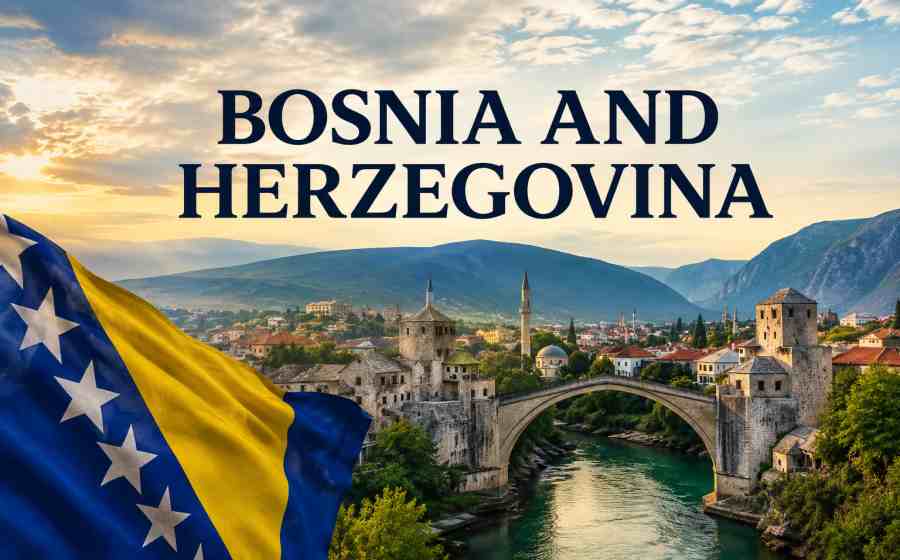
Today, Bosnia and Herzegovina attracts tourists with its medieval architecture, natural beauty, traditional cuisine, and famous landmarks such as the Old Bridge of Mostar. It is also recognized for its achievements in sports, particularly football, basketball, and winter sports.
Table of Contents
Location and Geography
Bosnia and Herzegovina lies in southeastern Europe on the Balkan Peninsula. It shares borders with Croatia to the north, west, and south, Serbia to the east, and Montenegro to the southeast. The country has a very short coastline of about 20 kilometers along the Adriatic Sea.
The landscape is dominated by the Dinaric Alps, making it one of Europe’s most mountainous countries. Rivers such as the Neretva, Bosna, Drina, and Una provide breathtaking scenery and support agriculture and hydroelectric power generation.
Quick Facts
- Capital: Sarajevo
- Largest City: Sarajevo
- Official Languages: Bosnian, Croatian, and Serbian
- Currency: Bosnia and Herzegovina Convertible Mark (BAM)
- Continent: Europe
- Population: Around 3 million
- Government: Parliamentary representative democracy
History of Bosnia and Herzegovina
Bosnia and Herzegovina has a long and fascinating history that dates back thousands of years. During ancient times, the region was inhabited by the Illyrians before becoming part of the Roman Empire. Later, it came under Byzantine influence before developing into the medieval Kingdom of Bosnia during the 12th and 13th centuries.
In the 15th century, the Ottoman Empire conquered Bosnia, introducing Islam alongside existing Christian communities. This period significantly influenced the country’s architecture, culture, and traditions.
In 1878, Austria-Hungary took administrative control of Bosnia and Herzegovina. One of the most significant events in world history occurred in Sarajevo in 1914, where Archduke Franz Ferdinand of Austria was assassinated. This event triggered the outbreak of World War I.
After World War II, Bosnia and Herzegovina became one of the six republics of Yugoslavia.
Following the breakup of Yugoslavia, Bosnia and Herzegovina declared independence in 1992. Unfortunately, this led to the Bosnian War (1992–1995), one of Europe’s most devastating conflicts since World War II. The war ended with the Dayton Peace Agreement in 1995, establishing the country’s current political structure.
Culture and Traditions
Bosnia and Herzegovina is famous for its multicultural society where Bosniaks, Croats, and Serbs have lived together for centuries.
The country reflects influences from Ottoman, Austro-Hungarian, and Slavic civilizations. Visitors often notice mosques, churches, and cathedrals standing close to one another, symbolizing its diverse heritage.
Traditional hospitality is deeply valued. Family gatherings, festivals, and community celebrations remain important parts of everyday life.
Folk music, dancing, handicrafts, and traditional clothing continue to preserve the nation’s cultural identity.
Famous Food
Bosnian cuisine combines Mediterranean, Turkish, and Central European flavors.
Popular dishes include:
- Ćevapi (grilled minced meat)
- Burek (meat-filled pastry)
- Begova Čorba (traditional soup)
- Dolma (stuffed vegetables)
- Bosnian coffee
- Baklava
Fresh ingredients, grilled meats, and homemade bread are common features of local meals.
Major Tourist Attractions
Bosnia and Herzegovina offers a wide variety of natural and historical attractions. Some famous places include:
- Old Bridge (Stari Most) in Mostar
- Baščaršija Market in Sarajevo
- Kravica Waterfalls
- Una National Park
- Blagaj Tekke
- Sutjeska National Park
- Latin Bridge
- Jahorina Mountain
- Bjelašnica Ski Resort
These destinations attract history lovers, adventure seekers, and nature enthusiasts from around the world.
Economy
The economy of Bosnia and Herzegovina is based on manufacturing, agriculture, tourism, mining, forestry, and services.
Major industries include:
- Metal processing
- Automobile components
- Wood products
- Hydroelectric energy
- Food processing
- Tourism
The country exports metals, machinery, furniture, and electrical equipment. Tourism has become an increasingly important contributor to economic growth.
Education
Bosnia and Herzegovina has a well-established education system consisting of primary, secondary, and higher education.
Several universities are internationally recognized, including the University of Sarajevo, which is one of the oldest higher education institutions in the Balkans. Education emphasizes science, engineering, medicine, humanities, and social sciences.
Sports in Bosnia and Herzegovina
Sports play an important role in the country’s national identity.
Football
Football is the most popular sport. The national football team has participated in international competitions, including the FIFA World Cup.
Basketball
Bosnia and Herzegovina has produced several talented basketball players who compete in European leagues and international tournaments.
Winter Sports
Because of its mountainous terrain, skiing, snowboarding, and other winter sports are extremely popular. Sarajevo successfully hosted the 1984 Winter Olympic Games, making it one of the most memorable Olympic host cities in Southeast Europe.
Other Popular Sports
- Volleyball
- Handball
- Athletics
- Tennis
- Martial arts
- Swimming
Wildlife and Natural Beauty
The country is rich in forests, rivers, lakes, and mountains.
Wildlife includes:
- Brown bears
- Wolves
- Lynx
- Deer
- Wild boars
- Eagles
Protected national parks help preserve Bosnia and Herzegovina’s biodiversity.
Interesting Facts
- Bosnia and Herzegovina has one of Europe’s last remaining primeval forests.
- Sarajevo is often called the “Jerusalem of Europe” because different religions have peacefully coexisted there for centuries.
- The famous Stari Most (Old Bridge) in Mostar is a UNESCO World Heritage Site.
- The country hosted the 1984 Winter Olympics.
- Bosnia and Herzegovina has three official languages.
- The country’s only coastline is about 20 kilometers long.
- Bosnian coffee is an important part of local culture.
- The national currency is the Convertible Mark (BAM).
- Mountain tourism is growing rapidly.
- The country offers excellent opportunities for rafting, hiking, skiing, and nature tourism.
Why Bosnia and Herzegovina is Important
Bosnia and Herzegovina holds an important place in European history due to its strategic location and multicultural heritage. It serves as a bridge between Eastern and Western civilizations and showcases centuries of cultural exchange. Its natural landscapes, historical landmarks, and resilient people make it a fascinating destination for travelers and an important topic in world geography and general knowledge.
Summary
Bosnia and Herzegovina is a country where history, culture, and natural beauty come together in a unique way. From the medieval streets of Mostar to the vibrant capital of Sarajevo and the majestic Dinaric Alps, every part of the country tells a story. Its rich traditions, diverse communities, growing tourism sector, and sporting achievements make it an excellent subject for students preparing for competitive exams and anyone interested in learning more about the world. Understanding Bosnia and Herzegovina provides valuable insight into European history, geography, and cultural diversity.
Also Check: General Knowledge