Chhath Puja – Bihar’s Most Important Festival, History, Rituals, Significance and Traditions
Chhath Puja is Bihar’s most revered festival, celebrating devotion to the Sun God with sacred rituals, fasting, gratitude and vibrant cultural traditions.
Chhath Puja
Chhath Puja is one of the oldest and most sacred festivals celebrated in India, with its deepest roots in the state of Bihar. It is widely regarded as Bihar’s most important festival because of its spiritual significance, unique rituals, and strong connection with the people of the region. Unlike many Hindu festivals that involve idol worship, Chhath Puja is dedicated to the worship of Lord Surya (the Sun God) and Chhathi Maiya, who is believed to protect children and bring prosperity, happiness, and good health to families.
The festival is celebrated with immense devotion not only in Bihar but also in neighboring states such as Jharkhand, Uttar Pradesh, and parts of Nepal. Due to migration, Bihari communities have carried this tradition to cities across India and even to countries around the world. Chhath Puja is admired for its simplicity, discipline, cleanliness, and the spirit of gratitude toward nature.
Table of Contents
History and Origin of Chhath Puja
The origins of Chhath Puja can be traced back to ancient India. References to Sun worship are found in the Rigveda, one of the oldest sacred texts of Hinduism. The Sun has always been considered the source of life, energy, health, and prosperity.
Several legends are associated with Chhath Puja:
- It is believed that Karna, the son of the Sun God in the Mahabharata, was a devoted worshipper of Lord Surya and offered prayers while standing in water.
- Another story connects the festival to Lord Rama and Goddess Sita, who are said to have observed Chhath after returning to Ayodhya following their exile.
- Some traditions also associate Chhath with the Pandavas during difficult times in the Mahabharata.
Although the exact historical origin remains uncertain, the festival has been celebrated continuously for centuries and remains one of India’s oldest living traditions.
Why Chhath Puja is Special
Chhath Puja is unique because it emphasizes purity, discipline, and devotion. Unlike many festivals that involve elaborate temple rituals or idol worship, devotees offer prayers directly to the Sun, recognizing it as the ultimate source of life.
The festival highlights:
- Respect for nature
- Gratitude for sunlight, water, and agriculture
- Family well-being
- Environmental cleanliness
- Self-discipline through fasting
These values make Chhath Puja not only a religious celebration but also a cultural and environmental tradition.
Four Days of Chhath Puja
The festival is celebrated over four days, with each day having its own rituals and significance.
1. Nahay Khay
The first day begins with a holy bath in rivers, ponds, or other clean water bodies. Devotees clean their homes thoroughly and prepare simple, pure vegetarian meals. This day symbolizes physical and spiritual purification before beginning the sacred rituals.
2. Kharna
On the second day, devotees observe a strict fast throughout the day without consuming food or water. After sunset, they prepare offerings such as jaggery kheer, chapati, and fruits. After worship, the fast is broken, and the prasad is distributed among family members and neighbors.
3. Sandhya Arghya
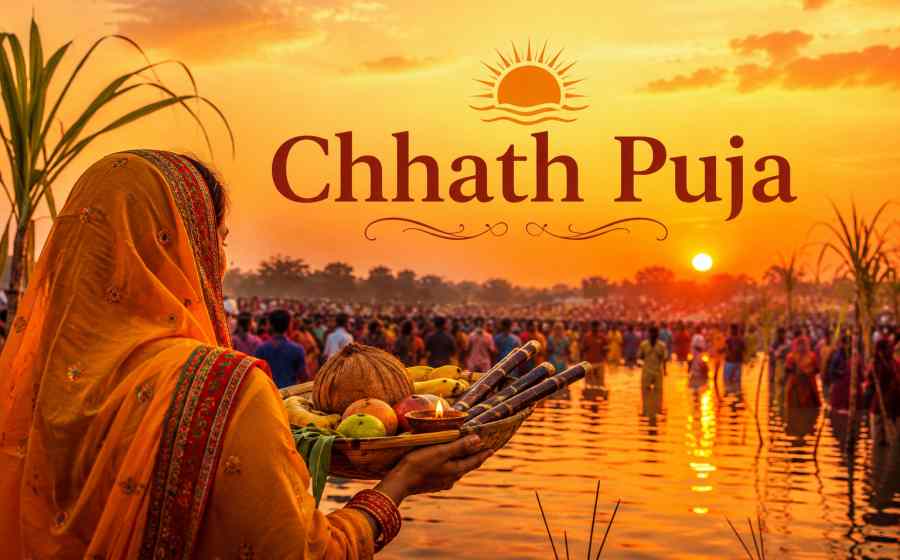
The third day is the most significant. Families gather at riverbanks, ponds, or lakes during sunset to offer Arghya (water offerings) to the setting Sun. Devotees stand in water holding bamboo baskets filled with fruits, sugarcane, coconuts, and traditional sweets while singing devotional songs. The sight of thousands of devotees offering prayers together creates an unforgettable spiritual atmosphere.
4. Usha Arghya
The final day begins before sunrise. Devotees once again gather near water bodies to offer prayers to the rising Sun. This symbolizes hope, new beginnings, prosperity, and gratitude for another day of life. After completing the rituals, the fasting devotees end their fast by consuming prasad.
Traditional Offerings
The offerings prepared during Chhath Puja are simple yet highly symbolic. Popular offerings include:
- Thekua (traditional sweet made from wheat flour and jaggery)
- Seasonal fruits
- Sugarcane
- Coconut
- Rice laddus
- Bananas
- Lemon
- Ginger
- Sweet potatoes
All offerings are prepared without onion, garlic, or artificial ingredients, maintaining complete purity.
Importance of Chhath Puja in Bihar
In Bihar, Chhath Puja is more than just a festival, it is an identity. Preparations begin weeks in advance as people clean homes, markets, streets, and riverbanks.
Government agencies and local communities work together to prepare ghats, improve sanitation, arrange lighting, and ensure public safety. Even people living outside Bihar often travel home to celebrate with their families.
The festival promotes:
- Family unity
- Social harmony
- Respect for elders
- Community cooperation
- Preservation of traditional culture
Scientific and Environmental Significance
Many scholars believe Chhath Puja also has scientific aspects. Offering prayers during sunrise and sunset exposes the body to gentle sunlight, which is considered beneficial for overall well-being. Standing in clean water while meditating creates a calming effect on the mind.
The festival also encourages environmental awareness by promoting the cleanliness of rivers, ponds, and public spaces. Since most offerings are natural and biodegradable, Chhath Puja is often regarded as one of the most eco-friendly festivals in India.
Chhath Songs and Folk Culture
Traditional folk songs are an important part of the celebration. Women sing devotional songs dedicated to Lord Surya and Chhathi Maiya while preparing offerings and during the rituals.
These songs reflect devotion, family values, gratitude, and the cultural richness of Bihar. Many of these melodies have been passed down through generations and remain an essential part of the festival.
Chhath Puja Around the World
As Bihari communities have migrated across India and abroad, Chhath Puja has gained international recognition. The festival is celebrated in countries such as Nepal, Mauritius, Fiji, the United States, the United Kingdom, Canada, Australia, and several Gulf nations.
Temporary ghats are created near rivers, lakes, or artificial water bodies so that devotees can perform the rituals according to tradition. This global celebration reflects the enduring cultural identity of the Bihari diaspora.
Summary
Chhath Puja stands as the heart of Bihar’s cultural and spiritual heritage. Its emphasis on purity, gratitude, discipline, and harmony with nature makes it one of the most meaningful festivals in India. The worship of the setting and rising Sun symbolizes respect for the natural forces that sustain life, while the rigorous rituals demonstrate unwavering faith and dedication.
Even in the modern world, Chhath Puja continues to unite families and communities across generations and geographical boundaries. More than a religious observance, it is a celebration of devotion, environmental consciousness, cultural pride, and the timeless traditions of Bihar that continue to inspire millions every year.
Also Check: Bihar GK