Festivals Celebrated in Bihar – Their Significance and Cultural Journey
Discover the major Festivals Celebrated in Bihar and Their Significance, including Chhath Puja, Sama Chakeva, Jitiya, Holi, Diwali and more.
Festivals Celebrated in Bihar
Bihar is one of India’s oldest cultural regions, known for its rich history, traditions, and spiritual heritage. The festivals celebrated in Bihar reflect the state’s deep-rooted beliefs, agricultural lifestyle, family values, and respect for nature. From ancient Vedic rituals to folk traditions passed down through generations, every festival in Bihar has its own cultural, historical, and religious significance.
Many festivals in Bihar are celebrated with great enthusiasm and devotion. They bring families and communities together, strengthen social bonds, and preserve centuries-old customs. Some festivals are unique to Bihar, while others are celebrated across India but have their own distinct traditions in the state.
Table of Contents
Chhath Puja
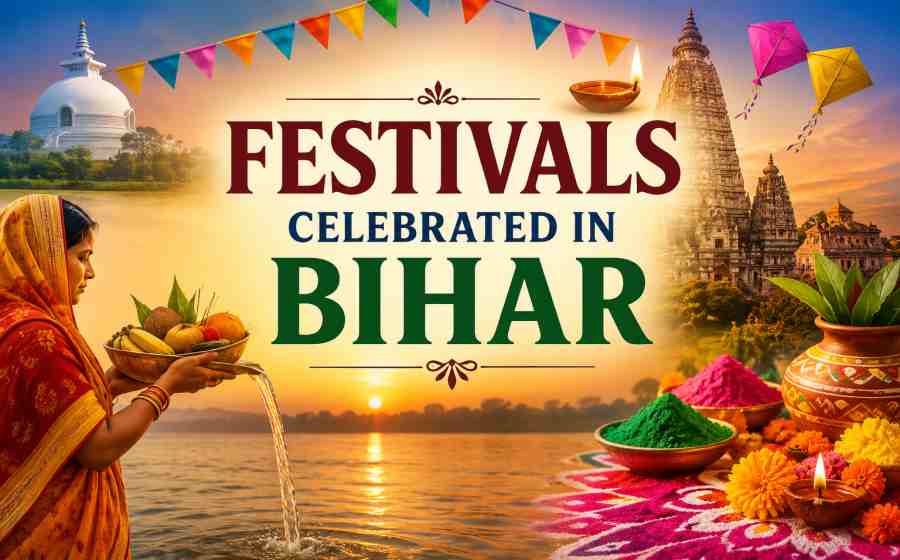
Chhath Puja is the most famous and revered festival of Bihar. It is dedicated to Surya Dev (the Sun God) and Chhathi Maiya. Unlike many other Hindu festivals, Chhath is celebrated without idol worship. Devotees offer prayers directly to the rising and setting sun.
The festival lasts for four days and includes strict fasting, ritual bathing, preparation of traditional offerings, and standing in rivers or ponds while offering arghya (water offerings) to the Sun.
Significance
- Expresses gratitude to the Sun God for sustaining life.
- Symbolizes purity, discipline, and devotion.
- Promotes harmony between humans and nature.
- Strengthens family bonds as members participate together.
Chhath Puja is celebrated not only across Bihar but also by Bihari communities around the world.
Sama Chakeva
Sama Chakeva is a traditional folk festival mainly observed in the Mithila region of Bihar. It begins after Chhath Puja and celebrates the affectionate relationship between brothers and sisters.
Women create colorful clay idols of birds and mythological characters while singing traditional Maithili folk songs during the evenings.
Significance
- Celebrates sibling love and affection.
- Preserves Maithili culture and folk traditions.
- Encourages community participation through music and art.
- Reflects respect for migratory birds and nature.
Jitiya (Jivitputrika Vrat)
Jitiya is an important fasting festival observed mainly by mothers for the long life, good health, and prosperity of their children.
Women observe a rigorous fast, often without food or water, and listen to the story of King Jimutavahana, whose sacrifice symbolizes selfless love and protection.
Significance
- Represents a mother’s unconditional love.
- Prays for children’s well-being.
- Promotes sacrifice, faith, and family values.
Makar Sankranti
Known locally as Khichdi Festival, Makar Sankranti marks the transition of the Sun into the zodiac sign Capricorn (Makara). It usually falls on 14th or 15th January every year.
People take holy baths in rivers, donate food and clothes, and prepare dishes such as khichdi, tilkut, dahi-chura, and sesame sweets.
Significance
- Marks the beginning of longer days.
- Celebrates the harvest season.
- Encourages charity and social welfare.
- Symbolizes prosperity and new beginnings.
Holi
Holi is celebrated with great excitement throughout Bihar. The festival begins with Holika Dahan, followed by the celebration of colors the next day.
People sing traditional folk songs, visit relatives, prepare sweets such as gujiya and malpua, and enjoy cultural performances.
Significance
- Symbolizes the victory of good over evil.
- Promotes unity and friendship.
- Marks the arrival of spring.
- Encourages forgiveness and social harmony.
Diwali
Diwali, the Festival of Lights, is celebrated across Bihar by decorating homes with oil lamps, candles, and colorful rangolis.
People worship Goddess Lakshmi and Lord Ganesha, exchange sweets, and illuminate their homes to welcome prosperity.
Significance
- Celebrates light over darkness.
- Represents prosperity and wisdom.
- Encourages cleanliness and positivity.
- Strengthens family and community relationships.
Durga Puja
Durga Puja is especially popular in urban areas of Bihar. Beautiful pandals are constructed, and idols of Goddess Durga are worshipped for several days.
Cultural programs, devotional songs, and community gatherings are major attractions.
Significance
- Celebrates the victory of Goddess Durga over Mahishasura.
- Symbolizes courage and righteousness.
- Encourages devotion and community participation.
Ram Navami
Ram Navami celebrates the birth of Lord Rama, one of the most respected figures in Hindu tradition.
Temples organize special prayers, devotional singing, and processions throughout Bihar.
Significance
- Honors truth, justice, and ideal leadership.
- Inspires people to follow moral values.
- Strengthens spiritual beliefs.
Mahashivratri
Mahashivratri is dedicated to Lord Shiva. Thousands of devotees visit Shiva temples across Bihar, especially the famous temples of the state.
Many devotees observe fasts and offer milk, water, and bel leaves to the Shiva Lingam.
Significance
- Symbolizes devotion and self-discipline.
- Encourages meditation and spiritual growth.
- Honors one of the principal deities of Hinduism.
Buddha Purnima
Bihar holds special importance in Buddhism because Lord Buddha attained enlightenment at Bodh Gaya. On Buddha Purnima, devotees visit Buddhist monasteries, meditate, and participate in peaceful prayer ceremonies.
Significance
- Celebrates the birth, enlightenment, and teachings of Gautama Buddha.
- Promotes peace, compassion, and non-violence.
- Attracts pilgrims from around the world.
Eid-ul-Fitr
Eid-ul-Fitr is celebrated by the Muslim community across Bihar after the holy month of Ramadan.
People offer special prayers, wear new clothes, prepare delicious dishes, and share food with relatives and neighbors.
Significance
- Marks the end of fasting during Ramadan.
- Promotes charity and kindness.
- Encourages communal harmony and brotherhood.
Christmas
Christmas is celebrated by the Christian community with prayers, decorations, and festive gatherings.
Churches are beautifully decorated, and people exchange gifts and sweets.
Significance
- Celebrates the birth of Jesus Christ.
- Promotes love, peace, and compassion.
- Encourages unity among different communities.
Sonepur Mela
Although primarily a fair rather than a religious festival, Sonepur Mela is one of Asia’s oldest and most famous traditional fairs.
Held near the confluence of the Ganga and Gandak rivers, it combines religious rituals, livestock trading, handicrafts, cultural performances, and local cuisine.
Significance
- Preserves Bihar’s traditional rural heritage.
- Supports local artisans and traders.
- Attracts tourists from India and abroad.
- Reflects Bihar’s rich cultural diversity.
The Cultural Importance of Festivals in Bihar
Festivals in Bihar are much more than religious celebrations. They preserve folk music, dance, art, traditional food, local languages, and ancient customs. Every festival provides an opportunity for families to reunite, communities to work together, and younger generations to learn about their cultural heritage.
Traditional songs, folk dances, handmade decorations, and local delicacies continue to play an essential role during these celebrations, ensuring that Bihar’s cultural identity remains vibrant even in modern times.
Summary
The festivals celebrated in Bihar beautifully showcase the state’s rich cultural, spiritual, and historical legacy. From the devotion of Chhath Puja and the folk traditions of Sama Chakeva to the joy of Holi, the lights of Diwali, and the peaceful message of Buddha Purnima, each festival carries unique values and timeless traditions. These celebrations strengthen family ties, promote social harmony, preserve regional customs, and connect people with nature and spirituality. As Bihar continues to grow and modernize, its festivals remain an enduring symbol of unity, faith, and cultural pride, making the state one of India’s most vibrant centers of traditional celebrations.
Also Check: Bihar GK