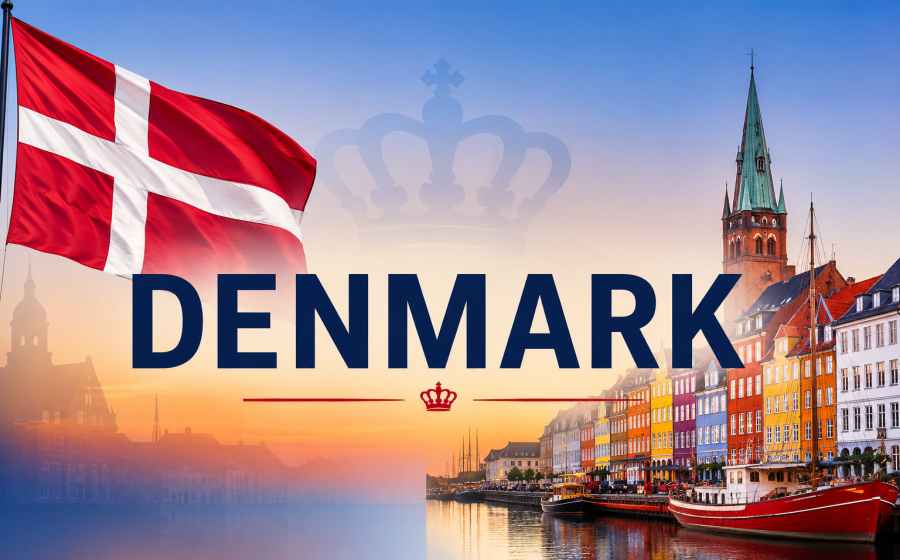
Denmark – History, Culture, Sports and Key Facts About The Happiest Nordic Nation
Explore Denmark, a Nordic nation known for its Viking heritage, royal history, beautiful cities, rich culture, world-class sports and high quality of life.
Denmark
Denmark is one of the most peaceful, prosperous, and happiest countries in the world. Located in Northern Europe, Denmark is known for its rich Viking history, beautiful castles, modern cities, excellent quality of life, and strong commitment to sustainability. As the southernmost of the Nordic countries, Denmark consists of the Jutland Peninsula and more than 400 islands, many connected by impressive bridges.
The country is famous for its royal family, fairy tales by Hans Christian Andersen, cycling culture, renewable energy initiatives, and world-renowned design. Despite its relatively small size, Denmark has played an important role in European history and continues to be influential in innovation, education, and environmental protection.
Table of Contents
History of Denmark
The history of Denmark dates back thousands of years. Archaeological discoveries reveal that people have lived in the region since the Stone Age. Denmark gained worldwide recognition during the Viking Age (8th to 11th centuries), when Danish Vikings explored, traded, and conquered territories across Europe.
In the Middle Ages, Denmark became a powerful kingdom and established the Kalmar Union in 1397, uniting Denmark, Norway, and Sweden under a single monarch. Although Sweden later left the union, Denmark remained an important European power.
The country gradually transformed into a constitutional monarchy. In 1849, Denmark adopted its first democratic constitution, reducing the powers of the monarchy and establishing parliamentary democracy.
During World War II, Denmark was occupied by Nazi Germany from 1940 to 1945. After the war, the nation rebuilt rapidly and became a founding member of several international organizations. Today, Denmark is recognized as one of the world’s most stable democracies.
Geography of Denmark
Denmark covers an area of approximately 42,943 square kilometers. It shares its only land border with Germany to the south, while the North Sea and the Baltic Sea surround the country.
Some important geographical features include:
- Jutland Peninsula
- Zealand Island
- Funen Island
- Greenland (autonomous territory)
- Faroe Islands (self-governing territory)
Although Greenland is geographically part of North America, it remains an autonomous territory within the Kingdom of Denmark.
The landscape is generally flat with rolling plains, fertile farmland, forests, and long coastlines stretching over 7,000 kilometers.
Capital and Major Cities
Capital: Copenhagen
Major cities include:
- Aarhus
- Odense
- Aalborg
- Esbjerg
- Randers
Copenhagen is Denmark’s largest city and serves as the country’s political, cultural, and economic center.
Danish Culture
Danish culture values equality, trust, simplicity, and community. People in Denmark enjoy a balanced lifestyle and place great importance on family, social welfare, and environmental responsibility.
One famous Danish concept is “Hygge” (pronounced hoo-ga), which refers to creating a cozy, comfortable atmosphere with family and friends. Hygge represents happiness through simple pleasures like candlelight, warm drinks, and quality time together. Denmark is also known for its minimalist architecture, modern furniture design, literature, and music.
Language and Religion
The official language is Danish. English is widely spoken, making Denmark one of the easiest European countries for international visitors.
The largest religion is Christianity, mainly the Evangelical Lutheran Church, although Denmark is home to people of many different faiths.
Traditional Food
Danish cuisine combines fresh local ingredients with centuries-old traditions.
Popular dishes include:
- Smørrebrød (open-faced sandwiches)
- Frikadeller (meatballs)
- Danish pastries
- Pickled herring
- Roast pork with potatoes
- Rye bread
Seafood is also an important part of the Danish diet due to the country’s long coastline.
Festivals and Celebrations
Denmark celebrates many colorful festivals throughout the year.
Important celebrations include:
- Christmas
- Easter
- Constitution Day
- Midsummer (Sankt Hans Aften)
- Roskilde Music Festival
- Copenhagen Jazz Festival
These festivals showcase Danish traditions, music, art, and community spirit.
Sports in Denmark
Sports play an important role in Danish society.
Popular sports include:
- Football
- Handball
- Cycling
- Badminton
- Sailing
- Tennis
Denmark has produced several internationally successful athletes and regularly performs well in international competitions.
Cycling is deeply integrated into everyday life, especially in Copenhagen, which is considered one of the world’s most bicycle-friendly cities.
Economy of Denmark
Denmark has one of the strongest economies in Europe. Major industries include:
- Renewable energy
- Pharmaceuticals
- Shipping
- Agriculture
- Food processing
- Biotechnology
- Information technology
The country is home to globally recognized companies in shipping, healthcare, and renewable energy. Denmark consistently ranks among the world’s least corrupt and most business-friendly nations.
Education System
Denmark provides free education for its citizens and residents.
Its education system emphasizes:
- Critical thinking
- Creativity
- Practical learning
- Equality
- Research
Danish universities attract students from around the world because of their high academic standards.
Government
Denmark is a constitutional monarchy with a parliamentary system. The monarch serves as the ceremonial head of state, while the Prime Minister leads the government. The country consistently ranks among the world’s strongest democracies.
Tourism in Denmark
Millions of visitors travel to Denmark every year. Popular attractions include:
- Tivoli Gardens
- The Little Mermaid statue
- Nyhavn Harbor
- Kronborg Castle
- Legoland Billund
- Rosenborg Castle
Tourists also enjoy Denmark’s clean beaches, museums, cycling routes, and historic towns.
Wildlife and Environment
Denmark has numerous forests, wetlands, beaches, and nature reserves. Common wildlife includes:
- Deer
- Foxes
- Seals
- Swans
- Owls
- Various migratory birds
The country is a global leader in environmental conservation and wind energy production.
Interesting Facts About Denmark
- Denmark is one of the oldest kingdoms in Europe.
- It consistently ranks among the happiest countries in the world.
- Copenhagen has more bicycles than cars in many areas.
- Greenland is the world’s largest island and belongs to the Kingdom of Denmark.
- Denmark introduced one of the world’s oldest national flags, the Dannebrog.
- LEGO was invented in Denmark.
- Hans Christian Andersen wrote famous fairy tales such as The Little Mermaid and The Ugly Duckling.
- Denmark is a pioneer in offshore wind energy.
- The country has one of the world’s highest standards of living.
- Danish society places strong emphasis on equality and social welfare.
Key Facts About Denmark
| Feature | Information |
|---|---|
| Official Name | Kingdom of Denmark |
| Capital | Copenhagen |
| Continent | Europe |
| Official Language | Danish |
| Currency | Danish Krone (DKK) |
| Government | Constitutional Monarchy |
| Population | Around 6 million |
| Area | 42,943 sq km |
| Famous For | Vikings, LEGO, Hygge, Cycling, Wind Energy |
| National Animal | Mute Swan |
| National Flag | Dannebrog |
Summary
Denmark is a remarkable Nordic nation that successfully combines a rich historical legacy with modern innovation and sustainability. From its Viking heritage and royal traditions to its world-famous design, cycling culture, and commitment to renewable energy, Denmark offers a unique blend of history and progress. Its excellent education system, high quality of life, strong economy, and welcoming society make it one of the world’s most admired countries. Whether exploring its historic castles, vibrant cities, or scenic coastlines, Denmark stands as an inspiring example of how culture, democracy, and environmental responsibility can flourish together.
Also Check: General Knowledge