Haiti – History, Culture, Tourism, Sports and Key Facts
Explore Haiti through its history, culture, sports, traditions, cuisine, landmarks, geography and fascinating facts about this Caribbean nation.
Haiti
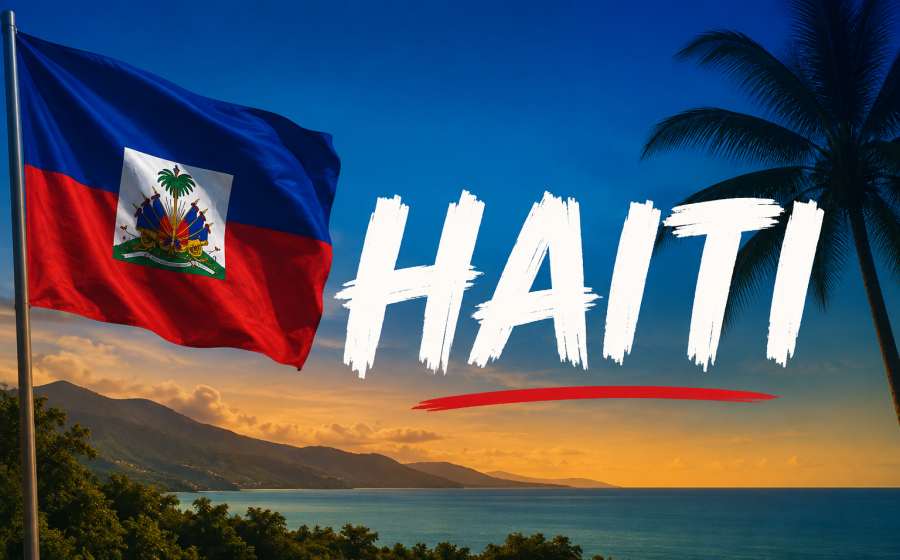
Haiti is a Caribbean country known for its remarkable history, vibrant culture, artistic traditions, and deep connection to the struggle for freedom. Located on the western part of the island of Hispaniola, Haiti shares the island with the Dominican Republic. Its capital and largest city is Port-au-Prince. Haiti is bordered by the Caribbean Sea and the Atlantic Ocean and is characterized by mountainous landscapes, tropical climate, and a rich cultural heritage.
Haiti holds a special place in world history because it became independent after a successful revolution led largely by enslaved people. On January 1, 1804, Haiti declared independence from France under the leadership of Jean-Jacques Dessalines. UNESCO describes Haiti’s independence as the result of a fourteen-year struggle and recognizes the country’s historic monuments as important symbols of liberty.
Table of Contents
Haiti at a Glance
- Official Name: Republic of Haiti
- Capital: Port-au-Prince
- Location: Caribbean, western Hispaniola
- Official Languages: Haitian Creole and French
- Currency: Haitian Gourde
- Independence: January 1, 1804
- National Day: Independence Day
- Major Sports: Football and basketball
- Famous Historical Site: Citadelle Henri Christophe
- World Heritage Site: National History Park – Citadel, Sans Souci, Ramiers
History of Haiti
Before European colonization, the island of Hispaniola was inhabited by Indigenous peoples, including the Taíno. Christopher Columbus arrived in the Caribbean in 1492, after which European colonization transformed the island dramatically.
The western part of Hispaniola eventually came under French control and became known as Saint-Domingue. During the colonial period, the territory developed a plantation economy based heavily on sugar and other crops. Enslaved Africans were brought to the colony in large numbers, and their labor became central to its economy.
The Haitian Revolution began in 1791 and developed into a major struggle against slavery and colonial rule. Leaders such as Toussaint Louverture, Jean-Jacques Dessalines, Henri Christophe, and Alexandre Pétion played important roles during the revolutionary period.
After years of conflict, Haiti declared independence on January 1, 1804. Jean-Jacques Dessalines became one of the central figures associated with the establishment of the independent state. Haiti’s independence was historically significant because it emerged from a successful revolution of enslaved people. UNESCO identifies Haiti as the first state in the modern era founded through such a successful slave revolt.
Citadelle and Historical Heritage
One of Haiti’s most important historical landmarks is the Citadelle Henri Christophe, located in the northern mountains. It was constructed after independence as a massive defensive fortress to protect the newly established nation.
The Citadelle forms part of the National History Park – Citadel, Sans Souci, Ramiers, which was inscribed on the UNESCO World Heritage List in 1982. The site also includes the impressive ruins of the Palace of Sans-Souci and the Ramiers buildings.
The Citadelle stands at roughly 970 metres above sea level and represents both military engineering and Haiti’s determination to defend its independence. The entire historical complex remains one of the most important symbols of Haitian freedom and national identity.
Geography and Natural Features
Haiti occupies the western portion of Hispaniola, the second-largest island in the Greater Antilles. The country’s landscape is largely mountainous, with several mountain ranges extending across its territory.
The country has a tropical climate, although geographical variations create differences between regions. Coastal areas, valleys, mountains, and agricultural regions contribute to Haiti’s varied natural environment.
Haiti also has beautiful coastal scenery, beaches, waterfalls, caves, and mountainous landscapes. Bassin Bleu, located near Jacmel, is known for its striking blue pools and waterfalls. The country’s natural beauty has long been an important part of its tourism potential.
Haitian Culture
Haitian culture is a distinctive combination of African, European, Caribbean, and Indigenous influences. These influences can be seen in the country’s language, music, food, religion, art, literature, and festivals.
Haitian Creole, commonly called Kreyòl, is one of the country’s official languages alongside French. Creole is widely spoken in everyday life, while French has an important role in government, education, literature, and formal communication.
Religion and spirituality have also influenced Haitian culture. Vodou, a Haitian spiritual tradition with African, Indigenous, and European influences, is an important part of the country’s cultural history. Many Haitians also identify with Christianity, and religious traditions can sometimes overlap within family and community life.
Haitian Music and Dance
Music is one of the most recognizable parts of Haitian cultural expression. Haitian musical traditions combine African rhythms, Caribbean influences, European elements, and local creativity.
Kompa, also spelled compas, is one of Haiti’s best-known musical styles. It developed during the twentieth century and became popular both inside Haiti and among Haitian communities abroad.
Other musical traditions include rara, which is strongly associated with processions, festivals, and community celebrations. Drums, dancing, singing, and colorful performances play an important role in many Haitian cultural events.
Haitian Art
Haiti has a distinctive and internationally recognized artistic tradition. Haitian artists are particularly known for colorful paintings, metalwork, woodcraft, sculpture, and handcrafted objects.
The country’s visual art often portrays everyday life, landscapes, markets, rural communities, religious themes, historical experiences, and imaginative scenes. Port-au-Prince and Jacmel have historically been important centers for Haitian artists and craftspeople.
Metal sculpture is another notable Haitian artistic tradition. Artists create decorative and symbolic works from recycled metal, demonstrating creativity while transforming ordinary materials into artistic pieces.
Haitian Food
Haitian cuisine reflects the country’s diverse cultural history. Rice, beans, plantains, vegetables, meat, seafood, and spices are commonly used in traditional cooking.
One famous Haitian dish is griot, consisting of seasoned pork that is cooked and fried. It is frequently served with rice and beans, plantains, or pikliz, a spicy pickled vegetable mixture.
Other popular foods include diri ak pwa, a rice-and-beans dish, soup joumou, and various seafood preparations. Food plays an important role in family gatherings, celebrations, and national traditions.
Soup joumou has particular historical significance. It is traditionally associated with Haiti’s independence and is enjoyed especially on January 1, Independence Day.
Sports in Haiti
Football, known as soccer in some countries, is the most popular sport in Haiti. The Haitian national football team is commonly known as Les Grenadiers.
Haiti made its FIFA World Cup debut in 1974. The team qualified after winning the 1973 CONCACAF Championship on home soil. At the 1974 World Cup in West Germany, Haiti faced Italy, Poland, and Argentina. Haitian forward Emmanuel Sanon scored against Italy, producing one of the most memorable moments in the country’s football history.
Haiti achieved another major football milestone by qualifying for the 2026 FIFA World Cup. The qualification ended a long absence from the tournament, with Haiti returning to the World Cup for the first time since 1974. Haiti finished at the top of its final qualifying group and secured its place after defeating Nicaragua 2–0.
Basketball is another popular sport, particularly among young people and urban communities. Haitian athletes have also participated in sports internationally, representing the country and its diaspora in different competitions.
Important People in Haitian History
Haiti’s history includes many influential personalities. Toussaint Louverture was one of the most important leaders of the Haitian Revolution and played a major role in the struggle against slavery.
Jean-Jacques Dessalines became a leading figure in the final phase of the revolution and proclaimed Haitian independence in 1804.
Henri Christophe was another prominent revolutionary leader. After independence, he became associated with the construction of the Citadelle and Palace of Sans-Souci.
Haiti has also produced notable writers, artists, musicians, political figures, and intellectuals whose work has contributed to Caribbean and global culture.
Haiti’s Importance in World History
Haiti’s greatest historical importance lies in its revolution and independence. The Haitian Revolution challenged the institution of slavery and colonialism at a time when both were deeply established in the Atlantic world.
The country’s independence became an important symbol of freedom and resistance. The historical sites associated with the revolution, especially the Citadelle, Sans-Souci, and Ramiers, continue to preserve this legacy. UNESCO recognizes the National History Park as a place with outstanding universal historical value.
Interesting Facts About Haiti
- Haiti shares the island of Hispaniola with the Dominican Republic.
- Haiti declared independence on January 1, 1804.
- Port-au-Prince is the capital and largest urban center.
- Haitian Creole and French are the official languages.
- The Haitian Gourde is the country’s currency.
- The Haitian Revolution lasted many years and resulted in independence.
- The Citadelle Henri Christophe is one of Haiti’s most famous historical monuments.
- The National History Park – Citadel, Sans Souci, Ramiers became a UNESCO World Heritage Site in 1982.
- Football is one of Haiti’s most popular sports.
- Haiti first appeared in the FIFA World Cup in 1974.
- Haiti qualified for the 2026 FIFA World Cup, returning to the tournament after a 52-year absence.
- Kompa is one of the country’s best-known musical styles.
- Griot is among Haiti’s most famous traditional dishes.
- Haiti has a rich tradition of painting, metalwork, sculpture, and handicrafts.
- Soup joumou is strongly associated with Haiti’s Independence Day celebrations.
Haiti is a country whose history, culture, and identity are closely connected with the struggle for freedom. From the Haitian Revolution and the declaration of independence in 1804 to its distinctive music, cuisine, art, and sporting traditions, Haiti has made a remarkable contribution to Caribbean and world history. Its historic monuments, especially the Citadelle and Sans-Souci, preserve the memory of that struggle, while its cultural traditions continue to evolve. Haiti’s return to the FIFA World Cup in 2026 also represents an important moment for its sporting history and national pride.
Summary
Haiti is a Caribbean nation located on the western part of Hispaniola. It became independent from France on January 1, 1804, following the Haitian Revolution. The country is famous for its historic struggle against slavery, vibrant Creole culture, music, art, cuisine, and landmarks such as the Citadelle and Sans-Souci. Football is its leading sport, and Haiti returned to the FIFA World Cup in 2026 after first appearing in the tournament in 1974.
Also Check: General Knowledge