North Macedonia – History, Culture, Tourist Places, Sports and Fascinating Facts
North Macedonia is a Balkan country known for its ancient history, rich culture, beautiful landscapes, famous cuisine, sports and unique national heritage.
North Macedonia
North Macedonia is a small and historically significant country in southeastern Europe. Located in the central Balkans, it shares borders with Kosovo, Serbia, Bulgaria, Greece, and Albania. Although relatively small in size, the country has a rich heritage shaped by ancient civilizations, medieval kingdoms, Ottoman rule, and modern European history. Its capital and largest city is Skopje, which serves as the country’s political, economic, and cultural center.
Known officially as the Republic of North Macedonia, the country adopted its current constitutional name in 2019 following an agreement with Greece. The name change helped resolve a long-standing dispute and opened the way for closer relations with European and international institutions.
Table of Contents
Geography of North Macedonia
Macedonia is a landlocked country covering approximately 25,700 square kilometers. Much of its territory is mountainous, with numerous valleys, rivers, and lakes. The Šar Mountains, Baba Mountains, and Osogovo Mountains are among its important mountain ranges.
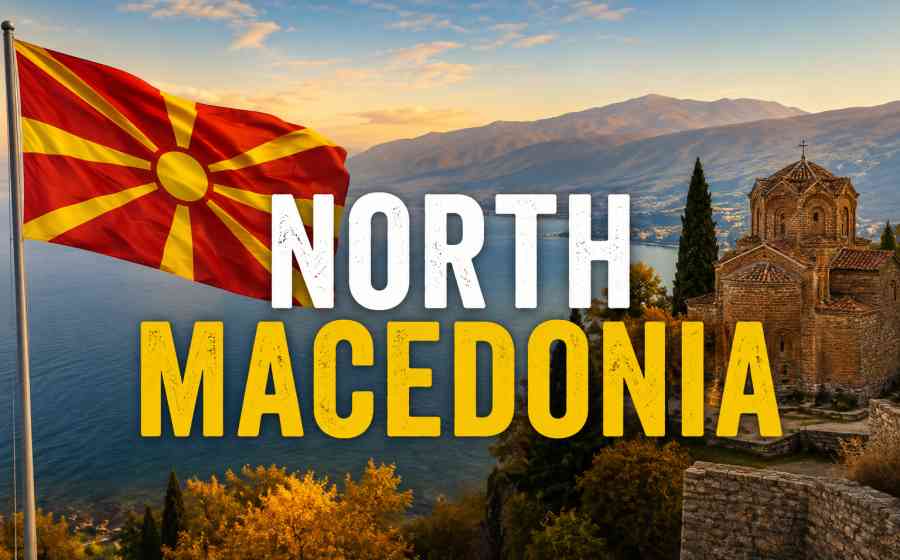
One of the country’s most famous natural attractions is Lake Ohrid, one of Europe’s oldest and deepest lakes. Shared by North Macedonia and Albania, Lake Ohrid is renowned for its clear water, biodiversity, and historic surroundings. The city of Ohrid, situated on its northeastern shore, is recognized for its cultural and religious heritage.
The Vardar River is another major geographical feature. It flows through the country from north to south before continuing into Greece.
Ancient History
The history of North Macedonia goes back thousands of years. The region was home to ancient tribes and later became associated with the Kingdom of Macedon. Ancient Macedon rose to international prominence under Philip II of Macedon, who expanded the kingdom and strengthened its military power.
His son, Alexander the Great, became one of history’s most famous conquerors. Beginning from Macedon, Alexander created a vast empire stretching from Greece and Egypt to parts of Central and South Asia. His campaigns contributed to the spread of Greek language and culture across a large area, helping shape the Hellenistic world.
The territory later came under Roman influence and became part of the Roman and subsequently Byzantine spheres. Important ancient settlements and archaeological sites throughout modern North Macedonia reflect the region’s long historical development.
Medieval and Ottoman Period
During the medieval period, the territory was influenced by the Byzantine Empire and various Slavic states and kingdoms. The region became an important area for the development of Slavic Christian culture.
The city of Ohrid played a particularly important religious and educational role. It became associated with Saint Clement of Ohrid and Saint Naum, two important figures in the development of Slavic literacy and Christian education. The Ohrid Literary School is remembered as an important center of medieval Slavic culture.
From the late 14th century, the region gradually came under the control of the Ottoman Empire. Ottoman influence lasted for several centuries and left a lasting mark on architecture, food, traditions, and urban culture.
Modern History
Following the decline of Ottoman power, the region experienced political changes and conflicts during the Balkan Wars of the early 20th century. After World War II, Macedonia became one of the constituent republics of the Socialist Federal Republic of Yugoslavia.
North Macedonia declared independence from Yugoslavia in 1991. Unlike several other parts of Yugoslavia, it achieved independence without a large-scale war. The country joined the United Nations in 1993, although its admission was initially associated with the provisional reference “the former Yugoslav Republic of Macedonia” because of the dispute with Greece over its name.
The Prespa Agreement, signed in 2018, led to the country’s official name becoming the Republic of North Macedonia in 2019. North Macedonia later became a NATO member in 2020, marking an important step in its foreign-policy development.
Culture and Traditions
North Macedonian culture combines influences from Balkan, Slavic, Byzantine, Ottoman, and other historical traditions. Music, dance, religious celebrations, handicrafts, and traditional food are important parts of national life.
Traditional Macedonian folk dances are often performed during festivals and cultural celebrations. One of the best-known forms is the oro, a traditional group dance accompanied by regional musical styles.
Music has a strong place in cultural life. Traditional instruments include the gaida, a type of bagpipe, as well as the tambura and zurla. Modern North Macedonian music includes pop, rock, folk, and other contemporary genres.
Religious heritage is also significant. The country has numerous historic Orthodox churches and monasteries, many containing medieval frescoes and religious art.
Food of North Macedonia
North Macedonian cuisine reflects the country’s Balkan and Ottoman heritage. Popular foods include tavče gravče, a baked bean dish widely regarded as a national specialty, and ajvar, a spread made primarily from roasted red peppers.
Other popular dishes include shopska salad, burek, pastrmajlija, and various grilled meat dishes. Local fruits, vegetables, dairy products, and regional wines also contribute to the country’s culinary identity.
Sports in North Macedonia
Sports are an important part of everyday life, with football, basketball, handball, volleyball, and wrestling enjoying significant popularity.
Football is particularly popular, and the North Macedonia national football team represents the country in international competitions. One of its most memorable achievements came during the qualification campaign for the 2020 UEFA European Championship, when North Macedonia reached the tournament for the first time.
Basketball also has a strong following. North Macedonian clubs have participated in regional and European competitions, while the national team has produced several notable international performances.
Handball is another major sport. North Macedonia has a strong handball tradition, and its clubs and national teams have competed in European competitions. The country has also produced successful athletes in wrestling, boxing, athletics, and other sports.
Famous Places to Visit
Macedonia has numerous historical and natural attractions. Ohrid is perhaps the country’s best-known tourist destination, famous for Lake Ohrid, historic churches, monasteries, and its old town.
Skopje, the capital, combines Ottoman-era architecture, modern buildings, museums, monuments, and the historic Old Bazaar. The Stone Bridge, connecting important parts of central Skopje, is one of the city’s most recognizable landmarks.
Other notable destinations include Matka Canyon, Mavrovo National Park, Bitola, Kruševo, and Heraclea Lyncestis, an ancient archaeological site near Bitola.
Key Facts About North Macedonia
- Official Name: Republic of North Macedonia
- Capital: Skopje
- Continent: Europe
- Region: Balkans / Southeast Europe
- Official Language: Macedonian and Albanian
- Currency: Macedonian denar (MKD)
- Government: Parliamentary republic
- Independence: 1991
- NATO Membership: 2020
- Major River: Vardar
- Famous Lake: Lake Ohrid
- Major City: Skopje
- Famous Historical Figure Associated with Ancient Macedon: Alexander the Great
- National Football Team: North Macedonia national football team
Summary
North Macedonia is a country where ancient history, medieval heritage, Balkan traditions, and modern European development come together. From the legacy of ancient Macedon and Alexander the Great to the historic churches of Ohrid and the lively streets of Skopje, its cultural landscape reflects many centuries of change. Its mountains, lakes, traditional cuisine, music, festivals, and sporting achievements add further depth to its national identity. Despite its modest size, North Macedonia holds an important place in the history and culture of the Balkan region.
Also Check: General Knowledge