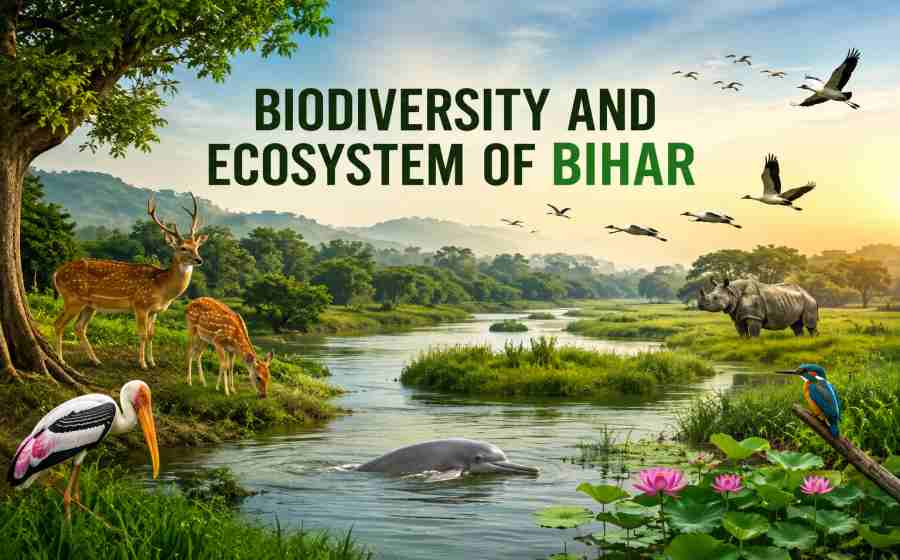
Biodiversity and Ecosystem of Bihar – Forests, Wildlife, Wetlands and Natural Heritage
Biodiversity and Ecosystem of Bihar includes forests, wetlands, rivers, wildlife and rich plant species that support nature, agriculture and local communities.
Biodiversity and Ecosystem of Bihar
Bihar is known mainly for its fertile plains, the Ganga River, agriculture and historical heritage, but the state also possesses a diverse and important natural environment. The biodiversity and ecosystem of Bihar include forests, grasslands, rivers, wetlands, agricultural landscapes and a wide variety of plants, animals, birds, fish and other organisms. The geographical position of Bihar, its river systems and different types of landforms have created habitats that support both terrestrial and aquatic biodiversity.
Bihar’s natural ecosystems are closely connected with the lives and livelihoods of its people. Rivers provide water and fish, wetlands support agriculture and migratory birds, forests provide ecological services, and fertile plains sustain farming. Protecting this biodiversity is therefore important not only for wildlife but also for the environmental and economic well-being of the state.
Table of Contents
Geographical Features Supporting Biodiversity
Bihar lies in the eastern part of India and is dominated by the Gangetic plains. The Ganga flows across the state and is joined by several important rivers, including the Gandak, Kosi, Son, Bagmati and Mahananda. These rivers create floodplains, wetlands, oxbow lakes, sandbars and riverine habitats.
The northern part of Bihar is influenced by the Himalayan foothills, particularly around West Champaran, while the southern districts contain hills, plateaus and forested areas. This geographical variation creates different ecological conditions and allows a variety of species to survive.
The combination of rivers, forests, wetlands, grasslands and agricultural areas makes Bihar an important landscape for biodiversity conservation.
Forest Ecosystem of Bihar
Although Bihar has a relatively limited forest area compared with heavily forested states, its forests have significant ecological value. Forest ecosystems are mainly found in areas such as West Champaran, Kaimur, Rohtas, Jamui, Munger and parts of the southern districts.
The forests include moist and dry deciduous vegetation, sal forests, riverine vegetation and other plant communities. Trees and shrubs provide food and shelter for wildlife while also helping control soil erosion, conserve moisture and regulate local environmental conditions.
The Valmiki Tiger Reserve in West Champaran is the most important protected forest landscape of Bihar. It contains a mixture of forested hills, valleys, grasslands, riverine areas and swampy habitats. These ecosystems support species such as tigers, leopards, deer, gaur, wild boar, sloth bears, reptiles and numerous birds.
Wildlife Diversity
Bihar is home to many species of mammals, birds, reptiles, amphibians, fish and insects. The wildlife varies according to the habitat.
The forests of Bihar support animals such as tiger, leopard, sloth bear, wolf, deer, chital, sambar, nilgai, wild boar, gaur and several smaller mammals. Valmiki Tiger Reserve is particularly important for the conservation of the Bengal tiger and other forest species.
The Kaimur Wildlife Sanctuary is another major protected landscape. It contains forest ecosystems, hills and water bodies and supports species including leopard, blackbuck, deer, sloth bear and numerous birds. According to the Bihar government’s information, Kaimur is the largest wildlife sanctuary in the state.
Rajgir Wildlife Sanctuary is another significant ecosystem. Located among the Rajgir hills, it represents a remaining forest patch surrounded by agricultural land, settlements and other human activities. Surveys in the sanctuary have recorded a wide variety of mammals, birds, reptiles, amphibians, fish and butterflies.
Wetland Ecosystem of Bihar
Wetlands are among the most valuable ecosystems in Bihar. They include natural lakes, oxbow lakes, floodplain wetlands, reservoirs and other water bodies. These areas provide breeding and feeding grounds for fish, amphibians, reptiles and birds.
Bihar’s wetlands are especially important for migratory birds. During winter, several wetlands attract birds travelling from distant parts of Eurasia and other regions. Wetlands also help store water, recharge groundwater, reduce the effects of floods and support local fisheries and agriculture.
Important wetland areas include Kanwar Lake, Kusheshwar Sthan, Baraila Lake, Nagi Dam and Nakti Dam. The Bihar government’s environmental planning documents identify wetlands as an important conservation priority and report that the state has been working to identify and manage wetlands, including Ramsar sites.
Kanwar Lake, also known as Kanwar Tal, is particularly important for wetland biodiversity and bird conservation. Nagi and Nakti are also important bird habitats in Jamui district and attract a variety of migratory birds.
Aquatic Ecosystem and Gangetic Dolphin
The rivers of Bihar form an important part of its aquatic ecosystem. They provide habitats for fish, turtles, water birds and other aquatic organisms. Among Bihar’s most famous aquatic animals is the Gangetic river dolphin, an endangered freshwater mammal associated with the Ganga and its tributaries.
The Vikramshila Gangetic Dolphin Sanctuary near Bhagalpur was established specifically to protect the river dolphin and its aquatic habitat. The sanctuary covers a stretch of the Ganga and is also important for other aquatic wildlife.
River ecosystems are also economically important because many communities depend on fisheries and other river-related resources. Maintaining clean and flowing rivers is therefore essential for both biodiversity and human livelihoods.
Plant Diversity of Bihar
Bihar’s plant diversity includes forest trees, grasses, aquatic plants, agricultural crops, medicinal plants, shrubs and various wild species. Sal is an important tree in several forest areas, while riverine landscapes contain species adapted to changing water levels and flood conditions.
Agricultural biodiversity is also significant. Bihar’s fertile plains support rice, wheat, maize, pulses, oilseeds, vegetables, fruits and other crops. Traditional agricultural practices and locally adapted crop varieties contribute to the broader biological resources of the state.
The Bihar State Biodiversity Board has highlighted the state’s diversity of wild and domesticated plants and animals, agricultural crops and traditional practices associated with biological resources.
Protected Areas and Conservation
Protected areas play an important role in conserving Bihar’s biodiversity. These include national parks, wildlife sanctuaries, bird sanctuaries, conservation reserves and other protected habitats.
Important protected areas include:
- Valmiki Tiger Reserve
- Kaimur Wildlife Sanctuary
- Rajgir Wildlife Sanctuary
- Vikramshila Gangetic Dolphin Sanctuary
- Nagi Dam Bird Sanctuary
- Nakti Dam Bird Sanctuary
- Udaypur Wildlife Sanctuary
- Kusheshwar Sthan Bird Sanctuary
- Kanwar Lake Bird Sanctuary
Together, these areas protect different types of ecosystems, from forests and hills to rivers and wetlands. Bihar’s environmental planning documents also identify wildlife protection and wetland conservation as important areas of environmental management.
Importance of Biodiversity in Bihar
Biodiversity provides many benefits to Bihar’s environment and society. Forests help maintain soil quality, regulate water and provide habitats for wildlife. Wetlands act as natural water storage systems and support fisheries and birds. Rivers provide water and aquatic resources, while agricultural biodiversity contributes to food security.
Biodiversity also supports pollination, nutrient cycling, soil formation and natural pest control. These ecological processes are often unnoticed but are essential for healthy ecosystems and productive agriculture.
For local communities, natural resources can provide food, fuel, fodder, fish, medicinal plants and other materials. Biodiversity also creates opportunities for nature-based tourism and environmental education.
Threats to Biodiversity
Despite its ecological importance, Bihar’s biodiversity faces several challenges. Habitat loss, pollution, deforestation, wetland degradation, excessive extraction of natural resources and unplanned development can affect wildlife and ecosystems.
River pollution is another major concern because aquatic organisms are highly dependent on water quality. Wetlands can also be damaged by encroachment, changes in water flow, waste disposal and conversion of natural areas for other uses.
Human-wildlife conflict may occur when natural habitats become fragmented or wildlife moves into agricultural and residential areas. Climate variability and changing rainfall patterns can further influence rivers, wetlands, forests and agricultural ecosystems.
Conservation Efforts
Biodiversity conservation in Bihar requires cooperation between government departments, local communities, researchers, environmental organizations and citizens. Protected areas provide direct protection to important habitats, while wetland management helps preserve aquatic ecosystems.
The state has also established the Bihar State Biodiversity Board under the framework of the Biological Diversity Act, 2002. Its broader purpose includes biodiversity conservation and sustainable use of biological resources.
Community participation is equally important. Protecting wetlands, reducing pollution, planting native trees, preventing illegal wildlife hunting and using natural resources responsibly can contribute to long-term conservation.
Summary
The biodiversity and ecosystem of Bihar represent an important combination of forests, rivers, wetlands, grasslands, agricultural landscapes and wildlife habitats. From the forests of Valmiki Tiger Reserve to the wetlands of northern Bihar and the Gangetic dolphin habitat near Bhagalpur, the state contains ecosystems with distinctive ecological importance.
Conserving these natural resources is essential for maintaining environmental balance, supporting agriculture and fisheries, protecting wildlife and improving the quality of life of future generations. Sustainable development, effective protected-area management, wetland conservation and community participation can help Bihar preserve its rich natural heritage while meeting the needs of its growing population.
Also Check: Bihar GK