
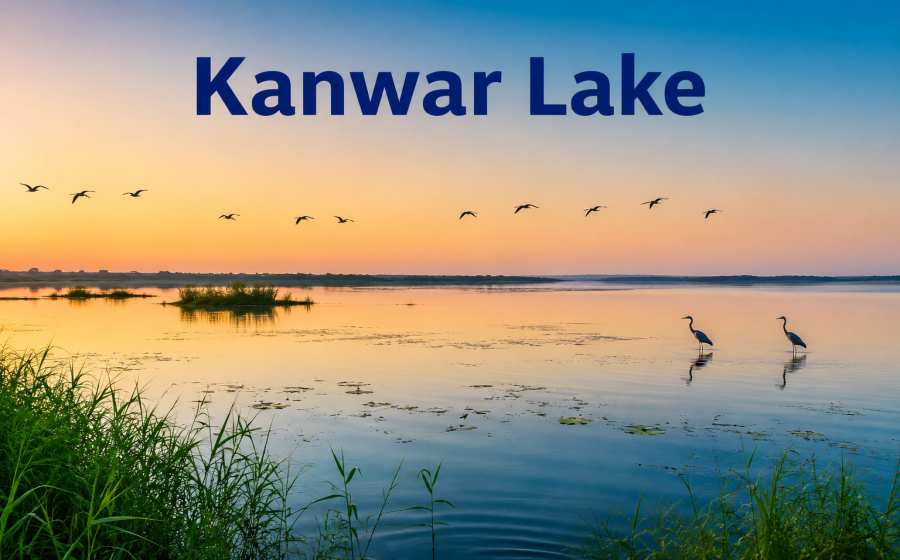
Kanwar Lake – India’s Remarkable Wetland and Bird Paradise in Bihar
Kanwar Lake in Bihar is a remarkable freshwater wetland known for migratory birds, biodiversity and its importance as a major ecological treasure.
Kanwar Lake
Kanwar Lake, also known as Kabar Taal, is one of the most important wetlands of Bihar and a significant natural attraction in Begusarai district. Located near Manjhaul, about 22 km northwest of Begusarai city, this freshwater natural wetland is especially famous for its rich birdlife and aquatic ecosystem. The Bihar Tourism Department describes it as a paradise for birdwatchers, particularly during the winter months when large numbers of migratory birds arrive.
The wetland is also important from the geographical and ecological point of view because it is an oxbow lake, a type of water body formed when a meandering river develops a cutoff from its main channel. Kanwar Lake is widely recognized by Bihar’s government sources as one of Asia’s largest freshwater oxbow lakes. Its extensive wetland environment supports aquatic plants, fish, resident birds and migratory waterfowl, making it an important biodiversity site in eastern India.
Table of Contents
Location and Geographical Features
Kanwar Lake is situated in the Begusarai district of Bihar, close to Manjhaul. Its landscape is closely connected with the river systems of the region. According to the Bihar Tourism Department, the lake receives water associated with the confluence of the Gandak, Bia and Kareh rivers. The surrounding low-lying wetland landscape and abundant aquatic vegetation create favorable conditions for a wide range of aquatic organisms and birds.
The National Wetland Atlas of Bihar identifies the wetland as a natural lake and records Khabar Tal as an important waterfowl habitat in the Gangetic plain. The atlas reports an area of about 2,680 hectares for the wetland and notes the presence of numerous submerged, floating and emergent aquatic plants.
A Major Bird Habitat
One of Kanwar Lake’s most remarkable features is its bird diversity. The wetland provides food, shelter and suitable resting areas for both resident and migratory birds. During winter, birds from colder regions migrate toward the relatively warmer wetlands of the Indian subcontinent, and Kanwar Lake becomes an important stopover and wintering habitat.
The wetland supports birds such as ducks, coots, herons, egrets, storks, grebes and other water-associated species. The National Wetland Atlas specifically records migratory ducks and coots along with resident species such as dabchick, herons, egrets, openbill stork, black ibis, whistling ducks, purple moorhen and little grebe.
This seasonal arrival of birds makes the lake particularly attractive to birdwatchers, nature enthusiasts, photographers and students interested in ecology. Bihar’s official tourism website recommends the period from September to April for visiting Kanwar Lake.
Kanwar Lake Bird Sanctuary
The importance of Kanwar Lake is not limited to tourism. It has long been recognized as a protected area for bird conservation. The National Wetland Atlas records that the wetland was declared a protected zone by the Bihar government in 1986, followed by its declaration as a bird sanctuary in 1989.
The Bihar government also lists Kanwar Lake Bird Sanctuary among the state’s protected wildlife areas and records its establishment in 1987. Government sources describe the sanctuary as covering approximately 70 sq km, reflecting the wider protected landscape associated with Kanwar Lake.
For students preparing Bihar GK, these dates and facts are particularly useful because questions about Kanwar Lake often involve its district, bird sanctuary status, wetland characteristics and ecological importance.
Rich Aquatic Biodiversity
Kanwar Lake is a complete wetland ecosystem rather than simply a large body of water. Its aquatic vegetation provides habitat and food for many organisms. The National Wetland Atlas records 55 species of macrophytes, including submerged, floating and emergent aquatic plants.
The wetland also supports several fish species. Recorded examples include Rohu, Mrigal, Catla, Reba, Channa species, freshwater catfish and other aquatic fish. Molluscs such as Pila globosa are also reported from the wetland.
Such biological diversity demonstrates why wetlands are essential ecosystems. They provide habitat for wildlife while also contributing to water regulation, nutrient cycling and the overall ecological balance of surrounding landscapes.
Importance of Wetlands
Wetlands such as Kanwar Lake perform many valuable environmental functions. They can store water, support groundwater-related processes, provide breeding and feeding habitats for wildlife and help maintain biodiversity. Wetlands also act as important ecological links between rivers, agricultural areas and other natural habitats.
For Bihar, these water bodies are especially significant because the state contains extensive riverine and floodplain landscapes. The Bihar State Wetland Authority reports thousands of wetlands across the state and identifies wetland conservation as an important responsibility under India’s wetland-management framework.
Kanwar Lake therefore represents much more than a tourist destination. It is an important part of Bihar’s natural heritage and contributes to the ecological health of the Gangetic plains.
Threats to Kanwar Lake
Despite its ecological importance, Kanwar Lake faces several environmental challenges. The National Wetland Atlas identifies issues including bird poaching, excessive aquatic vegetation, conversion of exposed lakebed areas for cultivation, and contamination or eutrophication caused by agricultural chemicals such as pesticides and fertilizers.
Changes in water availability can also influence the condition of wetlands. Since wetland ecosystems depend heavily on seasonal water levels, alterations in water flow, encroachment, pollution and unsustainable land use can affect birds, fish, aquatic plants and local communities.
Protecting Kanwar Lake requires cooperation among government agencies, local communities, farmers, conservation organizations and visitors. Preventing pollution, controlling illegal hunting, maintaining natural water flow and protecting wetland vegetation are important steps toward its long-term conservation.
Tourism and Birdwatching
Kanwar Lake has considerable potential for eco-tourism and nature-based tourism. The Bihar Tourism Department promotes it as a biodiversity hotspot and a popular destination for birdwatching. Visitors can enjoy the natural surroundings while observing seasonal bird populations and aquatic habitats.
The best period to experience the lake’s birdlife is generally during the cooler months. Visitors should maintain a respectful distance from birds, avoid disturbing wildlife and never feed wild birds. Responsible tourism can help generate awareness about wetland conservation without putting additional pressure on the ecosystem.
Key Facts about Kanwar Lake
Kanwar Lake is an important topic for everyone because it combines geography, environment, wildlife and tourism. Some key facts to remember are:
- Location: Begusarai district, Bihar
- Nearby area: Manjhaul
- Type: Natural freshwater wetland and oxbow lake
- Other name: Kabar Taal/Khabar Tal
- Importance: Major habitat for resident and migratory birds
- Protected status: Kanwar Lake Bird Sanctuary
- Protected-zone recognition: 1986
- Bird sanctuary declaration: 1989, according to the National Wetland Atlas
- Best visiting season: September to April
- Special feature: Widely described by Bihar government sources as Asia’s largest freshwater oxbow lake
Summary
Kanwar Lake is one of Bihar’s most valuable wetland ecosystems and an important natural heritage site of India. Its freshwater environment, extensive aquatic vegetation, diverse fish population and large variety of resident and migratory birds make it ecologically significant. Its location in the Gangetic plains further increases its importance as a wetland habitat.
Also Check: Bihar GK