
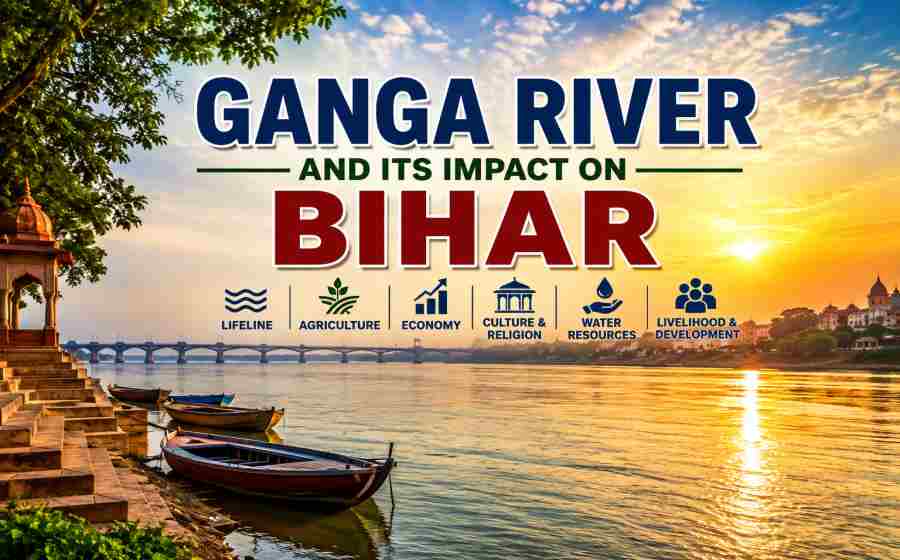
Ganga River and Its Impact on Bihar – Lifeline, Culture, Agriculture and Economy
Learn about the Ganga River and its impact on Bihar, including agriculture, economy, culture, transport, floods, biodiversity and major cities.
Ganga River and Its Impact on Bihar
The Ganga River is one of the most important rivers of India and holds exceptional geographical, economic, cultural, and historical importance. In Bihar, the Ganga plays an especially significant role because it flows across the state from west to east and influences the lives of millions of people. It supports agriculture, provides water resources, contributes to local economies, and has shaped the cultural identity of Bihar for centuries.
The river enters Bihar from the west and flows through or along several important districts before continuing towards West Bengal. Major cities such as Patna, Bhagalpur, Munger, and Begusarai are closely associated with the Ganga. Numerous smaller rivers also join it within Bihar, creating an extensive river system that influences the state’s landscape.
Table of Contents
Geographical Importance of the Ganga in Bihar
The Ganga is the principal river of Bihar and divides the state geographically into northern and southern regions. The northern part of Bihar is drained by rivers such as the Gandak, Kosi, Bagmati, and Kamla, many of which eventually join the Ganga. Rivers including the Son, Punpun, and Kiul contribute water from the southern side.
This interconnected river system has created extensive alluvial plains. The soil deposited by rivers is generally fertile and is highly suitable for agriculture. As a result, the Ganga and its tributaries have played a major role in making Bihar an important agricultural region.
Impact on Agriculture
Agriculture is one of the biggest areas where the Ganga influences Bihar. The river system provides water that supports farming and contributes to the fertility of agricultural land.
The fertile alluvial soil found across the Gangetic plains is suitable for growing crops such as rice, wheat, maize, pulses, sugarcane, and various vegetables. Farmers in areas near the river and its tributaries benefit from the availability of water and nutrient-rich soil.
However, the river system can also create agricultural difficulties. Excessive rainfall, high water levels, and flooding can damage standing crops, erode farmland, and disrupt agricultural activities. Therefore, the Ganga has both beneficial and challenging effects on agriculture in Bihar.
Role in the Economy of Bihar
The Ganga contributes to Bihar’s economy in several ways. Agriculture supported by the river system provides employment and income to a large rural population. Fishing is another livelihood associated with the river and its connected water bodies.
River-based transportation has also historically been important. The Ganga provides a natural inland waterway through the state, offering opportunities for movement of goods and people. The development of inland water transport can further strengthen trade connectivity along the river.
Sand and other river-related resources also contribute to local economic activities, although their extraction needs to be carefully managed to protect river ecosystems.
Cultural and Religious Importance
The Ganga is deeply connected with the cultural life of Bihar. The river is regarded as sacred by millions of people and is associated with numerous religious traditions and festivals.
Chhath Puja is one of the most important festivals of Bihar, and riverbanks, ponds, and other water bodies become important locations for devotees. During Chhath, people gather near the water to offer prayers to the setting and rising Sun.
Several important religious and cultural activities also take place along the Ganga. The riverbanks of cities such as Patna witness large gatherings during festivals and special occasions. For many communities, the Ganga is not simply a geographical feature but an important part of their cultural heritage.
Historical Importance
The Ganga has influenced the development of settlements and civilizations in Bihar for centuries. Its availability of water, fertile plains, and transportation potential encouraged the growth of communities along its banks.
Patna, one of the major cities of Bihar, developed in a region strongly connected with the Ganga. Historically, river-based routes helped connect settlements and supported trade and communication.
The river therefore forms an important part of Bihar’s historical geography. Its influence can be seen in the location of settlements, agricultural development, trade routes, and cultural centers.
Ganga and Urban Development
Several major urban centers in Bihar are located close to the Ganga. Patna is perhaps the most prominent example. The river provides an important geographical identity to the city and has influenced its development.
Other cities and towns along the Ganga also depend on the river system for various activities. At the same time, rapid urbanization has created pressure on the river. Untreated sewage, solid waste, industrial pollution, and other human activities can affect water quality.
Protecting the river is therefore essential for both the environment and the communities that depend upon it.
Biodiversity and Aquatic Life
The Ganga supports a variety of aquatic organisms and provides habitats for several species. One of the most notable animals associated with the river is the Ganges river dolphin, an endangered freshwater species found in parts of the Ganga river system.
The Vikramshila Gangetic Dolphin Sanctuary near Bhagalpur is particularly important for the conservation of the Ganges river dolphin. The river ecosystem also supports different species of fish, aquatic organisms, birds, and other wildlife.
Healthy river ecosystems are essential not only for biodiversity but also for maintaining ecological balance and supporting communities dependent on fisheries.
Floods: A Major Challenge
While the Ganga provides many benefits, flooding remains one of Bihar’s major environmental challenges. During the monsoon season, heavy rainfall and increased water flow in the Ganga and its tributaries can cause flooding in vulnerable areas.
Floods may damage homes, roads, bridges, crops, and public infrastructure. They can also force people to temporarily leave affected areas. The situation becomes more complicated because Bihar has a large network of rivers and many low-lying areas.
Effective flood management, embankment maintenance, improved drainage, accurate forecasting, and disaster preparedness are important for reducing the impact of floods.
Pollution and Conservation
Pollution is another major concern for the Ganga in Bihar. Domestic sewage, plastic waste, religious waste, agricultural runoff, and other forms of pollution can negatively affect river water and aquatic life.
Conservation requires cooperation between government agencies, local communities, industries, farmers, and citizens. Proper sewage treatment, responsible waste disposal, protection of wetlands, reduction of plastic pollution, and public awareness can help improve the condition of the river.
The cleanliness of the Ganga is not only an environmental issue. It is also connected with public health, agriculture, biodiversity, tourism, and the cultural heritage of Bihar.
Importance of the Ganga for Bihar’s Future
The future development of Bihar is closely connected with responsible management of its rivers. The Ganga can continue to support agriculture, transportation, fisheries, tourism, biodiversity, and cultural activities if its ecosystem is properly protected.
Modern infrastructure and economic development should therefore be balanced with environmental conservation. Sustainable use of water resources, protection of riverbanks, restoration of wetlands, and greater public participation can help ensure that the river remains beneficial for future generations.
Summary
The Ganga River is much more than a river for Bihar. It is a geographical lifeline, an agricultural resource, an economic asset, a cultural symbol, and an important ecological system. Its fertile plains support farming, its waters sustain communities, and its banks are closely connected with the history and traditions of the state.
At the same time, floods, pollution, erosion, and ecological degradation present serious challenges. Protecting the Ganga requires long-term planning and collective responsibility. For Bihar, preserving the health of the Ganga means protecting not only a river but also the environment, economy, culture, and future of millions of people.
Also Check: Bihar GK