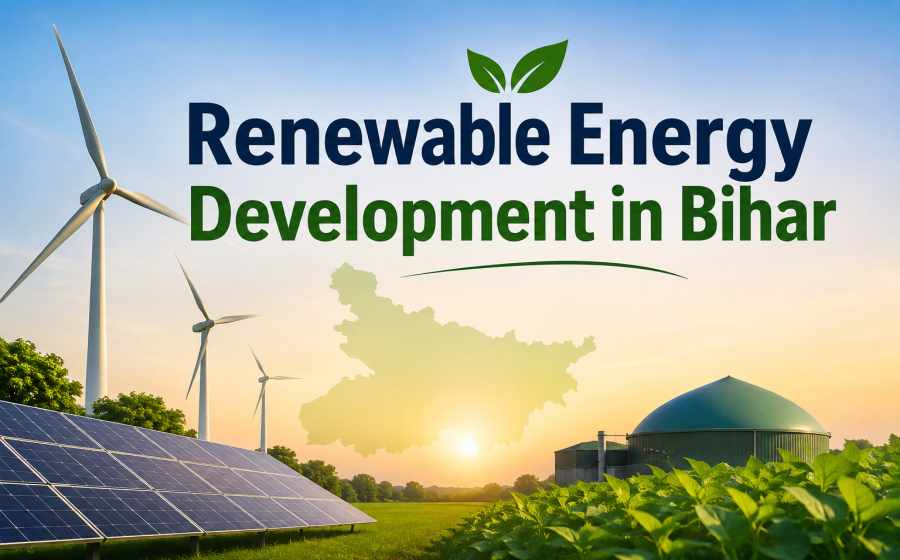
Renewable Energy Development in Bihar – Powering a Greener Future
Renewable Energy Development in Bihar is transforming the state’s power sector through solar, biomass, hydropower and sustainable energy initiatives.
Renewable Energy Development in Bihar
Bihar is steadily increasing its focus on renewable energy as the state looks for cleaner, affordable and sustainable sources of electricity. With a large rural population, extensive agricultural activity and abundant sunlight, Bihar has considerable potential for developing renewable energy. Solar power, biomass energy, small hydropower and other emerging technologies can help the state meet its growing energy requirements while reducing dependence on conventional fuels.
The development of renewable energy in Bihar is important not only for electricity generation but also for rural development, employment, environmental protection and improved energy access. The state’s renewable-energy efforts are therefore becoming an important part of its long-term development strategy.
Table of Contents
Solar Energy Potential in Bihar
Solar energy is one of the most promising renewable-energy resources available to Bihar. The state receives substantial sunlight for much of the year, making solar power suitable for both large-scale and decentralized applications.
Solar panels can be installed on rooftops, government buildings, schools, hospitals, agricultural facilities and unused land. Solar energy can also support irrigation pumps in rural areas, reducing the dependence of farmers on conventional electricity and diesel-powered equipment.
The growth of rooftop solar systems can allow households and institutions to generate part of their own electricity. Solar street lighting is another useful application, particularly in villages and semi-urban areas where reliable lighting infrastructure is important.
Bihar’s Focus on Solar Power
The government and energy agencies in Bihar have been promoting solar energy through various programs and projects. Solar parks, rooftop installations and decentralized solar systems can contribute to expanding clean electricity generation across the state.
Solar power is particularly valuable for Bihar because it can be deployed at different scales. A large solar project can supply electricity to the grid, while a small solar system can provide lighting and basic electricity services to an individual household or community.
As technology becomes more affordable, solar power can become increasingly accessible to farmers, households, businesses and public institutions.
Biomass Energy and Agricultural Resources
Agriculture is an important part of Bihar’s economy, and the large quantity of agricultural residues generated every year provides opportunities for biomass energy. Crop residues, animal waste and other organic materials can be used to produce energy when properly collected and processed.
Biomass-based power plants can convert agricultural and organic waste into useful electricity or heat. Biogas plants can also use cattle dung and other biodegradable materials to produce biogas for cooking and other energy needs.
The development of biomass energy has two major benefits. First, it creates an additional source of renewable energy. Second, it can provide a productive use for agricultural and organic waste that might otherwise be burned or improperly disposed of.
Small Hydropower Opportunities
Bihar does not have the same large hydropower potential as mountainous states, but its rivers, canals and water-management structures may provide opportunities for small hydropower projects in suitable locations.
Small hydropower facilities can generate electricity without requiring the large infrastructure associated with major dams. Where technically and economically feasible, such projects can support local electricity requirements and contribute to the state’s renewable-energy mix.
However, hydropower development must consider seasonal water availability, environmental effects and the ecological importance of rivers and wetlands.
Renewable Energy in Rural Bihar
Renewable energy has particular importance for rural Bihar. Many villages require reliable and affordable electricity for homes, schools, healthcare facilities, irrigation, small industries and local businesses.
Decentralized renewable-energy systems can help address local energy requirements. Solar home systems, solar pumps, mini-grids and community-level renewable projects can provide electricity closer to where it is needed.
Reliable renewable electricity can also encourage rural entrepreneurship. Small shops, food-processing units, tailoring businesses, cold-storage facilities and other enterprises can operate more effectively when dependable electricity is available.
Solar Energy for Agriculture
Agriculture offers a major opportunity for renewable-energy development in Bihar. Solar-powered irrigation pumps can provide farmers with an alternative to diesel pumps. These systems use sunlight to generate electricity for pumping groundwater or surface water.
Solar irrigation can potentially reduce recurring fuel expenses and provide farmers with greater energy independence. At the same time, responsible groundwater management is essential because cheaper pumping should not lead to excessive extraction of groundwater.
Combining renewable-energy programs with efficient irrigation practices, water conservation and appropriate crop planning can make agricultural development more sustainable.
Environmental Benefits
The expansion of renewable energy can provide important environmental benefits to Bihar. Solar, biomass and other renewable sources generally produce fewer greenhouse-gas emissions during operation than conventional fossil-fuel-based electricity generation.
Greater use of clean energy can also contribute to improved air quality and reduce dependence on fuels such as coal and diesel. Biomass projects can additionally support better management of agricultural and organic waste when suitable collection and processing systems are available.
Renewable energy therefore connects energy development with broader environmental goals, including climate resilience and sustainable resource management.
Employment and Economic Opportunities
Renewable-energy development can create employment in Bihar in areas such as manufacturing, installation, electrical work, maintenance, project management and technical services.
The expansion of solar installations, for example, requires trained technicians for system design, installation and maintenance. Biomass and biogas projects can generate additional employment through feedstock collection, plant operation and equipment servicing.
Renewable energy can also encourage local businesses to enter emerging clean-energy markets. Training programs and skill-development initiatives can help young people acquire technical skills relevant to this growing sector.
Challenges to Renewable Energy Development
Despite its potential, Bihar faces several challenges in expanding renewable energy. Land availability, project financing, grid infrastructure, technical expertise and maintenance capacity can affect the implementation of renewable-energy projects.
Solar projects may require suitable land and adequate transmission facilities. Biomass projects need reliable supplies of agricultural residues and efficient collection systems. Small renewable systems also require regular maintenance and trained personnel.
Another important challenge is public awareness. Households, farmers and small businesses need clear information about the costs, benefits, maintenance requirements and financial support available for renewable-energy technologies.
The Way Forward
Bihar can strengthen renewable-energy development by combining large-scale projects with decentralized systems. Greater use of rooftop solar, solar irrigation pumps, biomass plants, biogas systems and suitable small hydropower projects can diversify the state’s renewable-energy portfolio.
Improved transmission and distribution infrastructure will also be important for integrating renewable electricity into the power system. Skill development, private investment, research and public awareness can further support the sector.
Energy efficiency should develop alongside renewable energy. Using electricity more efficiently reduces overall demand and allows renewable resources to make a greater contribution to the state’s energy needs.
Summary
Renewable energy development in Bihar represents an important opportunity to build a cleaner and more resilient energy system. Solar power has particularly strong potential, while biomass, biogas and suitable small hydropower projects can complement solar generation.
For Bihar, renewable energy is not simply an alternative source of electricity. It can support agriculture, rural development, employment, environmental protection and sustainable economic growth. With appropriate policies, investment, infrastructure and public participation, renewable energy can play an increasingly important role in meeting Bihar’s future energy requirements.
Also Check: Bihar GK