Kuwait – History, Famous Places, Culture, Sports, Economy and Key Facts
Kuwait is a Gulf nation known for its rich history, Arab culture, oil wealth, sports, landmarks and important role in the modern Middle East.
Kuwait
Kuwait is a small but influential country located in the northeastern part of the Arabian Peninsula along the Persian Gulf. Despite its relatively small land area, Kuwait has played an important role in the history, economy and politics of the Gulf region. The country is widely known for its petroleum resources, modern cities, traditional Arab culture and strategic location. Its capital, Kuwait City, is the country’s major political, commercial and cultural center.
Table of Contents
History of Kuwait
The history of Kuwait stretches back many centuries. Its location along the Gulf made it an important place for trade, fishing and maritime activities. Before the discovery of oil, many people in the region depended on fishing, pearl diving, boat building and trade for their livelihoods. The modern ruling family of Kuwait, the Al Sabah family, became established in the 18th century. Kuwait gradually developed into an important trading settlement because of its position between the Arabian Peninsula and the wider Gulf region. Kuwaiti sailors and merchants became well known for their maritime skills and commercial connections.
During the 19th and early 20th centuries, Kuwait maintained relationships with the Ottoman Empire and Britain while seeking to preserve its local autonomy. In 1899, Kuwait entered into an agreement with Britain that strengthened British influence over its foreign affairs. A major turning point came with the discovery of oil. Commercial oil production began in the 1940s, transforming Kuwait’s economy and society. Oil revenues helped finance infrastructure, education, healthcare and rapid urban development.
Kuwait gained full independence from Britain on June 19, 1961. The country later became a constitutional monarchy with the emir as head of state and an elected National Assembly playing an important legislative role.
One of the most difficult periods in modern Kuwaiti history occurred in 1990, when Iraq invaded Kuwait. The occupation lasted several months before an international coalition expelled Iraqi forces in early 1991. Kuwait subsequently focused on reconstruction and restoring its infrastructure.
Geography of Kuwait
Kuwait is situated at the northeastern corner of the Arabian Peninsula. It shares land borders with Iraq to the north and west and Saudi Arabia to the south. Its eastern side faces the Persian Gulf.
The country consists mainly of flat desert terrain. Kuwait has a hot and dry climate, with extremely warm summers and relatively mild winters. Rainfall is generally limited and irregular.
Kuwait also has several islands, with Bubiyan Island being the largest. Failaka Island is particularly notable for its archaeological and historical importance.
Culture and Traditions of Kuwait
Kuwaiti culture reflects a combination of traditional Arab heritage, Islamic values and the country’s long history of maritime trade. Arabic is the official language, while English is also widely used in business, education and everyday communication.
Family and community remain important parts of Kuwaiti society. Traditional hospitality is highly valued, and guests are often welcomed with Arabic coffee, dates and other refreshments.
Kuwaiti cuisine includes a variety of rice, meat, seafood and bread-based dishes. Machboos, a spiced rice dish commonly prepared with meat or seafood, is one of the country’s best-known traditional foods. Other popular foods include harees, mutabbaq zubaidi and various seafood dishes.
Traditional clothing also remains an important part of cultural identity. Men may wear the thobe, while women may wear the abaya and other traditional garments. During religious and national celebrations, traditional clothing and customs are especially visible.
Music, poetry and storytelling have historically been important forms of cultural expression. Kuwait also has a strong tradition of maritime heritage, reflecting the historical importance of pearl diving and seafaring.
Economy of Kuwait
Kuwait has one of the world’s major petroleum-based economies. Oil and natural gas have played a central role in the country’s economic development and remain major sources of government revenue.
The country’s oil resources helped transform Kuwait from a traditional trading and pearling society into a modern, highly urbanized state. The government has invested petroleum revenues in infrastructure, public services, education and healthcare.
Kuwait has also sought to diversify its economy and reduce excessive dependence on hydrocarbons. Finance, trade, construction, logistics and other service industries contribute to economic activity.
The Kuwait Investment Authority, one of the world’s oldest sovereign wealth funds, manages state investments and plays an important role in the country’s long-term financial strategy.
Sports in Kuwait
Sports are popular in Kuwait, with football being the country’s most widely followed sport. The Kuwait national football team has represented the country in major international competitions and achieved notable success in Asian football.
Kuwait won the AFC Asian Cup in 1980, when it hosted the tournament. This remains one of the most significant achievements in Kuwaiti football history.
Basketball, handball, volleyball, athletics and motorsports also have enthusiastic followings. Kuwait has participated in the Olympic Games and other major international sporting events.
Traditional activities such as horse riding and camel-related sports also form part of the country’s sporting heritage.
Famous Places in Kuwait
Kuwait has several important landmarks that reflect its modern development and cultural history.
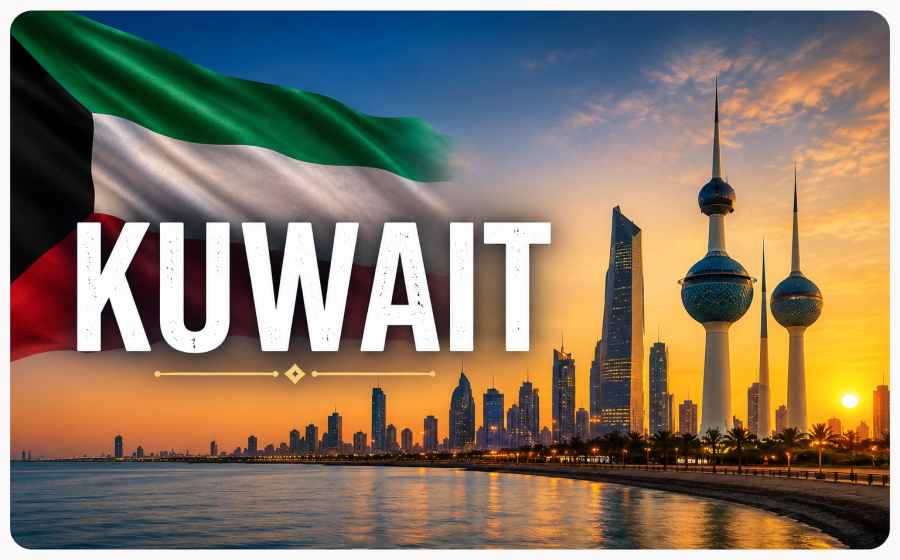
The Kuwait Towers are among the country’s most recognizable symbols. Located on the Arabian Gulf, the towers are known for their distinctive spherical structures and panoramic views.
The Grand Mosque of Kuwait is one of the country’s most important religious landmarks. Its impressive architecture and large prayer hall make it a significant feature of Kuwait City.
The Souq Al-Mubarakiya is a traditional marketplace where visitors can experience old-style Kuwaiti shopping, food and local culture. It provides a contrast to the country’s modern shopping centers and skyscrapers.
The Al Shaheed Park is another major attraction, combining landscaped spaces, museums, walking areas and cultural facilities.
Failaka Island is also historically significant because archaeological discoveries there provide evidence of ancient civilizations and the island’s connections with the wider Gulf world.
Important Facts About Kuwait
- Official Name: State of Kuwait
- Capital: Kuwait City
- Official Language: Arabic
- Currency: Kuwaiti Dinar (KWD)
- Government: Constitutional monarchy
- Independence: June 19, 1961
- Main Religion: Islam
- Major Natural Resource: Petroleum
- Location: Northeastern Arabian Peninsula
- Major Neighbors: Iraq and Saudi Arabia
- Coastline: Persian Gulf
- Largest Island: Bubiyan Island
- Major Sport: Football
National Identity and Modern Kuwait
Modern Kuwait combines traditional Gulf heritage with a highly developed urban lifestyle. Kuwait City contains modern buildings, business districts, shopping centers, universities, cultural institutions and large residential areas.
At the same time, the country continues to preserve elements of its traditional identity through food, architecture, festivals, family customs, maritime heritage and cultural institutions. National Day and Liberation Day are especially important occasions, bringing communities together through celebrations and public events.
Kuwait’s location, natural resources and historical development have given it an important position in the Gulf. Its journey from a small maritime trading community to an independent oil-producing state is one of the most notable transformations in modern Middle Eastern history.
Summary
Kuwait is a fascinating country where history, Arab culture, maritime traditions, modern development and petroleum wealth come together. Its story includes centuries of trade and pearl diving, the transformation brought by oil, independence in 1961 and the challenges of the 1990 Iraqi invasion. Today, Kuwait remains an important Gulf nation with a distinctive cultural identity, significant economic resources, memorable landmarks and a strong interest in sports and education.
Also Check: General Knowledge