Montenegro – History, Culture, Tourism, Sports and Key Facts
Montenegro – Discover its fascinating history, unique culture, sporting achievements, breathtaking landscapes, UNESCO heritage and essential facts.
Montenegro
Montenegro is a small but remarkably diverse country in southeastern Europe, situated along the Adriatic Sea in the western Balkans. Despite its modest size, the country combines dramatic mountains, historic towns, medieval monuments, coastal landscapes and a rich cultural heritage. Its name means “Black Mountain,” reflecting the rugged mountainous character of much of the country. Montenegro covers about 13,812 square kilometres and has a population of roughly 624,000. Podgorica is the modern capital and administrative centre, while Cetinje is regarded as the historical and cultural capital. The euro is used as the country’s currency.
Table of Contents
Geography and Location of Montenegro
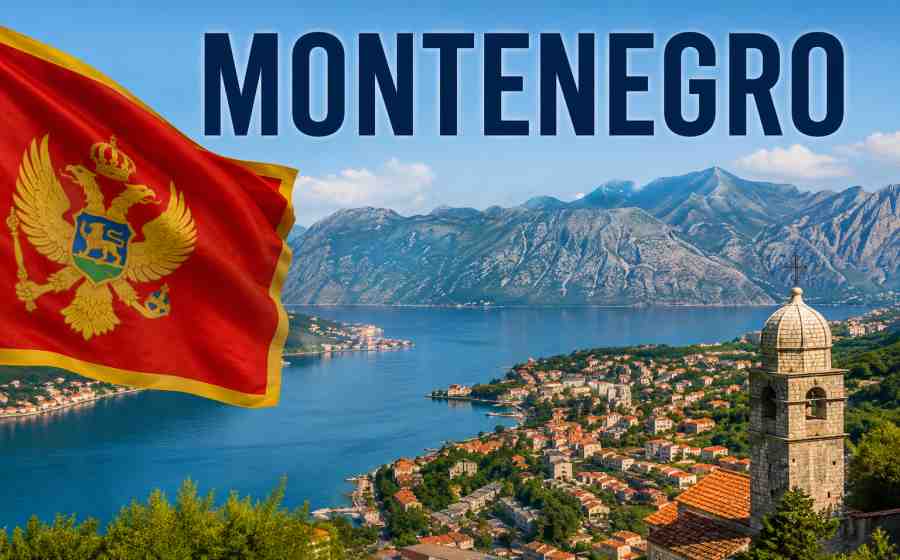
Montenegro is bordered by Croatia, Bosnia and Herzegovina, Serbia, Kosovo and Albania, while its southwestern side opens onto the Adriatic Sea. The country is famous for its combination of coastline and mountainous terrain. The Bay of Kotor, one of its best-known natural and cultural areas, extends deep into the land and is surrounded by steep mountains.
Montenegro has several important natural landmarks. Lake Skadar is the largest lake in the Balkans, while the Tara Canyon is among Europe’s deepest canyons. Durmitor, Lovćen, Biogradska Gora, Lake Skadar and Prokletije are among the country’s national parks. Montenegro’s highest peak is Zla Kolata in the Prokletije range, reaching 2,534 metres.
History of Montenegro
The history of Montenegro stretches back to ancient times. Illyrian tribes were among the earliest known inhabitants of the region, particularly between the 5th and 2nd centuries BC. The territory later became part of the Roman world and was associated with the province of Prevalis. Following the decline of the Roman Empire, the region came under Byzantine influence and experienced the settlement of Slavic peoples.
During the medieval period, the region was associated with Duklja and later became known as Zeta. The Vojislavljević dynasty ruled a medieval kingdom during the 11th and 12th centuries. Over subsequent centuries, local rulers and religious leaders played important roles in maintaining the area’s political and cultural identity.
Montenegro developed a particularly strong tradition of independence and resistance during the Ottoman period. The mountainous geography helped local communities defend their territory and preserve their political traditions.
A major milestone came in 1878, when Montenegro received international recognition as an independent state at the Congress of Berlin. It later became a kingdom in 1910 under Nikola I. Following the First World War, Montenegro became part of the Kingdom of Serbs, Croats and Slovenes, which later became Yugoslavia.
After the breakup of Yugoslavia, Montenegro remained in a state union with Serbia. On May 21, 2006, a referendum was held in which Montenegrins voted for independence. Montenegro subsequently restored its independence and became an internationally recognized sovereign state.
Culture and Traditions
Montenegro’s culture reflects centuries of interaction among Balkan, Mediterranean, Slavic, Venetian and other European influences. It is a multi-ethnic and multi-religious society, and its cultural heritage can be seen in its architecture, music, festivals, food and traditional customs.
One of the country’s best-known traditional dances is the Crnogorsko Oro, often described as a symbolic eagle dance. Traditional performers may dance in formations while accompanied by singing and music. Another important element of Montenegrin musical heritage is the gusle, a traditional one-stringed instrument historically used to accompany epic songs and stories.
Hospitality is an important part of traditional Montenegrin social life. Family, community, courage and respect for tradition have historically been emphasized in rural society. Traditional festivals and local celebrations continue to preserve many of these customs.
Montenegro also has a diverse culinary tradition. Coastal cuisine reflects Mediterranean influences, with seafood, olive oil and vegetables playing important roles. Mountain areas have traditionally been associated with hearty dishes, dairy products, cured meats and locally produced foods.
UNESCO Heritage of Montenegro
Montenegro has an impressive collection of internationally recognized heritage sites. UNESCO currently lists four World Heritage properties associated with the country. These include the Natural and Culturo-Historical Region of Kotor, Durmitor National Park, the Stećci Medieval Tombstone Graveyards and the Venetian Works of Defence between the 16th and 17th Centuries.
The Natural and Culturo-Historical Region of Kotor was inscribed in 1979. Its historic towns, churches, fortifications and maritime traditions reflect centuries of cultural development around the Bay of Kotor.
Durmitor National Park represents Montenegro’s exceptional natural heritage. Its mountains, forests, lakes and spectacular Tara Canyon make it one of the country’s most important protected landscapes.
Montenegro is also part of the multinational UNESCO heritage of the Stećci Medieval Tombstone Graveyards, which preserve distinctive medieval stone monuments found across several Balkan countries.
Sports in Montenegro
Sports play an important role in modern Montenegrin society, and the country has achieved notable success despite its small population.
Water polo is one of Montenegro’s strongest sports. The national team has competed at major international tournaments and has developed a strong reputation in European water polo. The country’s coastal location and long maritime tradition have contributed to the popularity of aquatic sports.
Basketball is another major sport. Montenegro has produced talented players and its national teams regularly participate in European competitions. Basketball enjoys strong support at both club and national levels.
Football is also widely followed throughout the country. The Montenegro national football team represents the country in international competitions and has featured several well-known players who have competed in major European leagues.
Handball is another important sport, particularly through the success of the women’s national team. Montenegrin women’s handball has produced memorable international performances and helped raise the country’s profile in European sport.
Mountaineering, hiking, skiing and other outdoor activities are also popular because of Montenegro’s mountainous landscape.
Economy and Tourism
Tourism is one of the most important sectors of Montenegro’s economy. The country’s Adriatic coastline, historic towns, mountains and national parks attract visitors from across Europe and beyond. The World Bank describes Montenegro as an upper-middle-income, small and open economy with a strong service sector and significant reliance on tourism and foreign investment.
Popular destinations include Kotor, Budva, Herceg Novi, Bar, Ulcinj, Cetinje and the mountain region around Žabljak. Coastal areas attract visitors interested in beaches, historic architecture and boating, while northern Montenegro is particularly suitable for hiking, rafting, skiing and nature tourism.
The country’s environmental identity is also notable. In 1991, Montenegro adopted a declaration making it the world’s first self-declared ecological state.
Important Facts About Montenegro
- Official name: Montenegro
- Capital: Podgorica
- Historical and cultural capital: Cetinje
- Region: Western Balkans, Southeastern Europe
- Area: About 13,812 square kilometres
- Population: About 624,000
- Currency: Euro (€)
- Coastline: About 293 kilometres
- Largest lake: Lake Skadar
- Highest peak: Zla Kolata, 2,534 metres
- Major canyon: Tara Canyon
- Famous bay: Bay of Kotor
- Official language: Montenegrin
- Independence restored: 21 May 2006
- International independence recognition: 1878
- Major sports: Water polo, basketball, football and handball
- UNESCO World Heritage properties: 4
Summary
Montenegro is a country where dramatic natural landscapes and centuries of history exist side by side. From the medieval heritage of Kotor and Cetinje to the mountains of Durmitor and the waters of the Adriatic, Montenegro offers remarkable geographical and cultural diversity. Its traditions, UNESCO heritage, sporting achievements and journey toward modern independence make it an interesting subject for general knowledge. Although small in size, Montenegro has developed a distinctive identity that continues to attract attention across Europe and around the world.
Also Check: General Knowledge